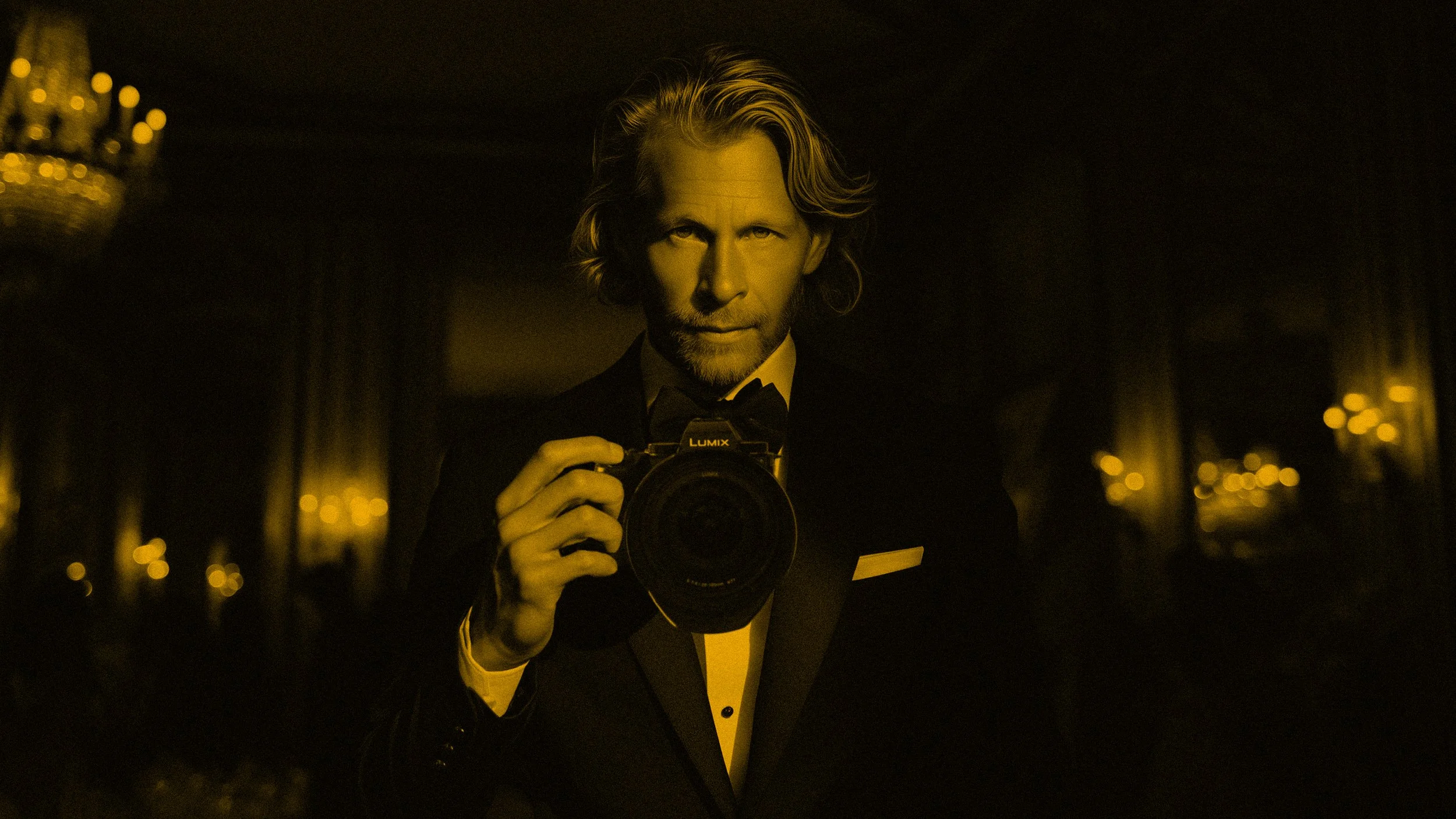
Movement, light, and storytelling come together during Tybee Ballet Theatre's From the Minds of Others at the Tybee Post Theater.
The Art of Filming Theater and Dance: Stories Beyond the Stage
There is something extraordinary about live theater. An empty stage becomes an entirely different world through the imagination of directors, actors, dancers, musicians, and designers. The lights come up, the music begins, and for a little while everyone in the room agrees to believe in something that exists only in that moment. Then the curtain falls, the audience goes home, the sets eventually come down, and what remains are memories of the experience. Throughout my journey as a photographer, filmmaker, and musician, I've had opportunities to work with theater companies, high schools, directors, and dance organizations to create photographs and films that help tell their stories. Some of these projects were created to promote upcoming productions, while others were intended to preserve performances for the artists and organizations who brought them to life. What I've come to appreciate is that filming a theatrical production is not simply a matter of pointing a camera toward a stage. It requires understanding the creative intention behind the performance and recognizing when to interpret what you're seeing and when to simply let the art speak for itself.
Every Production Begins With Someone Else's Imagination
When I walk into a theater with my cameras, I'm entering a world that other artists have already spent weeks or months creating. The director has developed a vision, actors have explored their characters, choreographers have considered every movement, and designers have made countless decisions about scenery, costumes, and lighting. My role is to understand that vision and determine how photography and filmmaking might help communicate it to an audience beyond the theater itself. Sometimes that involves creating a carefully composed photograph or filming intimate interviews that introduce the people behind the characters. Other times it means observing a performance as faithfully as possible, preserving the choreography, staging, and atmosphere without imposing an entirely different interpretation. Having spent much of my career photographing people and creating visual stories, I find that the same instincts I rely on in portraiture, documentary filmmaking, and even music become useful in the theater. I'm always looking for the moment when something feels genuine, when the lighting reveals an emotion, or when a simple gesture communicates more than words.
Clue: Creating a Story Before the Curtain Rises
For Sheehan High School's production of Clue, I had the opportunity to approach the project through both photography and filmmaking. I created a posed promotional photograph of the cast arranged together on the theatrical set, using the characters, costumes, and environment to introduce the personality of the production in a single image. This also serves as the video poster as shared below. That photograph was not a frame pulled from the film. It was a deliberately composed portrait, and I approached it much as I would any other creative photographic assignment, considering the relationships between the subjects, the balance of the composition, and the overall atmosphere. I enjoy directing photographs like this because they offer an opportunity to bring many personalities together into one cohesive visual statement. A theatrical cast portrait should feel like more than a group photograph. It should give the viewer some sense of the world they are about to enter.
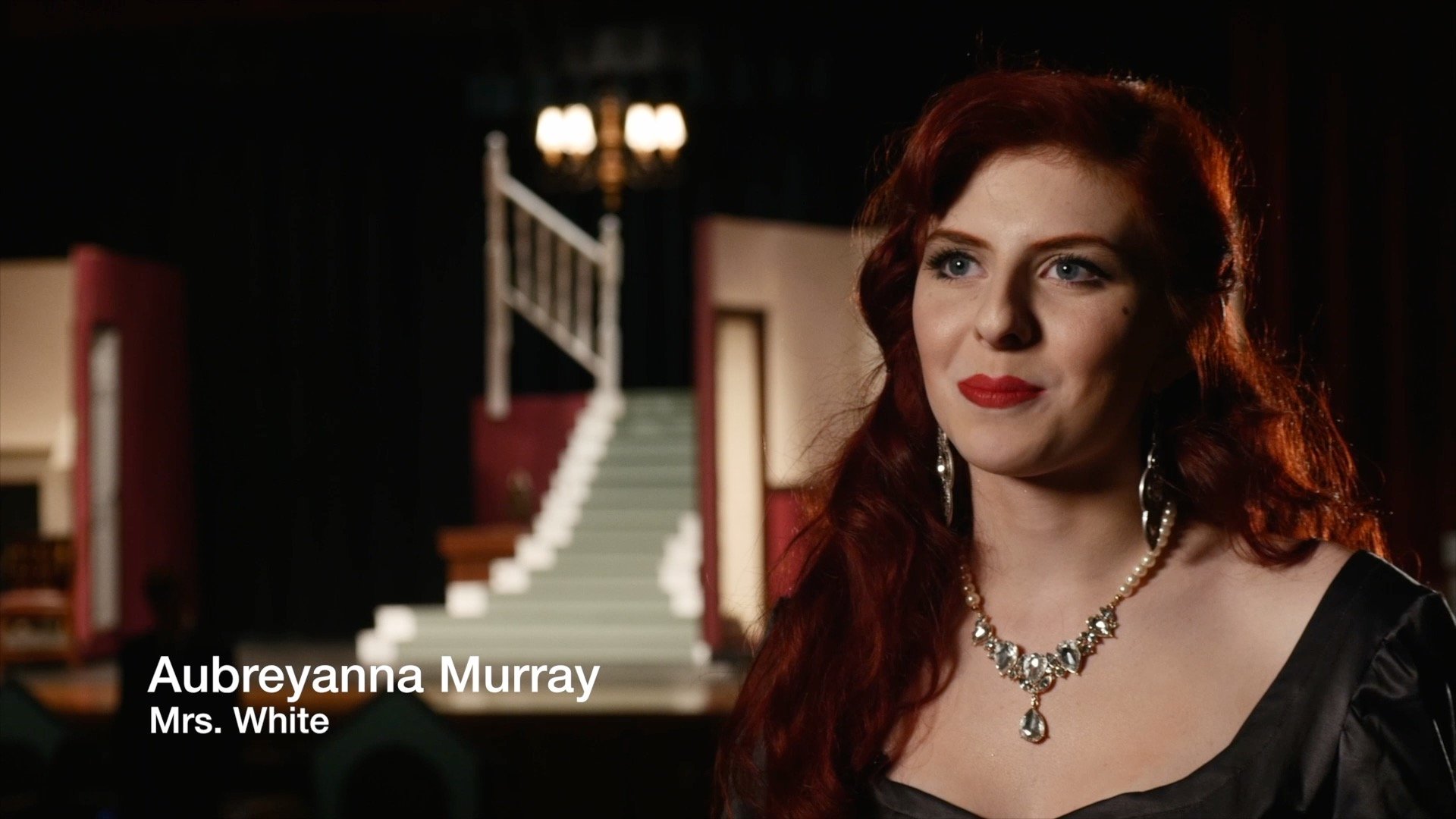
Aubreyanna Murray, portraying Mrs. White, photographed during an interview that brings the performer and the atmosphere of the production together.
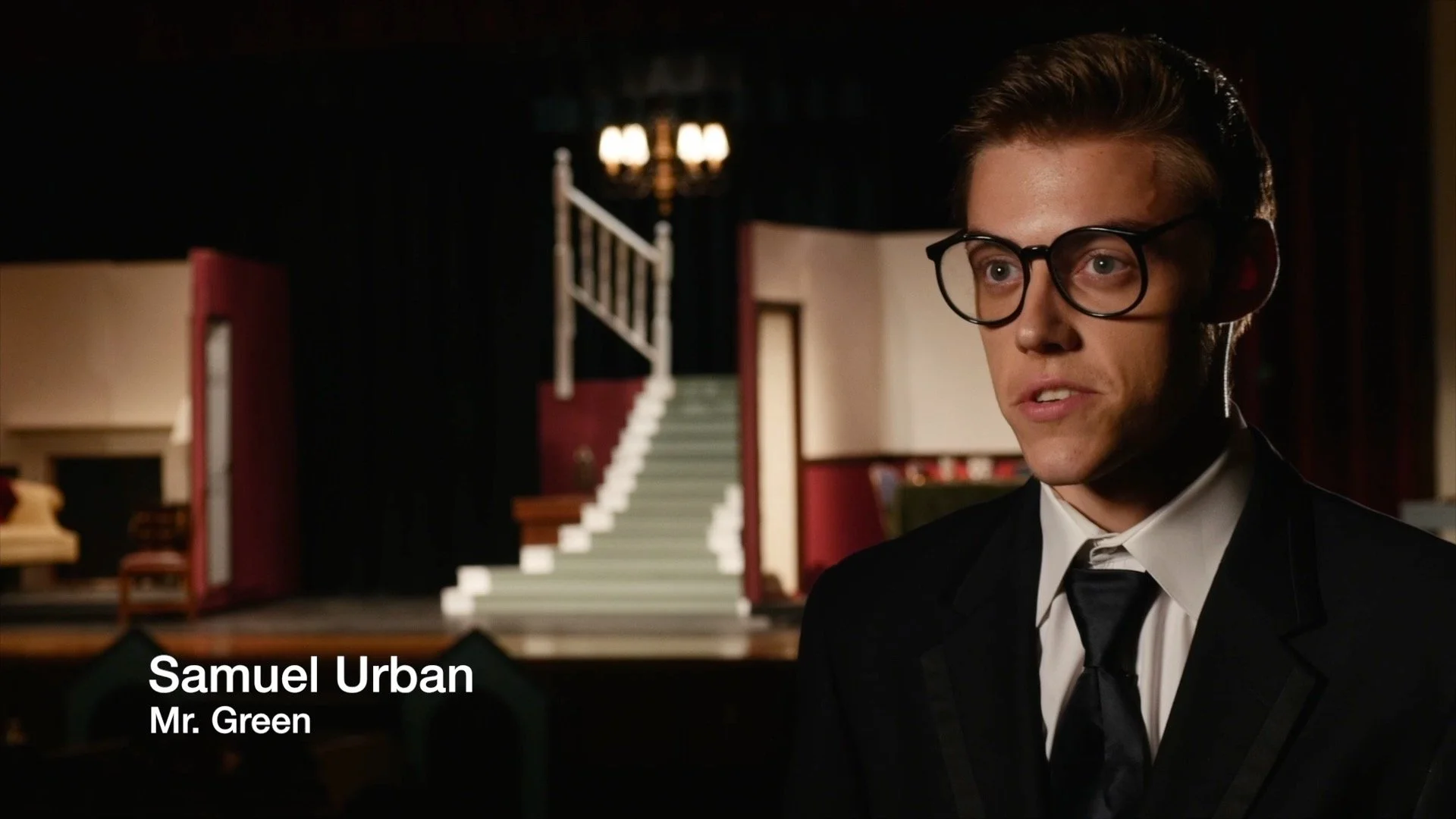
Samuel Urban, portraying Mr. Green, during an interview filmed on the theatrical set. Carefully controlled lighting brings a cinematic quality to the conversation.
The film offered an entirely different opportunity. I photographed professionally lit interviews with the actors inside the theater, allowing the stage and scenery to become part of the background. Samuel Urban, portraying Mr. Green, and Aubreyanna Murray, portraying Mrs. White, were among the performers who shared their perspectives on the production. Rather than placing them against a generic backdrop, I wanted the environment itself to contribute to the visual experience. I used controlled lighting to bring dimension to their faces while allowing the theatrical set to remain recognizable behind them. There is something interesting about watching an actor step outside a character and speak about the experience of portraying that person. Suddenly the audience gets to know both the fictional personality and the real individual bringing that character to life. By combining those conversations with moments from the stage, the promotional film became more than a collection of theatrical highlights. It became a short introduction to the people, personalities, and creative energy behind the production.
The Great Gatsby: Finding the Cinematic World Within the Theater
Sheehan High School's production of The Great Gatsby presented a very different visual experience. The period costumes, theatrical environments, dramatic relationships, and romantic tension offered opportunities to create a film with a distinctive atmosphere. Once again, I combined interviews with scenes from the performance, but I wanted the visual language to reflect the character of the production itself. The interviews were filmed inside the theater with carefully considered lighting, allowing the performers to speak naturally while remaining visually connected to the world they were creating on stage. I have always enjoyed the challenge of photographing people in existing environments because it requires finding a balance between what is already there and what I can contribute through lighting and composition. A theater can be a wonderful place to create portraits, particularly when the scenery and stage lighting already contain so much visual character.
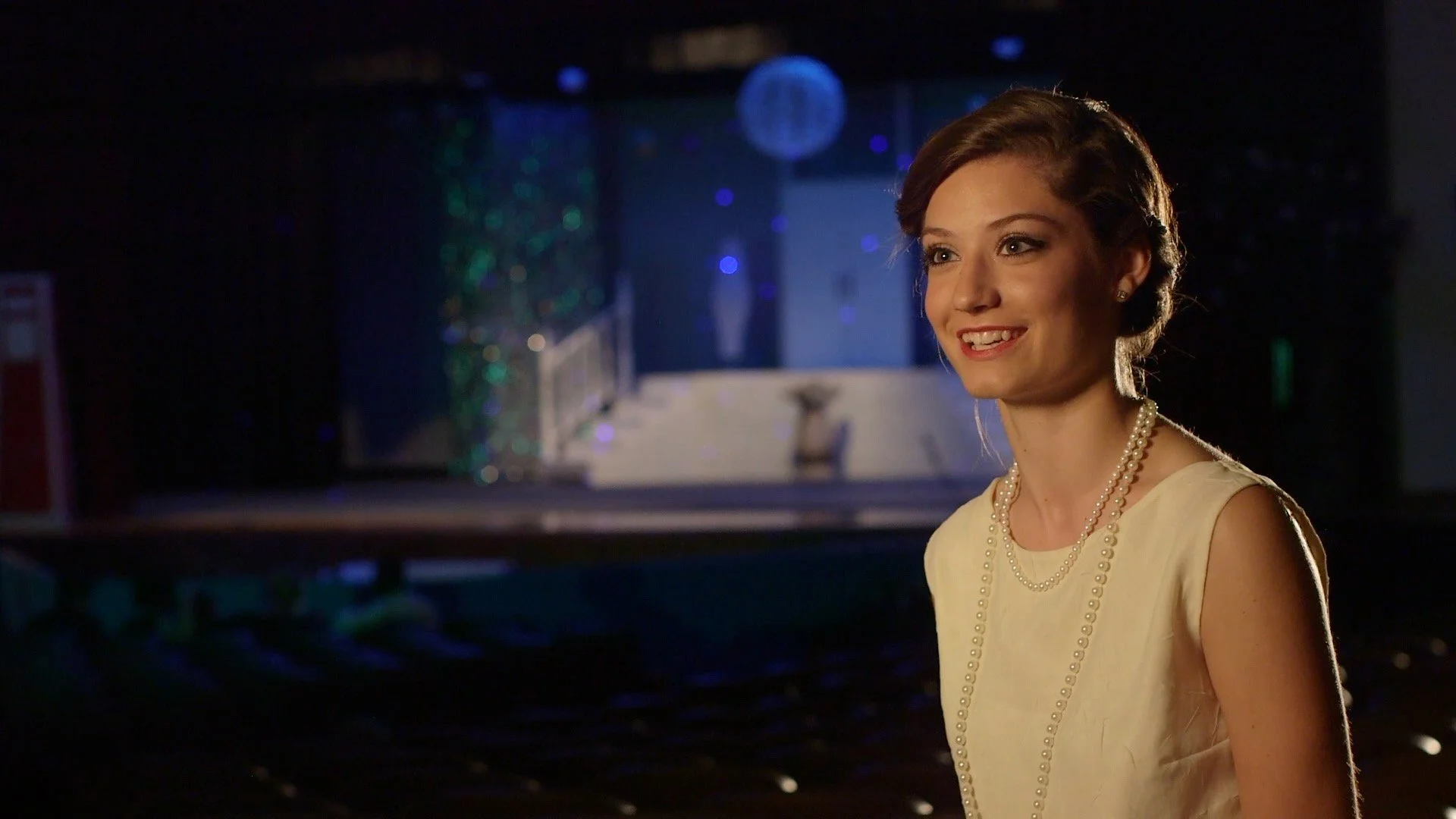
An interview from The Great Gatsby, where portrait lighting and the theatrical environment help establish the visual atmosphere of the film.
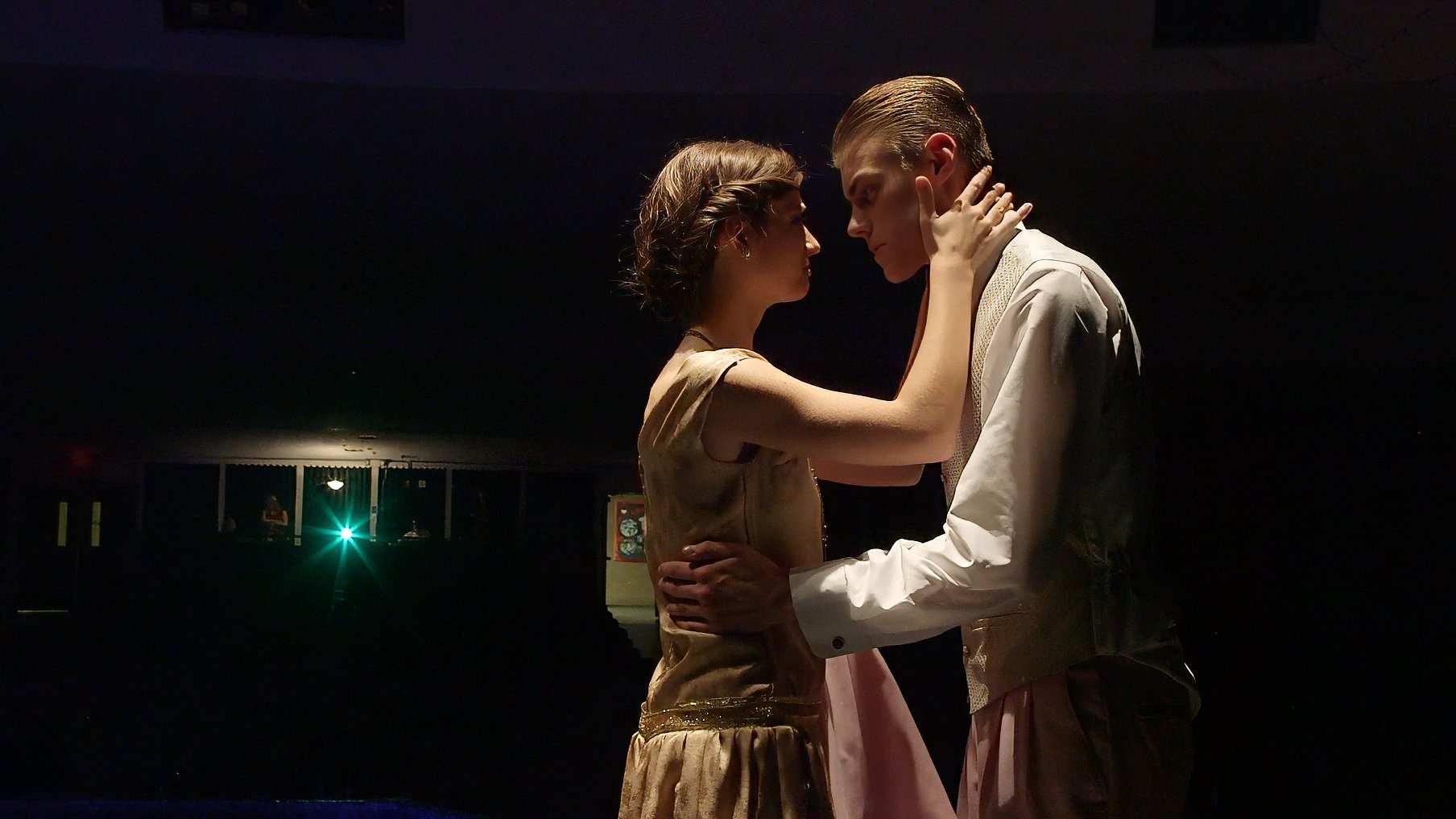
An intimate moment from The Great Gatsby, illustrating how expression, gesture, and theatrical light can communicate a story without dialogue.
When editing a promotional film like The Great Gatsby, I find myself looking for moments that communicate the emotional tone of the production rather than simply selecting the most visually elaborate scenes. A glance between two characters, a confrontation, or an intimate moment beneath a theatrical spotlight can tell us something about the relationships at the heart of the story. The objective isn't to reproduce the entire play in miniature. It is to give someone who hasn't seen the production a reason to become curious about it. That requires making creative decisions about rhythm, pacing, dialogue, and imagery, much as I would when directing any other short film. In many ways, the theatrical performance provides an extraordinary collection of raw material, but the promotional film becomes its own piece of storytelling through the decisions made in the editing room.
Les Misérables: The Power of a Story Told Together
Maloney High School's production of Les Misérables brought another dimension to this work. There is an enormous amount of creative energy involved in staging a musical of this scale, from the dramatic performances and elaborate costumes to the music, ensemble scenes, and countless contributions happening beyond the spotlight. I was struck by the way the production could move between intimate moments of personal struggle and scenes involving a large group of performers working together to communicate something much greater than any one character. As a filmmaker, those changes in scale require different ways of seeing. Sometimes the emotional story is carried by a single expression, while other moments demand that the camera recognize the entire stage and the relationships unfolding within it. There is an instinct involved in knowing when to move closer and when to allow the broader theatrical composition to tell the story.
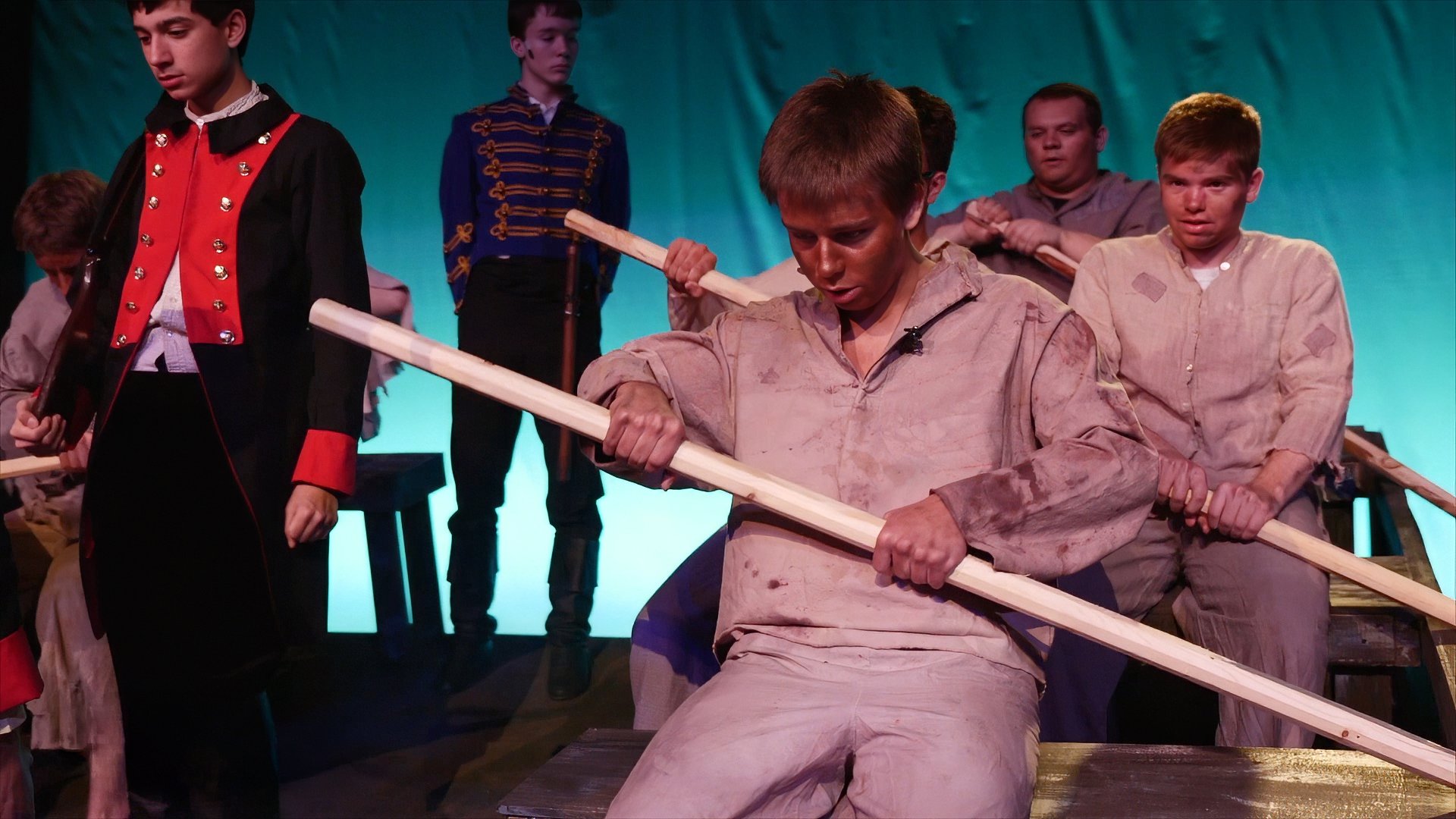
A dramatic moment from Maloney High School's Les Misérables, where the intensity of the performers and the scale of the stage create a powerful visual composition.
What I also appreciate about projects involving young performers is that the films eventually become something more than promotional material. At the time, everyone is focused on the upcoming performances, the rehearsals, the excitement, and the work required to bring the production to the stage. Years later, the same footage becomes a record of a remarkable chapter in their lives. The students move on to college, careers, families, and entirely different pursuits, but the film preserves a moment when they came together to create something meaningful. I think about that often in my work as a photographer and filmmaker. We may begin a project with one purpose in mind, but the photographs and films we create can grow in significance as time passes. What was once a promotional piece can become a lasting reminder of the people, friendships, and creative experiences that made the production possible.
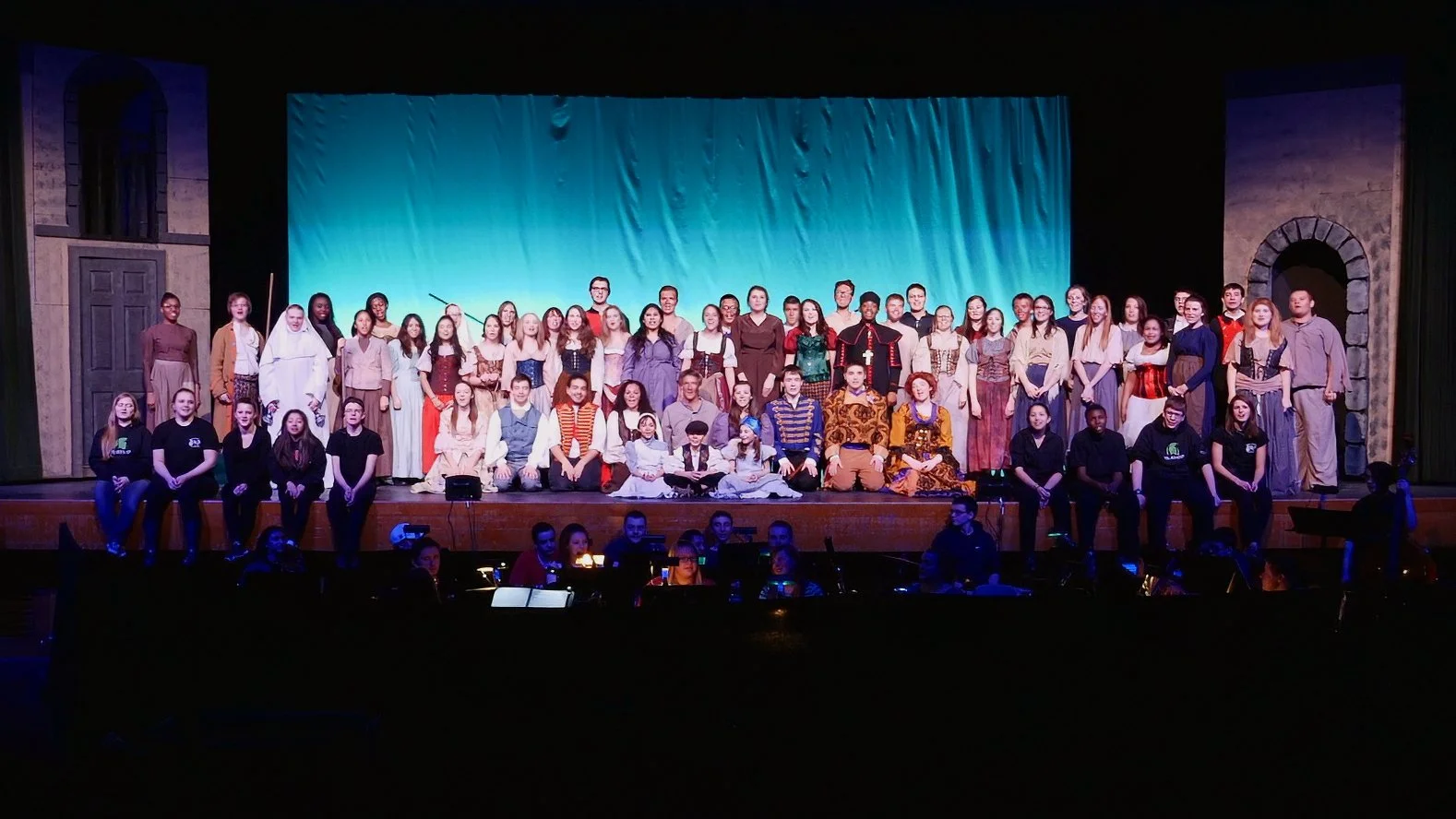
The cast and production participants of Les Misérables. Beyond the performances themselves, these photographs preserve the extraordinary collective effort behind a theatrical production.
Masks and The Monster: Documenting the Creative Process
Not every theatrical project begins with a familiar story or a production that has already reached its final form. Masks and The Monster, directed by Joni Weisfeld, offered an opportunity to document an original theatrical work during its workshop development. Visually, the production was quite different from the others. The largely black stage, minimal scenery, expressive movement, and intimate interactions between performers placed much of the emphasis on the actors themselves. There was something compelling about the simplicity of the environment because it allowed the physical and emotional qualities of the performance to become especially prominent. Rather than relying on elaborate theatrical settings, the work invited the audience to focus on the relationships, gestures, and ideas unfolding before them.
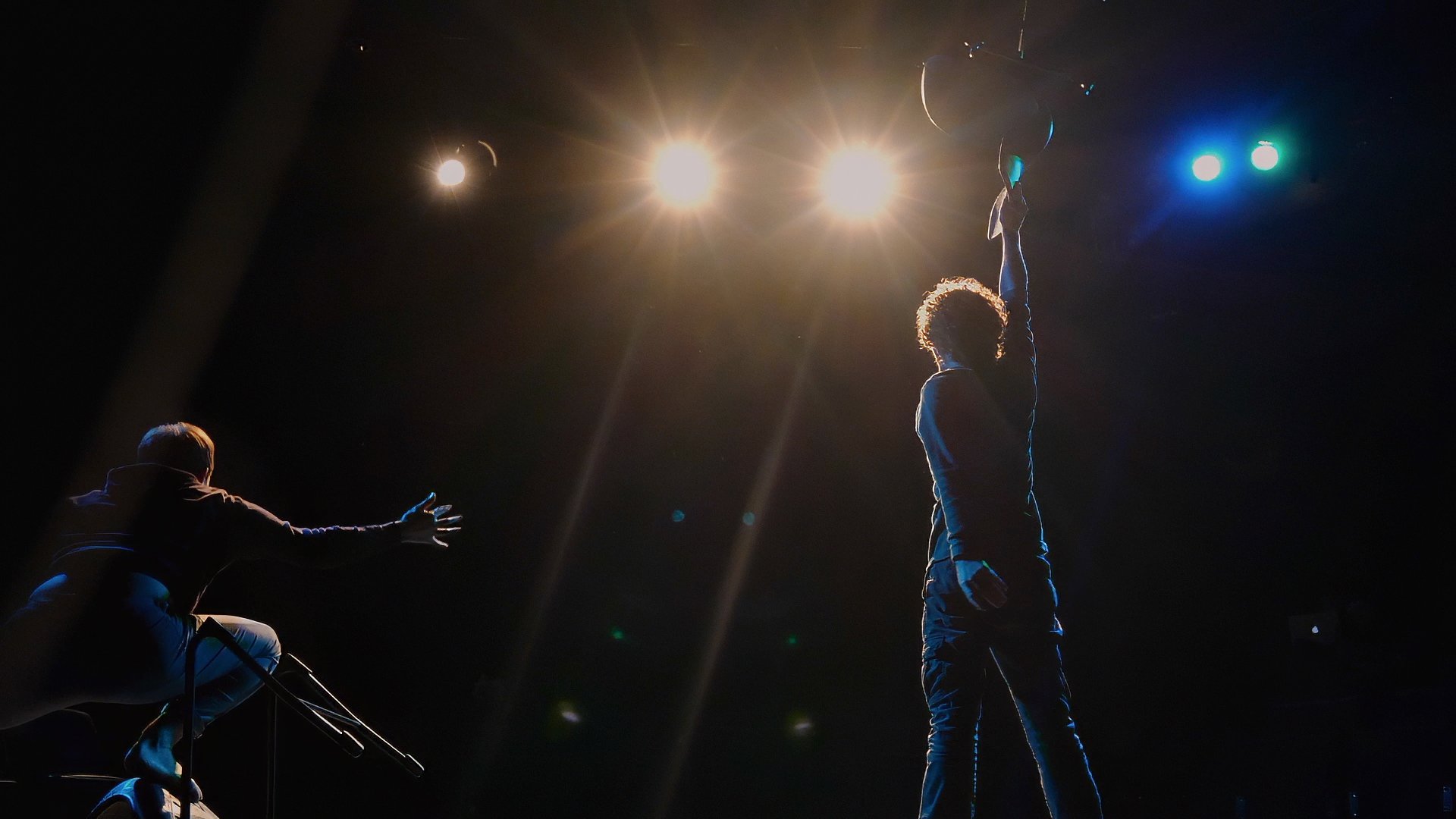
A moment from Masks and The Monster, directed by Joni Weisfeld, where expressive movement and minimal staging place the focus on the performers.
I find the development of an original artistic work particularly interesting because the creative process is still revealing itself. As a painter, musician, and filmmaker, I understand that an idea rarely arrives fully formed. Sometimes the most meaningful discoveries happen while experimenting, questioning, and allowing something unexpected to emerge. Documenting a workshop presents an opportunity to preserve that stage of the journey, before every creative decision has been finalized. For Masks and The Monster, I combined interviews with moments from the performance, creating a film that introduced the artists while offering a glimpse into the theatrical work they were developing. I wasn't trying to impose a finished interpretation on something that was still evolving. I wanted to capture the energy of the process and preserve a moment in the life of an original creative idea. There is real value in that, especially for artists who may eventually look back and recognize how much their work changed along the way.
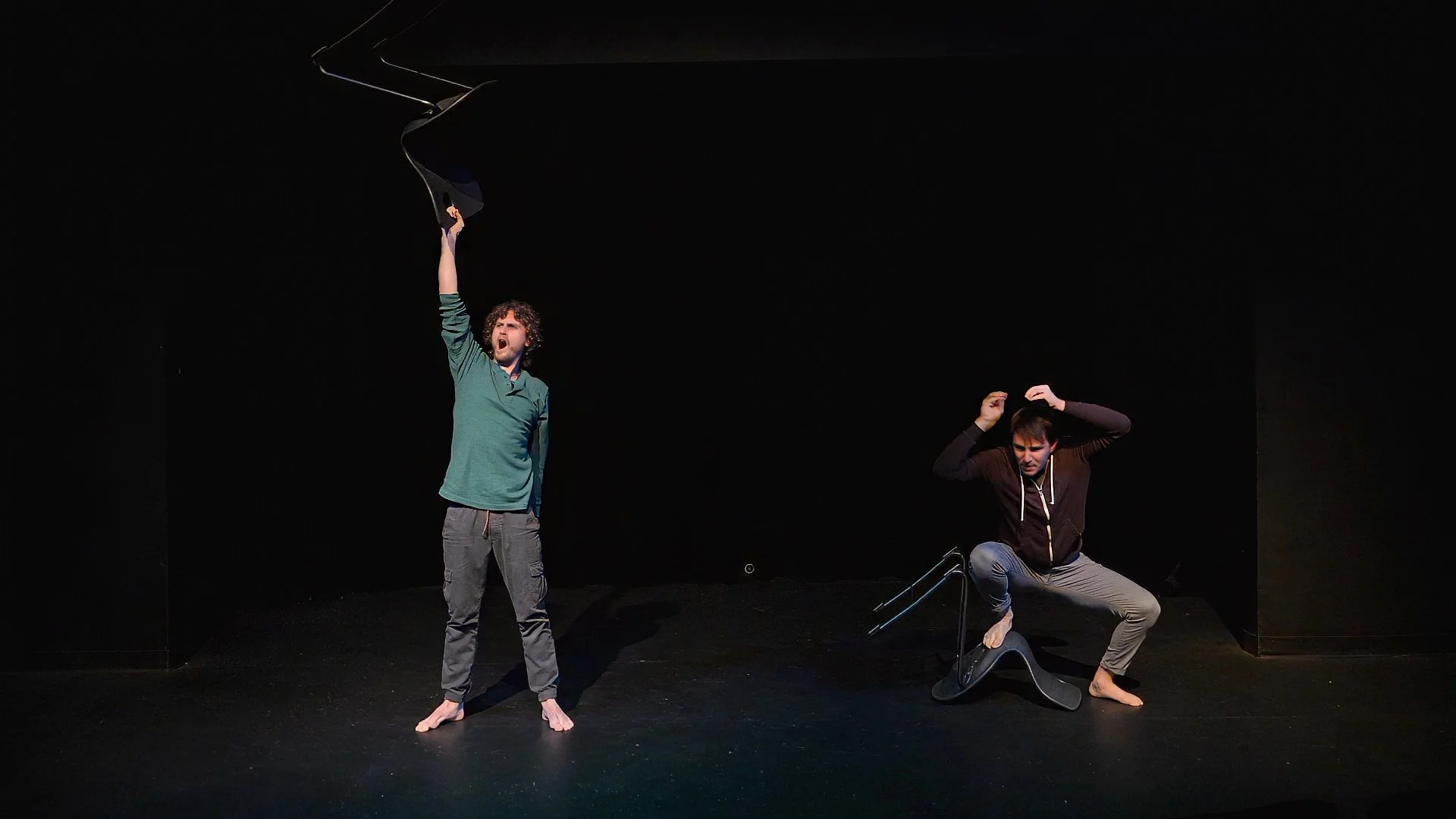
The simplicity of the stage allowed movement, gesture, and the relationships between performers to become central to the visual storytelling.
Tybee Ballet Theatre: Letting Movement and Light Tell the Story
My work with Tybee Ballet Theatre at the Tybee Post Theater required a different approach altogether. For the production From the Minds of Others, I filmed the performance and preserved its individual chapters as an archival record. I also created a shorter highlight film that brought selected moments together into a more condensed visual experience. Unlike the theatrical promotional films, this project didn't rely on interviews with performers to explain what was happening. The choreography, music, movement, lighting, and visual design were already communicating the story. My responsibility was to observe those elements carefully and capture them in a way that respected the original artistic vision. There is a particular discipline involved in filming dance because so much of the expression exists in the relationship between bodies moving through space. A close view may reveal a beautiful gesture, but a wider composition may be necessary to understand the choreography and the way performers interact with one another.
The production itself was visually fascinating. Some sequences featured dancers moving beneath saturated blue lighting, creating an almost otherworldly atmosphere. Other performances unfolded under intense red illumination, with chairs and carefully arranged movements becoming part of the choreography. One of the most interesting sections brought together dance, live saxophone, and painting, allowing several artistic disciplines to exist together on the same stage. As someone who works across photography, painting, music, and filmmaking, I found that particularly engaging. It reminded me how naturally different forms of artistic expression can influence and respond to one another. The painter's gestures, the musician's phrasing, and the dancer's movement were all contributing to a shared experience, each speaking a different creative language.
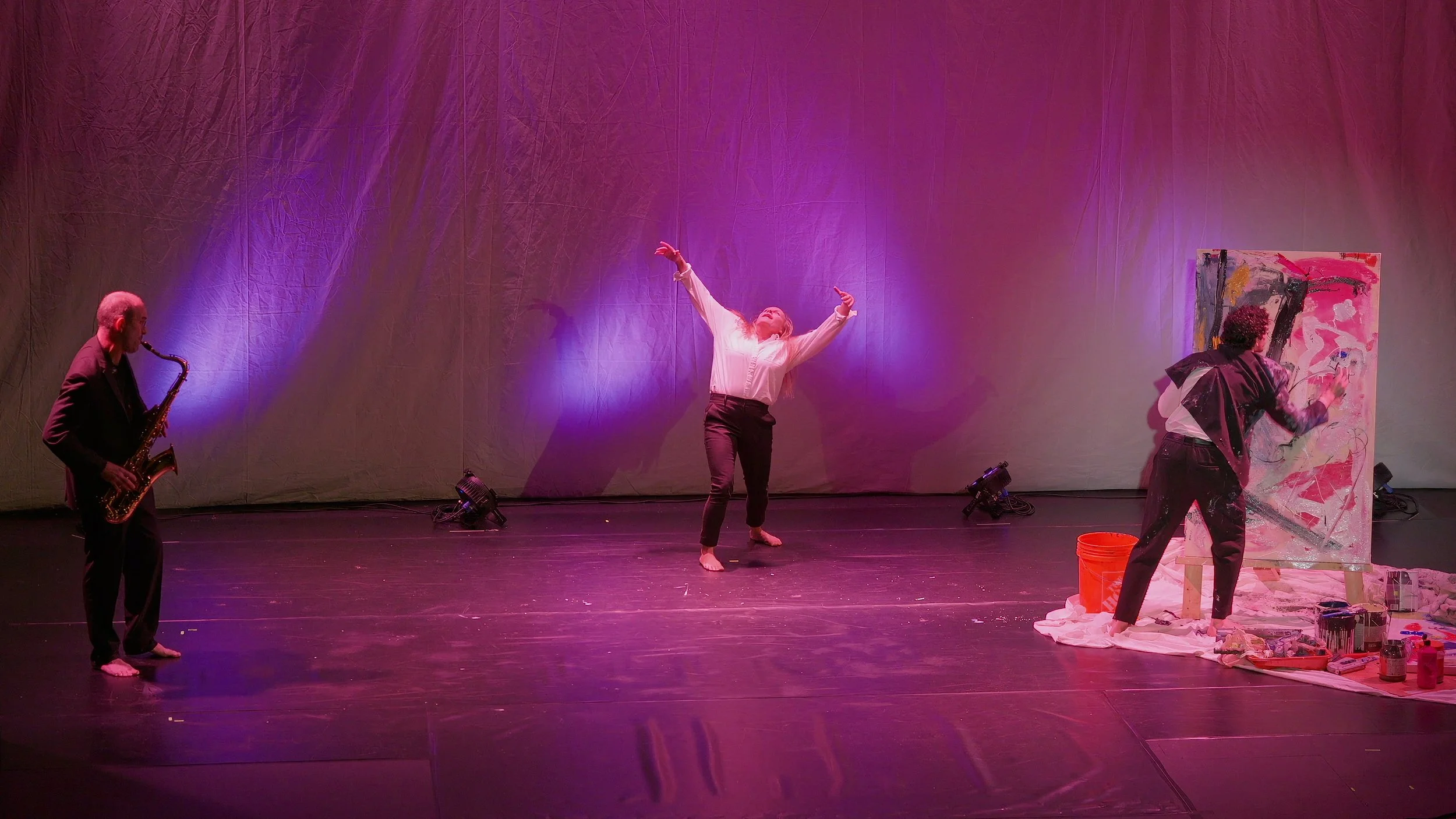
Dance, music, and live painting share the stage during From the Minds of Others, a performance that brought several artistic disciplines together.
Filming a performance like this also presents technical challenges that can become creative decisions. The theatrical lighting may change dramatically within seconds, moving from deep shadows to brilliant color, while performers travel across the stage at unpredictable speeds. It's tempting to approach those situations as problems that need to be corrected, but I've learned that the atmosphere created by the lighting designer is part of the artwork itself. Making everything brighter or more visually conventional might actually diminish the experience. I want to preserve the intention behind the production, even when that means allowing darkness, silhouettes, or saturated color to remain prominent. The archival recording and the highlight film serve different purposes, but both begin with that same respect for the performance. One preserves the sequence and continuity of the original work, while the other creates a shorter interpretation intended to communicate its energy and visual character.
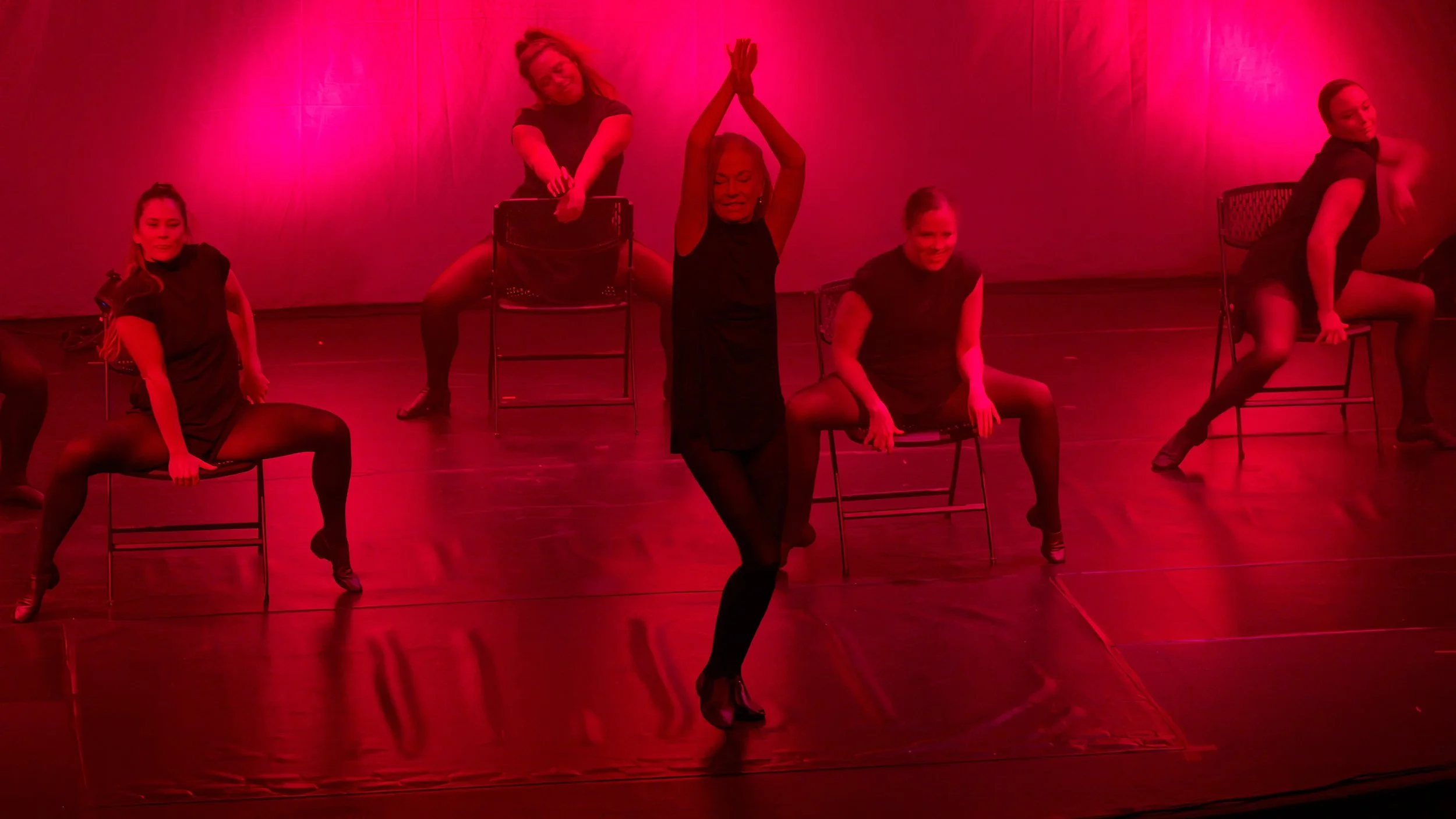
Dramatic red lighting and carefully arranged movement create a striking visual atmosphere during Tybee Ballet Theatre's From the Minds of Others.
Preserving a Performance and Interpreting It Are Two Different Things
Working across these productions has reinforced something I've come to understand throughout my creative career. There is a meaningful difference between documenting an experience and interpreting it. When I'm creating an archival recording of a dance performance, my primary responsibility is to preserve the choreography, staging, and progression of the work as faithfully as possible. The film should serve the artists and the original production, allowing them to revisit what happened on stage. A promotional film invites a different kind of creative involvement. Interviews may be introduced, scenes rearranged, music carefully selected, and individual moments brought together to communicate the essence of a production in just a few minutes. Neither approach is inherently more valuable than the other. They simply answer different needs, and understanding that distinction is part of making thoughtful creative decisions. I've explored similar ideas while photographing live musicians, where understanding rhythm and anticipating a moment can be just as important as the camera itself.
I also believe the ability to move between these approaches comes from having spent so much of my life working in different artistic disciplines. Photography has taught me to recognize the importance of a single moment. Music has given me an appreciation for rhythm, timing, and emotional progression. Painting has encouraged me to think about color, composition, and the relationship between light and shadow. Filmmaking brings those experiences together, adding movement, sound, and the passage of time. When I'm working in a theater, all of those influences become part of the way I see. I'm not consciously thinking about each discipline separately, but I recognize their presence in the decisions I make. A musical phrase may influence the timing of an edit, a theatrical spotlight may remind me of a portrait I once created, or the movement of a dancer may suggest a composition that feels almost like a painting.
The People Behind the Performance
Looking back at these films, I find that what stays with me isn't always the most elaborate scene or the most technically challenging moment. Often it's the expression of an actor speaking about a character, the interaction between performers on an otherwise empty stage, or the collective energy of a group of young people who have spent months working toward something together. Theater and dance are deeply human forms of expression. They require imagination, discipline, vulnerability, and a willingness to create something in front of other people without knowing exactly how it will be received. Perhaps that is why I have always been drawn to photographing and filming performers. Beneath the costumes, scenery, choreography, and dramatic lighting are people trying to communicate something meaningful through their art.
There is also something worth remembering about the temporary nature of live performance. Even when a production runs for several nights or weeks, no two performances are exactly alike. The energy changes, the performers respond to one another differently, and the audience becomes part of an experience that can never be reproduced in precisely the same way. Photography and filmmaking cannot completely recreate what it feels like to be sitting in that theater when everything comes together. But they can preserve a meaningful part of it. They can introduce new audiences to the work, celebrate the artists who made it possible, and allow performers to revisit a creative chapter long after the stage has gone dark.
For me, that is what makes these projects worthwhile. Whether I'm creating a promotional portrait, filming interviews with actors, documenting an original theatrical workshop, or preserving a contemporary dance performance, I'm ultimately interested in the same thing that has guided so much of my creative life: finding the human story within the experience and making something meaningful from what I've been given. The performance may end, the sets may disappear, and everyone involved may move on to the next chapter, but the photographs and films remain. Sometimes they become invitations to discover something new. Other times they become reminders of something wonderful that once existed.
And sometimes, simply preserving that moment is enough.
Bringing Stories Beyond the Stage to Life
Beyond the creative experiences shared here, my work in theater and dance extends to professional promotional films, theatrical photography, cast interviews, and archival performance recordings. Through Maring Visuals, we collaborate with theater companies, schools, dance organizations, and performing artists to create photographs and films that celebrate their work and preserve it for years to come.
Explore Theater & Dance Photography and Filmmaking at Maring Visuals.
Charles Maring | Artist, Photographer, Filmmaker & Creative Director