Beyond the Elevator Pitch: Telling a Brand's Human Story Through Film
Every Business Has a Story Beyond What It Sells
After decades of photographing and filming people, I've come to believe that the most interesting part of a business is often the story behind it. Products and services may be what bring customers through the door, but the people who imagined the business, the experiences that shaped their ambitions, and the relationships that sustain their work are frequently what make it memorable. I've always been drawn to those stories because they offer something a conventional advertisement rarely can: an opportunity to understand the people we're being introduced to.
When celebrity publicist Eda Kalkay approached me about creating a film for Interior Productions, a New York design company led by Victoria Gorelik and her daughter, Emily Gorelik, I was intrigued by the opportunity to tell a story that extended beyond the company's impressive work. Interior Productions specializes in custom upholstery and window treatments, bringing craftsmanship and a sophisticated understanding of materials, texture, and design to the spaces they help create. But behind the business was a mother and daughter whose shared creative interests and professional relationship offered an entirely different dimension to the assignment.
The objective was to introduce the company through film and photography, creating visual material that could support its public relations efforts while communicating the character of the people behind it. I saw an opportunity to tell a story about design, certainly, but also about family, creative ambition, and the relationships that give a business its identity.
Finding the Story Behind Interior Productions
There's something particularly interesting about a family business in which two generations contribute their individual experiences and perspectives to a shared vision. Victoria and Emily brought different qualities to Interior Productions, yet their work was connected by an appreciation for design and the care required to produce something exceptional. Their relationship provided a natural foundation for the film because it offered viewers an opportunity to understand the business through the people responsible for it.
Emily had also gained public recognition through Bravo's Real Girlfriends in Paris, which introduced another dimension to her professional life. Celebrity and television can certainly attract attention, particularly when a publicist is developing opportunities for editorial coverage, but I felt the more interesting story was what Emily was building alongside her mother. There was a creative enterprise here with its own history, personality, and aspirations, and that deserved to be seen on its own terms.
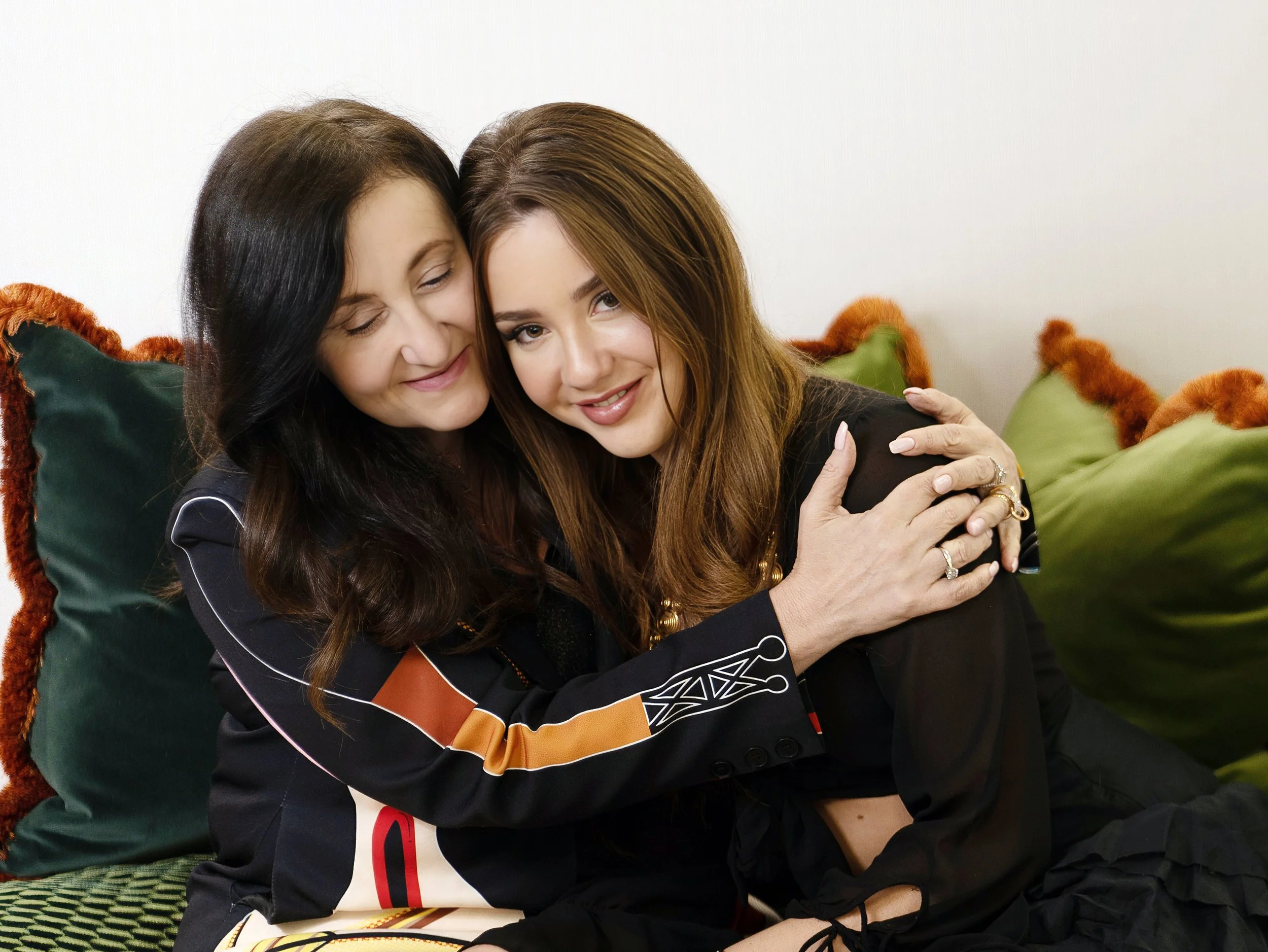
Victoria and Emily Gorelik share a quiet moment together. Their relationship as mother and daughter is central to the story behind Interior Productions, a New York design business built around their shared creative interests.
As a filmmaker, I'm interested in finding the qualities that distinguish one story from another. In this case, the design work gave us a beautiful visual environment, while the relationship between Victoria and Emily gave the film a personal dimension. Bringing those elements together allowed the company to be introduced through both its craftsmanship and the people whose lives were invested in it.
An original brand film featuring Victoria and Emily Gorelik of Interior Productions in New York, exploring the family relationship, creative vision, and craftsmanship behind their design business.
Revealing Character Through Film
One of the challenges of creating a short film about a business is deciding how much information an audience actually needs. Companies naturally want to communicate their experience, services, accomplishments, and competitive advantages, and those details can all be important. But a film becomes much more interesting when the viewer begins to recognize the personalities behind that information and develops a sense of what it might be like to know or work with those people.
I approach these assignments with the understanding that a camera records far more than a person's words. It captures expressions, gestures, the way people respond to one another, and the atmosphere of the spaces they inhabit. A conversation between two people who share a history can reveal qualities that would be difficult to communicate through a carefully written statement about a company's values. My responsibility is to recognize those possibilities and shape them into a story that feels coherent, engaging, and true to the people involved.
With Interior Productions, the goal was to communicate professional expertise without losing the warmth of the family relationship. I wanted the viewer to appreciate the design work while also recognizing the personalities and commitment behind it. The result needed to function as a professional introduction, but I didn't want it to feel like a rehearsed sales presentation. The more naturally we could bring the people and their work together, the more meaningful that introduction could become.
Creative Direction Is the Art of Choosing What Matters
Photography has taught me that a compelling image depends as much on what we choose to exclude as what we place within the frame. Filmmaking builds upon that principle, introducing movement, dialogue, sound, timing, and the sequence in which information is revealed. Every decision influences the viewer's experience, and even a relatively short film involves countless choices about what deserves attention and how the story should unfold.
When I begin thinking about a film, I try to understand what I would find interesting if I knew nothing about the subject. What would make me curious? What would help me understand the people? Which details might reveal something about their character or the quality of their work? Those questions guide the creative process because a film can be beautifully photographed and technically accomplished while still failing to communicate anything memorable.
A business may have years of experience, countless accomplishments, and a tremendous amount of knowledge to share, but a short film cannot contain all of it. Creative direction involves identifying the essential ideas and finding a visual language that allows them to emerge naturally. In the case of Interior Productions, I felt the combination of design craftsmanship and the mother-daughter relationship offered a particularly engaging way to introduce the company.
Portrait Photography and the Power of Environment
Alongside the film, I photographed Emily in her workspace, creating portraits that could complement the moving images and provide additional material for publicity and editorial use. I've always enjoyed environmental portraiture because a person's surroundings can contribute something meaningful to the photograph. The spaces where people work, create, and make decisions often reveal aspects of their personality that might be lost against a conventional studio background.
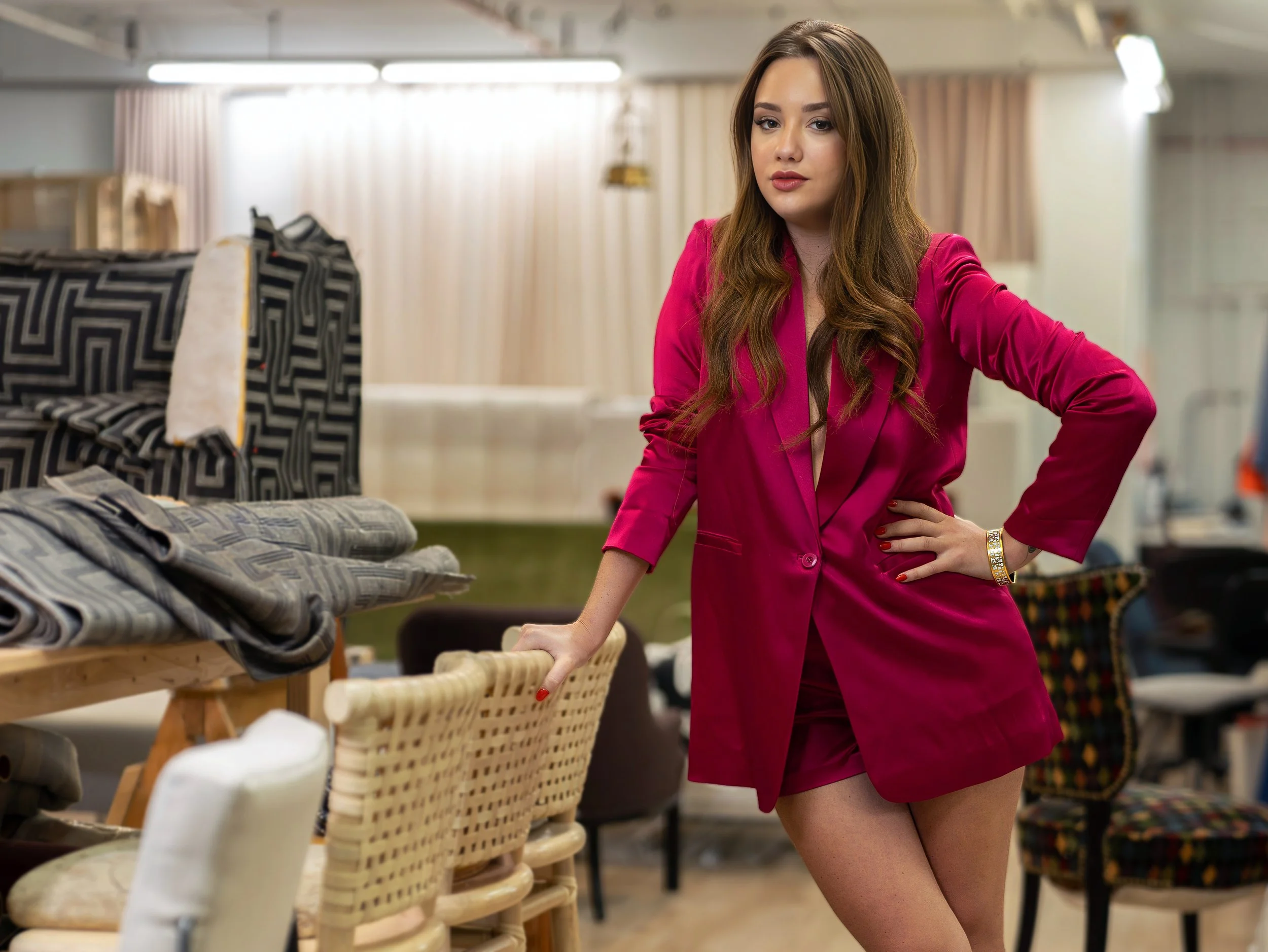
mily Gorelik photographed among the materials and furnishings of Interior Productions. The environment becomes part of the portrait, connecting her personal style with the creative business she shares with her mother.
A portrait in a creative workspace offers an opportunity to consider the relationship between the individual and the world they've helped build. The composition, lighting, expression, and surrounding details all contribute to that impression. I want the photograph to be visually compelling, of course, but I also want it to communicate something about the person beyond their appearance.

Emily Gorelik photographed by Charles Maring at Interior Productions in New York. The environmental portrait connects her personal presence with the creative setting of the family design business.
Photography also serves a different purpose from film in the world of public relations. A portrait can introduce someone instantly, accompany an interview, appear in an editorial feature, or become the image associated with a person's professional identity. While a film develops a story over time, a photograph must communicate through a single moment. I find the relationship between those two disciplines especially rewarding because each offers a different way of seeing and understanding the same subject.
When I create both photography and film for an assignment, I'm thinking about how the work can complement itself. The photographs don't need to reproduce the film, and the film doesn't need to behave like a collection of moving portraits. Each should take advantage of its own strengths while contributing to a consistent impression of the people and the business.
Creating a Story That Can Travel
Working with a publicist introduces another interesting consideration: the finished work may be encountered by audiences in many different settings. A film might appear on a company's website, accompany a media introduction, be shared through social platforms, or help establish a relationship with a prospective collaborator. The photographs may find their way into articles, interviews, professional profiles, or other editorial opportunities. Each use places the work in a slightly different context, yet the underlying story should remain recognizable.
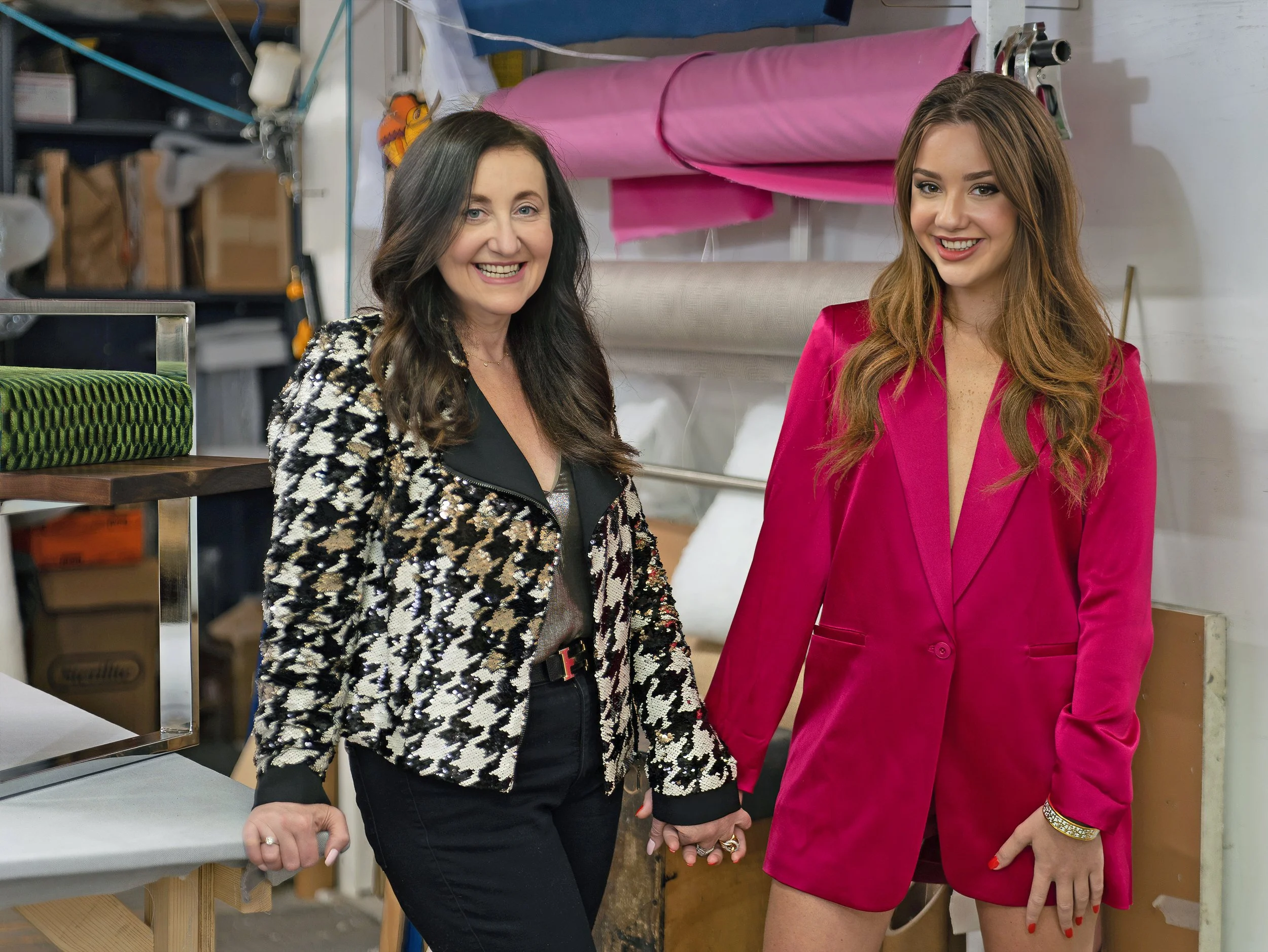
Victoria and Emily Gorelik at Interior Productions. Their shared creative vision and family relationship are at the center of the film and photography project, bringing a personal dimension to the company's public relations story.
I think this is one reason authentic storytelling is so valuable in public relations. A promotional message can become dated as a company introduces new products or changes its marketing priorities, but a thoughtful introduction to the people behind the business often has a longer life. Their personalities, experiences, and creative values provide a foundation that can remain relevant even as the company evolves.
For Interior Productions, the film and portraits offered complementary ways to introduce Victoria and Emily to audiences who might not otherwise have known their story. The design work established their professional world, while the personal relationship helped give that world character. Together, those elements created something more substantial than a description of services.
Why the Human Story Still Matters
We live in a time when creating visual content has become easier and faster than I could have imagined when I began my career. Cameras are extraordinary, editing tools are increasingly sophisticated, and emerging technologies continue to expand what's possible. I embrace many of those developments in my own work, but I also believe they make creative judgment more important. Having the ability to produce an endless amount of content doesn't necessarily mean we have something worth saying.
The challenge remains understanding what makes a story meaningful and finding a way to communicate it with sensitivity, clarity, and imagination. Whether I'm photographing a wedding, creating a film for a corporation, working with an artist, or exploring a new creative technology, I'm ultimately interested in people and the experiences that shape their lives. The circumstances change, but that curiosity has remained remarkably consistent throughout my career.
The Interior Productions assignment reminded me why I enjoy this kind of work. What began as a public relations film about a New York design company became an opportunity to explore the relationship between a mother and daughter, their shared appreciation for craftsmanship, and the business they were building together. The film and photographs introduced their professional world, but it was the personal story behind that world that made the project particularly interesting to me.
I believe the best brand storytelling begins with a genuine interest in the people involved. When we take the time to understand who they are, what matters to them, and what makes their experience distinctive, we have a much better chance of creating something that resonates beyond the moment it was produced.
That's the kind of work I continue to find meaningful, and it's one of the reasons I still enjoy picking up a camera after all these years.
Explore more of my work in Creative Direction & Film, where I bring photography, filmmaking, and an artist's perspective to stories for businesses, organizations, and individuals.
Charles Maring | Artist, Photographer, Filmmaker & Creative Director