Giving Technology a Heart
Finding the Human Story Behind the Machine
How do you make a robot feel approachable? How do you take something built from electronics, software, and engineering and create a film that helps people imagine it becoming part of their everyday lives?
These were some of the questions I considered while developing a series of scripted films exploring the possibilities of assistive robotics. The technology itself was fascinating, but I wasn't interested in simply demonstrating features or explaining how the machines worked. I wanted to create stories that would help people understand how technology might fit into familiar human experiences.
As a photographer, filmmaker, and creative director, I've always been drawn to the relationship between technology and humanity. Cameras, lighting equipment, microphones, and editing software are extraordinary tools, but they don't create meaning on their own. That comes from the ideas we develop, the people we work with, and the decisions we make throughout the creative process.
For this project, I wanted to explore situations that families could immediately recognize. A child listening to a bedtime story. A parent encouraging a daily routine. Small moments that might seem ordinary but carry considerable meaning in everyday life.
The challenge was to bring those ideas to life through scripted filmmaking, creating believable interactions between people and machines while maintaining the warmth and familiarity of the experiences themselves.
A Bedtime Story About More Than a Robot
An original scripted film exploring how a robot might become part of a familiar bedtime ritual, bringing technology into a moment associated with imagination, comfort, and connection.
The first film centered on a robot reading a bedtime story to a child. I was attracted to the simplicity of the idea because it introduced an unfamiliar technology through an experience nearly everyone understands. Rather than presenting a technical demonstration, the story invited viewers to imagine the robot participating in a quiet family ritual.
Developing a scene like this requires thinking carefully about the relationship between the characters, the environment, and the technology. The robot needs to feel like a natural part of the interaction, while the people remain the emotional center of the story. I have to consider how the scene begins, how the interaction develops, and what I want the audience to understand or feel when it ends.
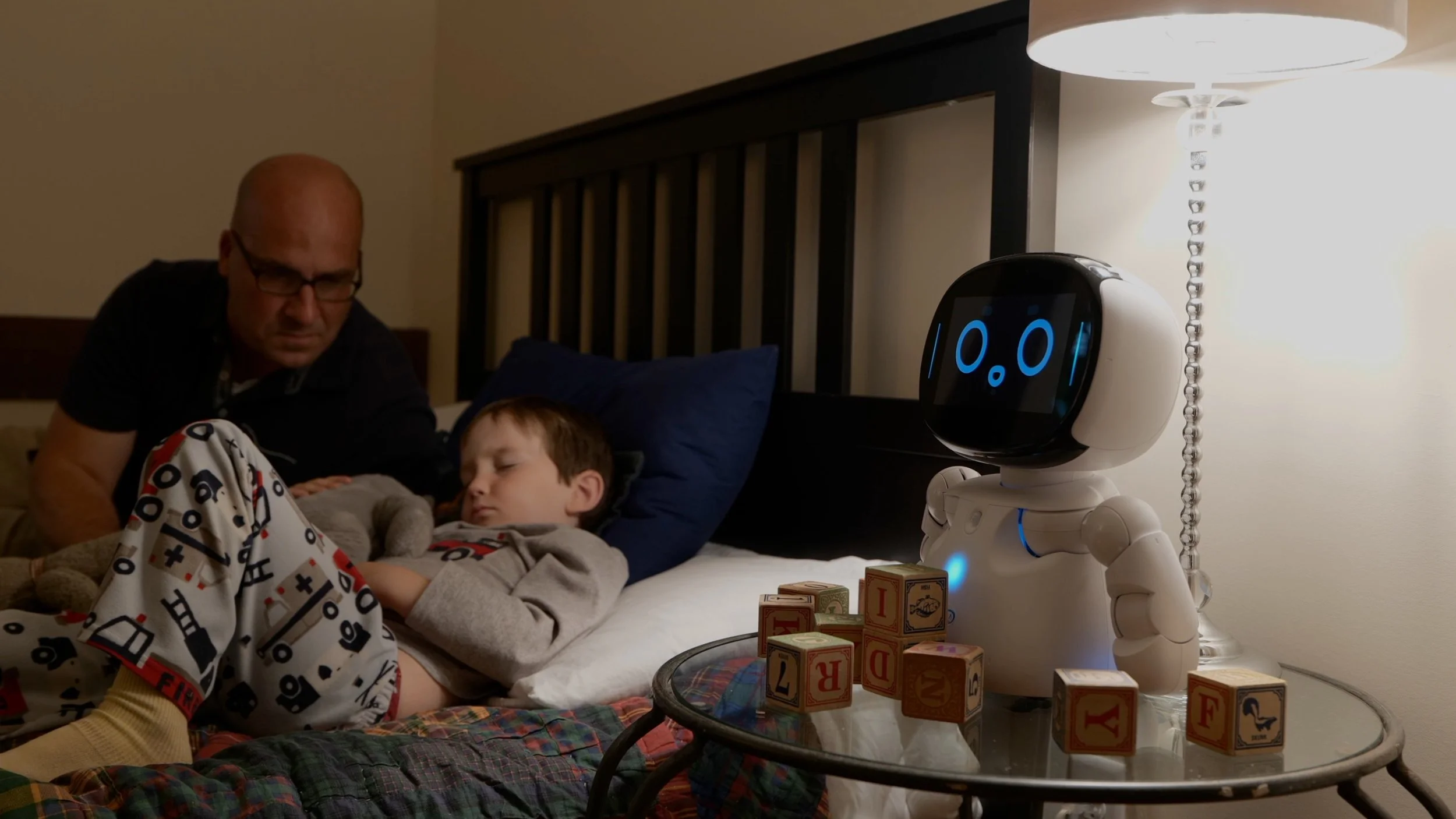
A bedtime story brought to life through scripted filmmaking. The warmth of the bedside lamp, the darker surroundings, and the relationship between the child, adult, and robot create an intimate atmosphere while keeping the technology central to the narrative.
This is scripted filmmaking rather than documentary work. The dialogue, actions, and emotional progression are developed intentionally, and the scene is directed to communicate a particular idea. But even when a story is carefully planned, the finished film needs to feel believable. The audience should become interested in the interaction itself rather than the mechanics of how it was created.
That's where creative direction becomes especially important. A concept may sound compelling on paper, but transforming it into a film requires a combination of storytelling, visual judgment, technical knowledge, and the ability to communicate effectively with the people involved.
Cinematic Filmmaking in Real-World Locations
One of the most interesting challenges of these productions is that they aren't filmed on controlled soundstages. We're working in actual homes and everyday environments, where the architecture, available light, furnishings, reflective surfaces, and ambient sounds all influence the decisions I make.
I begin by observing the light that already exists. Windows may provide beautiful directional illumination, while practical lamps can establish warmth and atmosphere. Sometimes those existing sources are enough. Other times, I introduce additional lighting to shape a face, create separation between subjects, or bring attention to an important part of the scene.
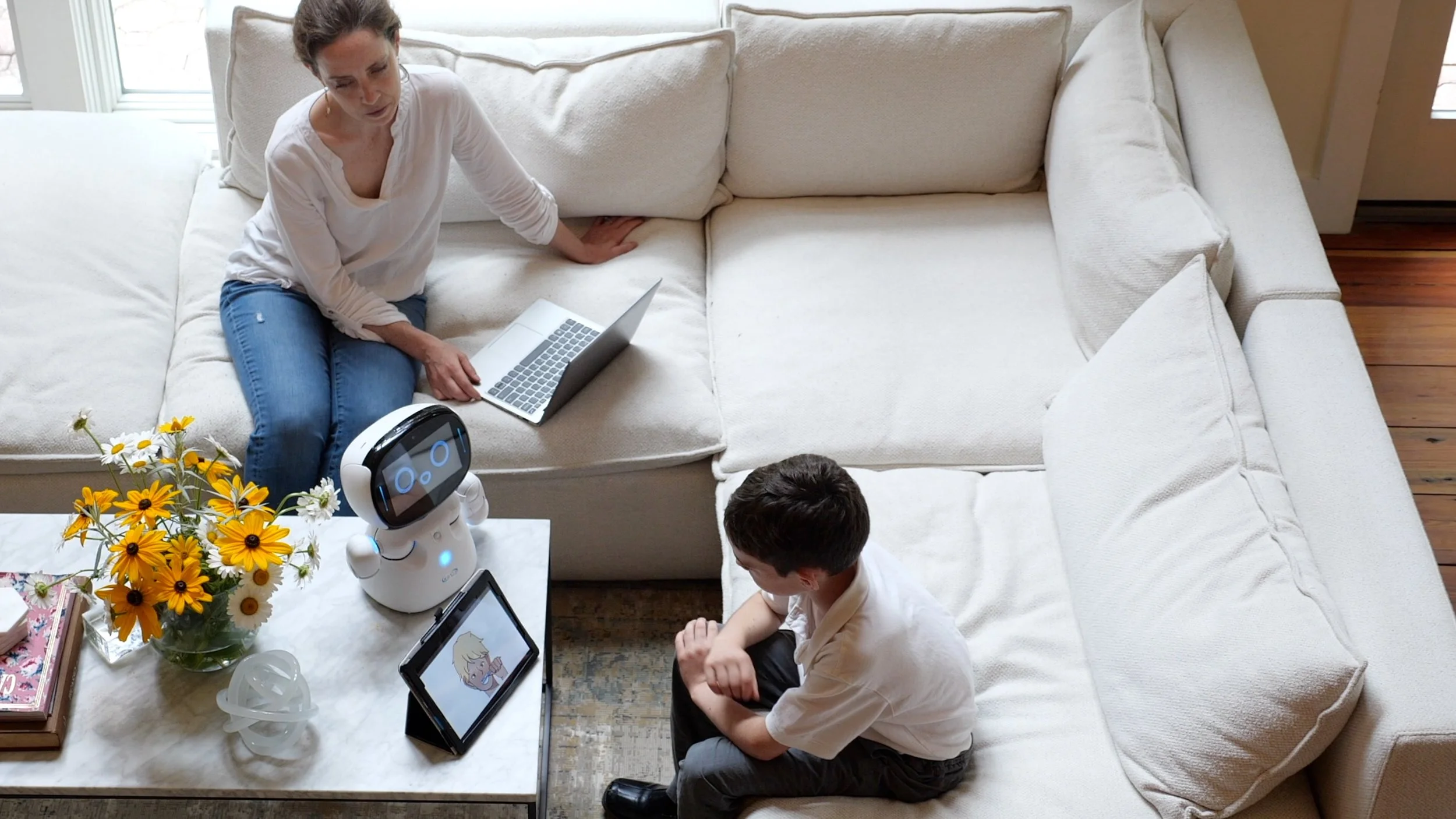
A scripted family interaction filmed in a real home. Working with existing window light, composition, and the placement of the performers and robot helps create a scene that feels natural rather than staged.
The objective isn't simply to make everything brighter. It's to create lighting that feels natural to the environment while giving the image the depth and character I want. An additional light might be placed to suggest illumination coming from a window or to subtly enhance the warmth of a room. I may need to soften shadows, control contrast, or balance different color temperatures so that the finished scene feels cohesive.
Working with robots adds another layer of complexity. Their screens and reflective surfaces can reveal lights, windows, cameras, and other elements that would ordinarily remain unnoticed. A light that works beautifully on a person's face might create an unwanted reflection across the robot's screen. Changing the camera position to solve one problem can introduce another.
These situations require constant observation and adjustment. I have to consider the relationship between the subjects, the camera, and every light source in the environment. Sometimes moving a light a few inches makes the difference. Other times, changing the angle of the camera or modifying the surrounding light produces a better result.
I enjoy that process because it draws directly on my experience as a photographer. Learning to recognize light, understand how it behaves, and make thoughtful decisions under changing conditions has been central to my creative life. Filmmaking builds on those instincts while introducing movement, performance, sound, and continuity.
Capturing Natural Sound Without Revealing the Production
Sound is another essential part of creating believable films, and it presents challenges that audiences rarely consider. Dialogue needs to be clear, the environment needs to feel authentic, and the recording equipment should remain invisible.
In a real home, there may be background noise, hard surfaces that create reflections, or limited opportunities to position microphones. I have to determine how to capture voices effectively without placing equipment where it will appear in the frame or interfere with the interaction between the actors and the robot.
The way a scene is staged can influence how sound is recorded. A camera angle that works beautifully for the composition may make microphone placement more difficult. A change in blocking might improve the performance but introduce unwanted noise or move someone farther from the microphone. These decisions are interconnected, and they require attention throughout the production.
Good sound should support the illusion that we're simply witnessing a moment unfold. When the dialogue feels natural and the recording is clean, viewers can concentrate on the story. They don't need to think about where the microphones were hidden or how the audio was captured.
That invisibility is part of the craft.
Photographing the Personality of a Machine
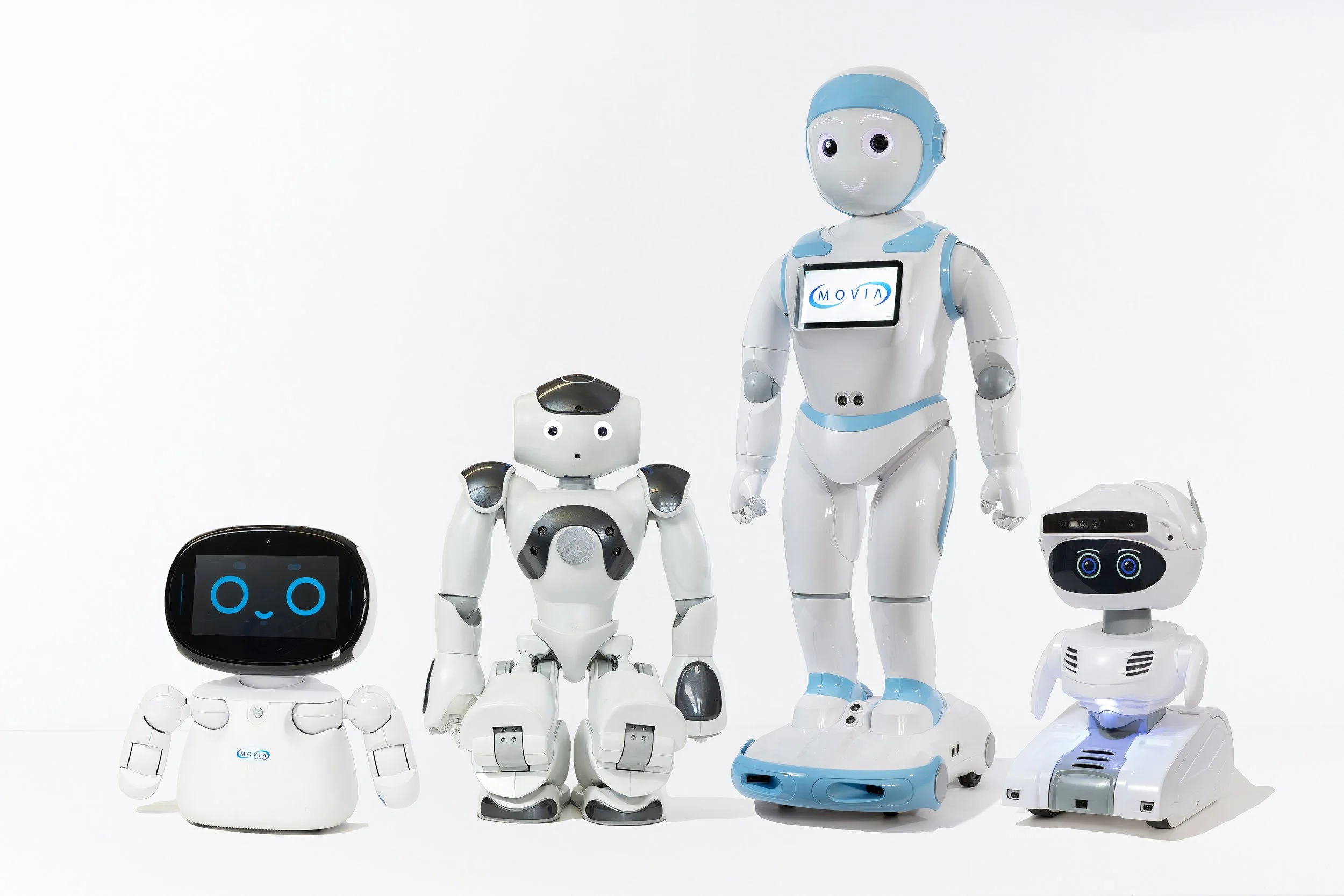
Exploring the visual character of robotics through photography, with careful attention to lighting, reflections, composition, and the details that influence how we perceive a machine.
The project also involved photographing the robots themselves, which presented a different but related set of creative considerations. Unlike a human portrait, where expression and gesture can reveal personality, a robot communicates much of its character through its design, proportions, screen, and relationship to the surrounding environment.
Lighting becomes particularly important with reflective surfaces. The position of a highlight can reveal the shape of an object beautifully, while an unwanted reflection can obscure its design. I have to think carefully about the direction, size, and quality of the light, as well as the position of the camera and the background.
My approach to photographing technology isn't entirely different from photographing people. In both cases, I'm looking for a way to communicate something beyond the subject's appearance. With a person, that might be a fleeting expression or gesture. With a machine, it may be the way light reveals its form or how its placement within a composition suggests its purpose.
The goal is to create photographs that are visually compelling while remaining faithful to the subject. Good commercial photography should help people see and understand something, not simply make it look impressive.
Directing Children and Adults for Authentic Performances
Perhaps one of the most important aspects of these films is working with the people in front of the camera. These are scripted productions involving both children and adults, and my responsibilities extend far beyond choosing lenses, arranging lights, or recording the action.
I have to communicate the storyline, explain what each scene is intended to accomplish, and help everyone understand what their character is experiencing. It's not enough to tell someone where to stand or what words to say. I need to help them understand why they're saying those words, how they might feel in that moment, and what kind of response will make the interaction believable.
A line of dialogue can be delivered in several ways, each changing the emotional meaning of a scene. A slight hesitation, a change in tone, or a natural reaction can make an enormous difference. Part of directing is recognizing those subtleties and helping the people I'm working with find a performance that feels right for the story.
Working with children requires a particularly thoughtful approach. Children don't necessarily respond to direction in the same way adults do, and I have to adapt how I communicate based on their age, personality, and comfort level. Sometimes the best direction is simple and playful. Other times, it involves demonstrating an action, explaining the situation in familiar terms, or allowing the child a little freedom within the scene.
Patience is essential. I want children to feel comfortable and engaged rather than overwhelmed by cameras, lighting equipment, and unfamiliar expectations. Creating that environment is part of my responsibility as a director, and it often leads to more natural performances.
Adults bring their own considerations, especially when they aren't experienced actors. Some people are immediately comfortable in front of a camera, while others need more guidance and reassurance. I find that helping someone understand the intention behind a scene is often more effective than asking them to repeat a line or movement mechanically.
At the same time, the performances have to work within the technical realities of the production. Someone may need to adjust their position to avoid a reflection on the robot's screen, repeat an action for another camera angle, or deliver dialogue in a way that allows us to capture clean audio. My job is to manage those requirements without allowing the technical process to overwhelm the human interaction.
Directing is as much about listening, observing, and communicating as it is about making visual decisions. When the people in front of the camera understand the story and feel comfortable participating in it, the finished film becomes considerably more convincing.
Finding Meaning in Everyday Routines
The second film explored how robotics might encourage children through familiar daily activities, including something as ordinary as brushing their teeth.
I was interested in that concept because small routines can represent important steps toward independence. What may seem like a simple activity to an adult can require patience, encouragement, and repetition for a child. These are experiences that families recognize, and they provide a meaningful way to explore the possibilities of assistive technology.
Rather than approaching the film as a demonstration of the robot's capabilities, I developed the story around the interaction itself. The child needed to remain central to the scene, with the robot offering encouragement as part of the experience. The objective was to communicate a possibility through a familiar situation rather than overwhelm the audience with technical information.
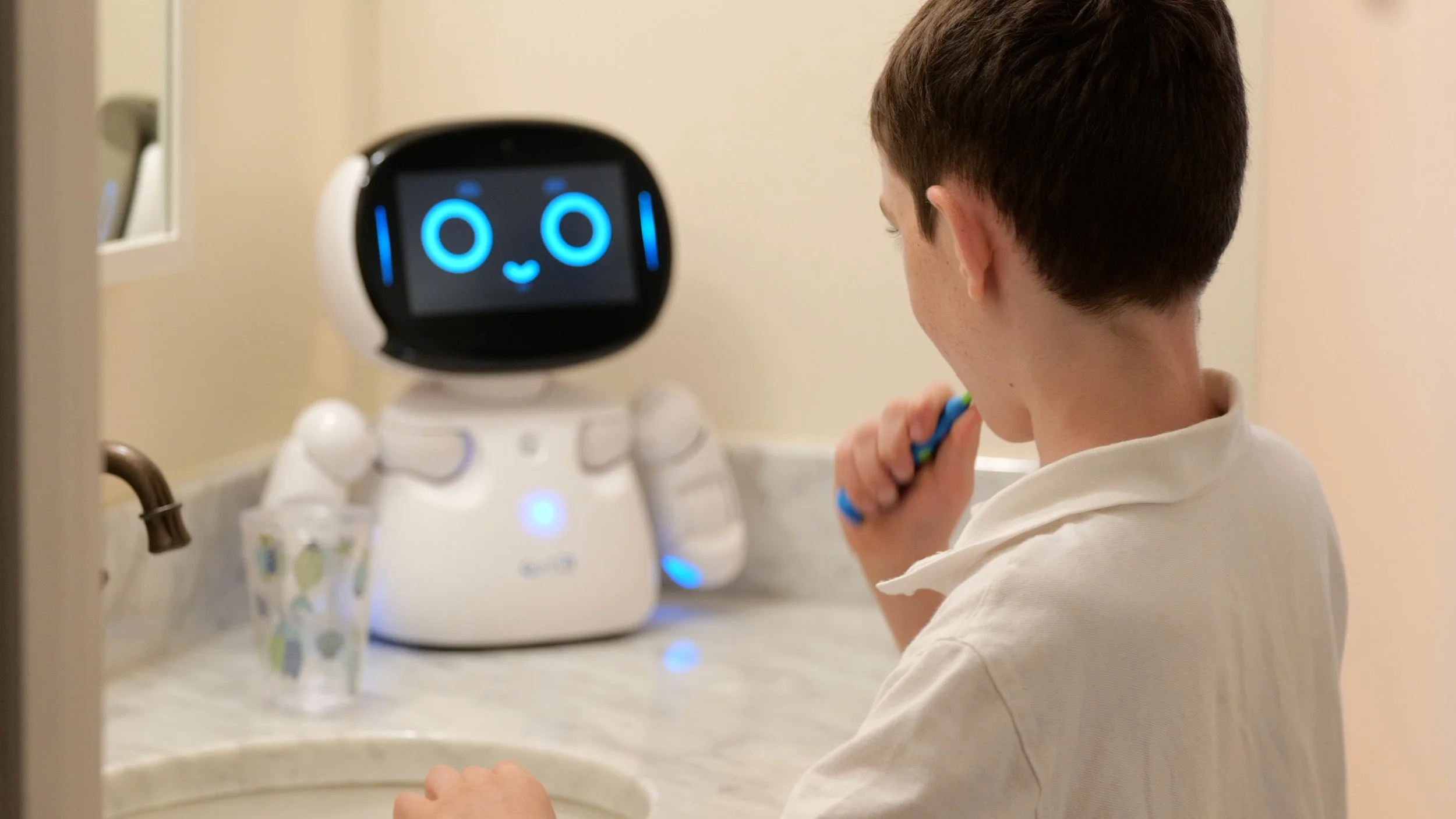
An everyday routine becomes the subject of a scripted film exploring how assistive robotics might encourage children. Directing the interaction, controlling reflections on the robot's screen, and balancing the bathroom lighting all contribute to making the scene believable.
As with the bedtime story, the scenes were scripted and directed. We were creating an imagined example of how the technology might be used, not documenting a spontaneous interaction or establishing a particular outcome. I believe that distinction matters. Scripted storytelling allows us to explore possibilities, but it should remain clear about what the audience is seeing.
The challenge was to make the interaction feel natural while balancing the performances, camera placement, lighting, reflections, and sound. All of those elements had to work together to create a scene that felt approachable and believable.
A scripted film exploring how assistive robotics might encourage children through familiar daily activities, using storytelling to make an emerging technology easier to understand.
Creative Direction Is the Sum of a Thousand Decisions
When someone watches a finished film, they see a story unfolding. They don't necessarily see the hundreds of decisions required to make that experience possible.
Before filming begins, I'm thinking about the concept, the script, the location, the people involved, and how the story should feel. During production, those considerations become more immediate. I'm directing performances, choosing camera positions, evaluating light, controlling reflections, recording sound, and making adjustments as circumstances change.
These responsibilities don't happen independently. They constantly influence one another. Moving an actor may improve the composition but change the lighting. Adjusting the lighting may introduce a reflection. Changing the camera angle may affect where a microphone can be placed. A wonderful spontaneous expression may require me to reconsider how the next shot should unfold.
Experience helps me recognize these relationships and make decisions without losing sight of the story. I've spent decades photographing people and events in environments that rarely offer perfect conditions. That experience has taught me to observe carefully, anticipate challenges, and find creative solutions while remaining attentive to the people around me.
Filmmaking brings those instincts together with the additional disciplines of directing, movement, dialogue, sound, and editing. I find that each creative discipline informs the others. My experience as a photographer influences how I see light and composition. My experience as a musician influences how I think about rhythm, pacing, and emotional progression. And my work as a filmmaker brings those perspectives together in service of a larger narrative.
The goal isn't to call attention to the complexity of the production. It's to make that complexity disappear so the audience can become immersed in the story.
Technology Changes, but the Human Story Remains
I've spent much of my creative life working with tools that continue to evolve. Cameras have become more sophisticated, digital filmmaking has opened new creative possibilities, and artificial intelligence is changing how we imagine and produce visual content. I find those developments exciting because they expand what artists and storytellers can accomplish.
But I've never believed that technology alone makes something meaningful.
A camera can record a beautiful image, but it takes observation and judgment to recognize what deserves to be photographed. Lighting equipment can illuminate a room, but it takes an understanding of atmosphere to make the scene feel believable. A script can describe an interaction, but it takes communication, patience, and direction to bring that interaction to life.
When I look back at these robotics films, what stays with me isn't simply the technology. It's the familiar experiences we chose to explore. A child listening to a bedtime story. A moment of encouragement during an everyday routine. The possibility that a new tool might find a useful place within ordinary family life.
Those stories gave the technology context, and the filmmaking gave those ideas a visual and emotional language.
I believe that principle applies across nearly everything I create, whether I'm photographing people, directing a scripted commercial, documenting real experiences, or experimenting with emerging creative tools. The equipment and techniques may change, but the most important questions remain remarkably consistent. What are we trying to communicate? Why does it matter? And how can we create something that genuinely connects with people?
Technology Changes, but the Human Story Remains
I believe that principle applies across nearly everything I create, whether I'm photographing people, directing a scripted commercial, documenting real experiences, or experimenting with emerging creative tools. The equipment and techniques may change, but the most important questions remain remarkably consistent. What are we trying to communicate? Why does it matter? And how can we create something that genuinely connects with people?
Technology gives us new possibilities. Our humanity gives those possibilities purpose.
That belief has become central to my work beyond photography and filmmaking. It's also at the heart of my Human First keynote, where I explore the relationship between creativity, human judgment, and emerging technology. As our tools become increasingly powerful, I believe the qualities that make us human become more valuable, not less.
Explore more of my work in Creative Direction & Film, where photography, scripted filmmaking, documentary storytelling, and emerging technologies come together to bring ideas to life.
Charles Maring
Artist, Photographer, Filmmaker & Creative Director