Why Creativity, Judgment, and Human Connection Matter More in the Age of AI
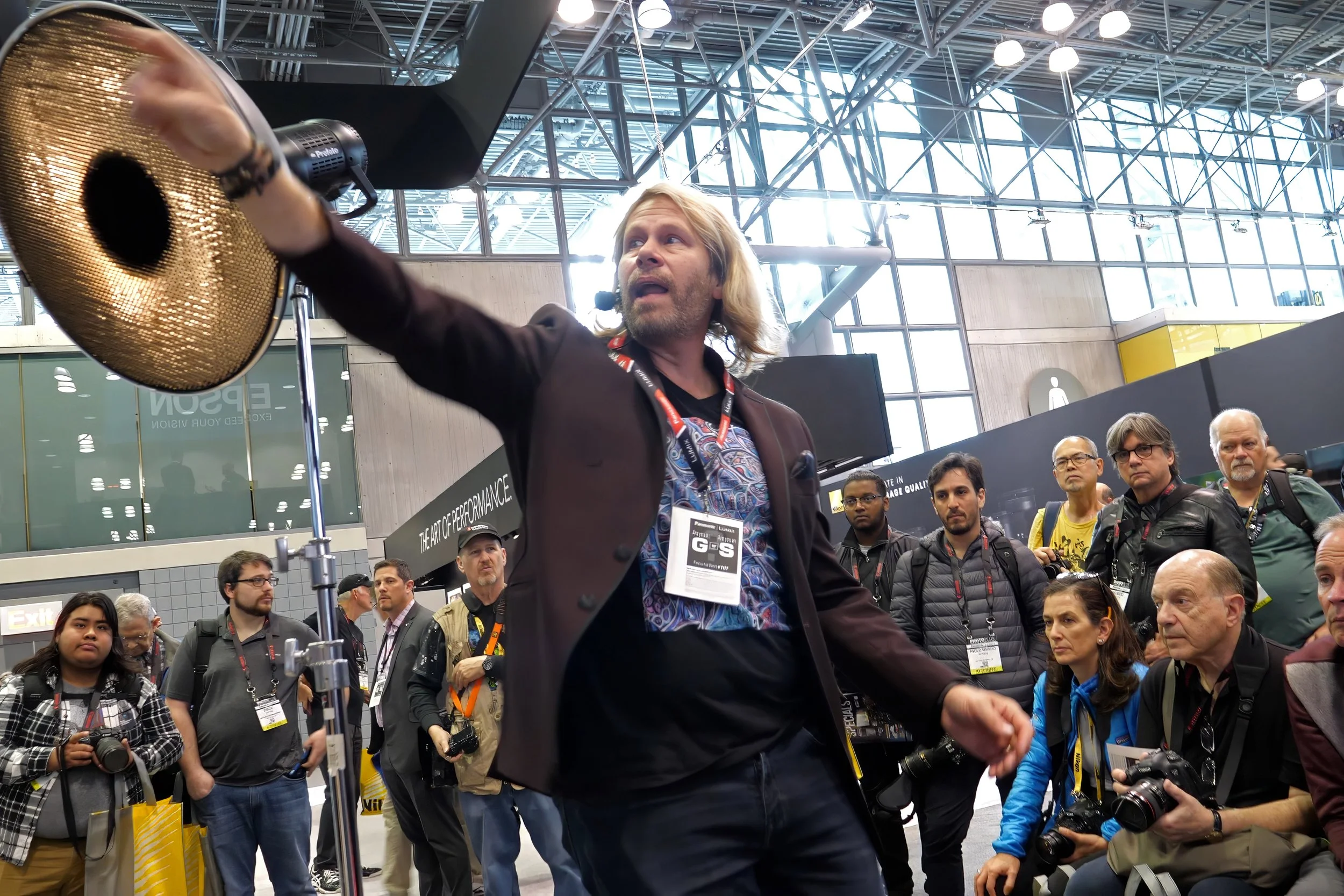
Charles Maring demonstrates the art of lighting during a live photography presentation, sharing how creative judgment, technical expertise, and human connection work together to create meaningful images.
I've spent much of my career standing in front of audiences, teaching the art of photography, demonstrating lighting, and exploring the decisions that transform an ordinary image into something meaningful. I’ve presented numerous times at photography conferences, surrounded by people eager to understand the latest cameras, lighting equipment, and creative techniques. Sometimes I'd be adjusting a light while explaining how a subtle change in direction could transform someone's appearance. Other times, I'd be photographing a subject in front of an audience, discussing composition, expression, and the relationship between technical decisions and the emotional qualities of a photograph. The equipment was always part of the conversation, but what interested me most was helping people understand why we make certain choices in the first place.
Looking back, those experiences seem particularly relevant today. I've spent decades navigating technological changes that have fundamentally reshaped photography, filmmaking, music production, and nearly every other creative discipline. I've watched film give way to digital cameras, darkrooms evolve into sophisticated editing systems, and professional production capabilities become available to people working from their homes. Each transformation introduced remarkable opportunities, along with familiar concerns about what technology might replace and whether the skills we had spent years developing would remain valuable. Yet through every transition, I kept returning to the same realization: the tools were changing, but the importance of creative judgment, imagination, and human connection remained.
Artificial intelligence is now accelerating that transformation on an entirely different scale. We can generate images, develop concepts, compose music, explore visual environments, and create moving pictures with capabilities that would have seemed extraordinary only a few years ago. I've embraced many of these tools in my own creative work, and I find the possibilities genuinely exciting. But the more I experiment, the more convinced I become that our greatest advantage isn't simply our ability to produce something. It's our ability to understand what matters, recognize what deserves our attention, and make thoughtful decisions about what we want to create. Technology can expand our capabilities, sometimes dramatically, but capability and judgment are not the same thing.
When Possibility Becomes Almost Unlimited
For much of my career, creative work involved navigating limitations. Film was expensive, production equipment was specialized, and experimentation often required considerable investments of time and money. If I wanted to explore a visual concept, I might need to build a set, arrange a location, hire talent, coordinate lighting, or spend hours developing an illustration. Those constraints could be frustrating, but they also demanded preparation and thoughtful decision-making. We had to imagine what we wanted to accomplish before committing our resources, and the process encouraged us to consider which ideas were worth pursuing.
Artificial intelligence has changed that relationship in remarkable ways. A concept that once required weeks of preparation can sometimes be explored in minutes. We can experiment with atmosphere, visualize imaginary environments, develop storyboards, and discover possibilities that might never have occurred to us through conventional methods. As someone who enjoys exploring ideas across photography, painting, music, and filmmaking, I find that freedom extraordinary. Yet abundance introduces an entirely different challenge. When thousands of possibilities are available, how do we recognize the few that are worth pursuing? When almost anyone can produce something visually impressive, what separates an interesting image from one that communicates something meaningful?
These questions extend well beyond the creative arts. Businesses are discovering that the ability to generate presentations, marketing concepts, communications, and strategic possibilities doesn't automatically tell them which ideas deserve attention. More information doesn't necessarily produce greater understanding, and faster production doesn't guarantee better decisions. As technology makes more possibilities available to more people, our ability to evaluate, prioritize, and choose becomes increasingly important. In some ways, the challenge is no longer simply producing enough ideas. It's developing the judgment to recognize which ones have value.
The Difference Between Generating and Creating
I've explored this distinction through my work in creative direction and filmmaking including AI-assisted techniques as seen in this Fourth of July film. The project was intended to evoke emotion, memory, and a sense of shared experience, using cinematic imagery to communicate something that felt familiar and meaningful. Artificial intelligence allowed me to explore an enormous range of visual possibilities, from atmospheric environments to expressive moments that would have been difficult to produce through conventional methods. Some of the results were extraordinary, while others were technically impressive but emotionally empty. I could generate variations almost endlessly, yet having more material didn't necessarily bring me any closer to a finished film.
The real work began when I started making the decisions that have always been central to filmmaking. Which images belonged together? What should the audience feel? Where should the pacing accelerate, and where should the story have room to breathe? How should the music influence the sequence, and which images, however beautiful, were ultimately unnecessary? Those questions required interpretation, experience, restraint, and a willingness to reject possibilities that didn't serve the larger idea. The finished film emerged through selection, editing, sound, rhythm, and countless judgments about what contributed to the emotional experience.
Fourth of July, an AI-assisted cinematic film created and directed by Charles Maring. Thousands of visual possibilities informed the process, but human judgment, editing, music, and storytelling shaped the finished work.
This was an early experiment and AI gave me thousands of possibilities. However, it couldn't tell me which ones mattered.
That experience reinforced something I've learned throughout my career: creativity isn't measured by the number of ideas we produce. It's reflected in what we choose to do with them. Sometimes the most important decision is removing something beautiful because it distracts from the story. Sometimes it's recognizing an unexpected possibility that deserves further exploration. And sometimes it's knowing when an idea has become complicated enough and needs to return to something simple and human. These decisions are rarely glamorous, but they are often what separates an interesting experiment from a meaningful piece of work.
The Experience Behind the Decision
When I photograph someone, I bring more to the assignment than a camera and an understanding of lighting. I bring decades of experience observing people, interpreting expressions, anticipating moments, and recognizing when something authentic is happening. The technical aspects of photography matter enormously, but they exist in service of something larger. A beautifully illuminated portrait can still feel lifeless if the person in front of the camera feels uncomfortable or disconnected. Sometimes the most important decision isn't changing the lighting or adjusting the camera. It's having a conversation, offering encouragement, or recognizing that someone needs a little time before they're ready to be photographed.
I've demonstrated these principles countless times while teaching photography and filmmaking to professional audiences. During live demonstrations, I might begin by positioning a light and explaining how its direction, size, or distance affects the subject. But the most interesting part of the experience often comes when we begin working with the person being photographed or filmed. The technical decisions become intertwined with communication, observation, and the ability to respond to something unexpected. A subtle adjustment in posture, a spontaneous expression, or a moment of genuine connection can transform the photograph. Those moments aren't simply the result of equipment. They emerge through the relationship between the photographer, the subject, and the environment.
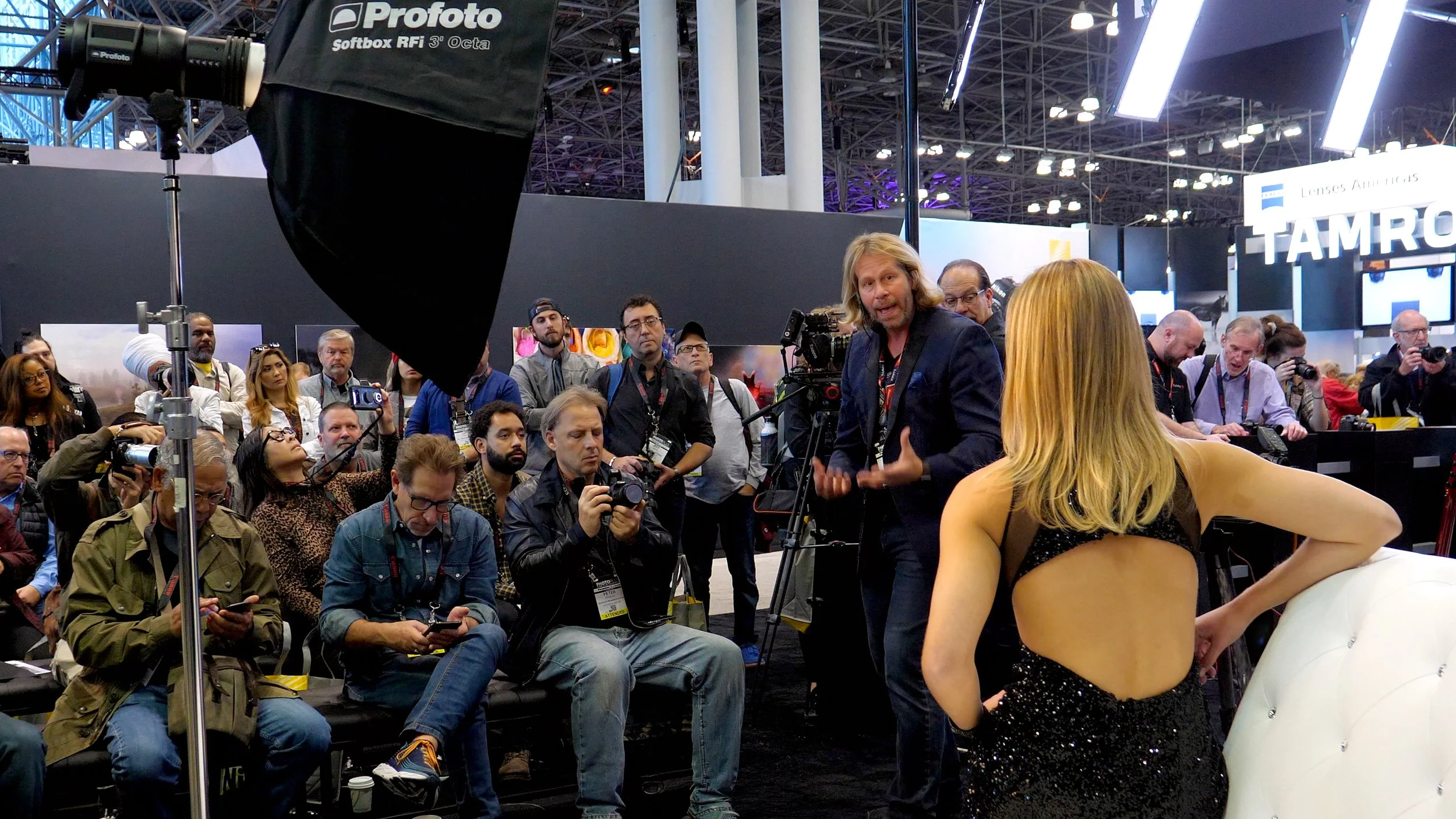
Teaching photography at the Javits Center in New York City. Beyond the equipment and technical decisions, creating a meaningful portrait requires communication, observation, and an understanding of the person in front of the camera.
Filmmaking presents similar challenges. I've directed executives, artists, musicians, children, and people who have never appeared on camera before. Every person responds differently, and the approach that works beautifully with one individual may be completely wrong for another. Sometimes the solution is technical, involving a change in lighting, camera position, or sound recording. Other times, it's entirely human. We need to establish trust, listen carefully, or recognize that the story someone is trying to tell may be more important than the one we originally planned to capture. Experience teaches us to recognize those distinctions, and creative judgment helps us respond.
I believe there's an important lesson here for organizations navigating technological change. Efficiency matters, but not every meaningful outcome can be measured by how quickly something is produced. Relationships, trust, leadership, and communication depend on our ability to understand circumstances that don't always fit neatly into a predictable process. Technology can assist us in remarkable ways, but we still need people who can interpret situations, exercise judgment, and recognize the human consequences of their decisions.
What Happens When Different Worlds Collide?
One of the most exciting aspects of new technology is its ability to connect ideas that previously existed in separate worlds. I've spent my career moving between photography, painting, music, and filmmaking, and I've discovered that some of the most interesting creative possibilities emerge when those disciplines begin influencing one another. My understanding of light as a photographer changes the way I paint. My experience as a musician influences the rhythm of my films. My work as a filmmaker changes how I think about storytelling in a single photograph. These relationships aren't always deliberate, but over time they become part of how I approach creative challenges.
My original song Island Time, produced traditionally the old fashioned way, offered an interesting opportunity to bring several of those interests together. As I developed the animated music video, I drew inspiration from The Inside Out, one of my original fine art paintings, using its visual character, textures, and artistic styling to help shape the animated world. Artificial intelligence opened possibilities for translating those influences into moving imagery, but the creative direction came from something deeply personal: music I had written, artwork I had painted, and a visual story I wanted to tell. What interests me about this process isn't simply that AI can generate animation. It's that something created in one artistic discipline can become the foundation for an entirely different expression in another.
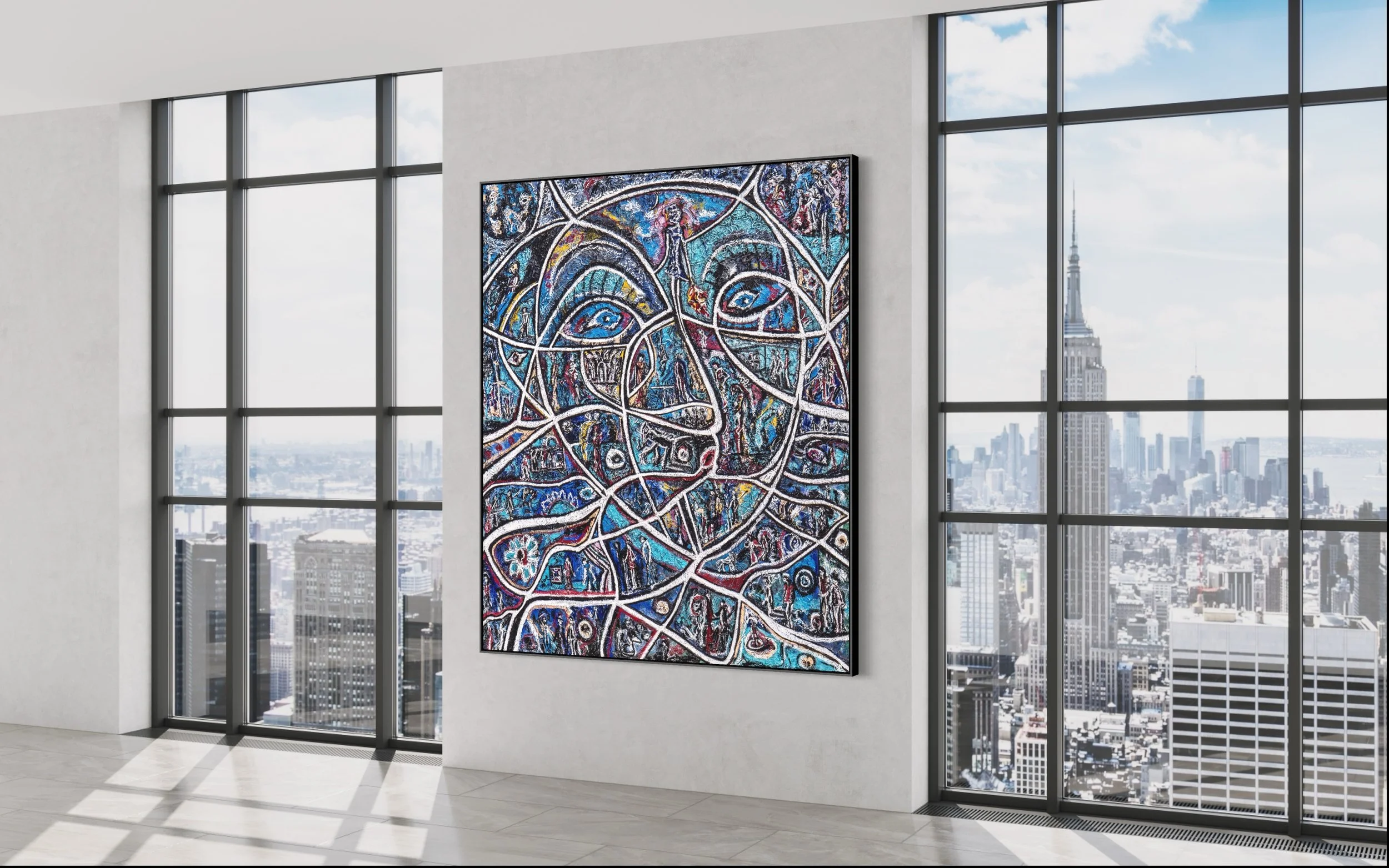
The Inside Out, an original painting by Charles Maring. Its expressive textures, colors, and visual character helped inspire the artistic direction of the AI-assisted animation for his original song Island Time.
Island Time, an original song written, performed, and traditionally produced by Charles Maring. The accompanying AI-assisted animated music video draws inspiration from his painting The Inside Out, bringing original music, fine art, and emerging technology together in a single creative work.
I've explored related possibilities through immersive animation for music and live performance, combining original artwork, photographic portraits, and emerging animation techniques to imagine visual experiences that extend beyond traditional screens. These experiments have encouraged me to reconsider the boundaries between artistic disciplines and explore ideas that would have been difficult to realize through conventional methods alone. But the technology itself has never been the starting point. The work begins with curiosity, an artistic direction, and the question of what might become possible if familiar ideas were approached differently.
That kind of thinking has implications far beyond the arts. Innovation often emerges when someone recognizes a useful connection between ideas that appear unrelated. A solution developed in one industry may inspire an entirely different approach in another. A person with experience across several disciplines may recognize possibilities that someone working within a single specialty might overlook. AI can help us explore those connections, but curiosity, imagination, and the willingness to experiment remain essential to discovering which ones are meaningful.
The Human Experience Is Not an Inefficiency
As organizations adopt new technologies, much of the conversation naturally focuses on efficiency. How much time can we save? Which processes can we automate? How quickly can we produce what once required an entire team? These are reasonable business questions, and there are many situations where eliminating unnecessary work creates tremendous value. But I wonder whether we sometimes risk treating every human interaction as something that needs to be accelerated or optimized, without considering what might be lost in the process.
Consider the difference between communicating information and making someone feel understood. A system may help us produce a clear message, but the effectiveness of that message often depends on context, trust, timing, and the relationship between the people involved. A leader can deliver a perfectly structured presentation and still fail to connect with an audience. A business can automate its communications while gradually losing the personal qualities that once made its customers feel valued. The challenge isn't choosing between technology and humanity. It's understanding which aspects of our work benefit from greater efficiency and which require us to remain fully present.
I've experienced this throughout my career photographing and filming people. Some of the most meaningful moments I've recorded happened because I allowed something unexpected to unfold rather than forcing it into a predetermined schedule. A spontaneous laugh, a thoughtful pause, or an emotional response can communicate more than an elaborate production. Those moments remind me that human connection isn't simply another variable in the creative process. Often, it's the very thing that gives the work its meaning. I suspect the same principle applies to leadership, customer relationships, and the many ways organizations interact with the people they serve.
Judgment, Taste, and the Courage to Choose
As AI continues to improve, I suspect the ability to produce competent work will become increasingly widespread. More people will have access to sophisticated creative and analytical capabilities, and many tasks that once required specialized technical knowledge will become easier. That's an extraordinary opportunity, but it also raises an important question: if the tools become more accessible, what will distinguish exceptional work from everything else?
I believe judgment will become increasingly valuable. Not judgment in the sense of simply criticizing what others produce, but the ability to recognize quality, understand context, evaluate consequences, and make decisions that reflect a clear purpose. Taste develops through experience, observation, experimentation, and exposure to different ideas. It's influenced by what we've studied, what we've attempted, what we've failed at, and what we've learned to appreciate along the way. Technology can help us explore possibilities, but developing the discernment to choose among them remains an important human responsibility.
There's also courage involved. When an almost unlimited number of options is available, it's tempting to keep searching for something better. I've experienced that temptation in my own creative work, particularly when experimenting with generative tools. But eventually, we have to commit to an idea, make decisions, and accept responsibility for the result. Whether we're creating a film, leading a team, developing a product, or navigating organizational change, progress requires more than possibility. It requires the willingness to choose a direction and move forward.
Becoming More Human, Not Less
I don't believe the future belongs exclusively to those who resist technological change, nor do I think it belongs to those who adopt every new tool without questioning its purpose. The most interesting opportunities may belong to people and organizations that learn to combine technological capability with the qualities that make human experience meaningful. Curiosity, empathy, imagination, judgment, adaptability, and the ability to connect with others aren't obstacles to progress. They're among the reasons progress matters.
I've spent enough years working through technological transitions to know that change can be both exciting and unsettling. New tools challenge familiar ways of working, and they sometimes force us to reconsider skills and assumptions that once felt permanent. But I've also seen how change can open unexpected doors, encouraging us to experiment, learn, and discover abilities we might never have explored otherwise. The important question isn't simply what technology will allow us to do next. It's what we want to accomplish with those capabilities and what kind of people we want to become in the process.
These ideas are at the heart of my Human First keynote, where I explore creativity, technology, storytelling, and the human qualities that remain essential as the world changes. My perspective comes from a lifetime of making things, working with people, teaching creative professionals, adapting to new tools, and discovering that the most important decisions rarely begin with the technology itself. They begin with an idea, a question, a relationship, or a desire to communicate something meaningful.
Artificial intelligence will continue to evolve, and I look forward to exploring what comes next. But I don't believe our goal should be to compete with machines at everything they can do. We have an opportunity to become more intentional about the things that make our contributions valuable: how we think, how we choose, how we create, and how we treat one another. The future will undoubtedly be shaped by extraordinary technology. What gives that future meaning will still depend, in no small part, on us.
Charles Maring is an award-winning photographer, filmmaker, musician, visual artist, and keynote speaker whose work spans commercial storytelling, fine art, and creative direction. An experienced educator and presenter, he explores the intersection of artificial intelligence, creativity, storytelling, and human connection through decades of firsthand creative experience.