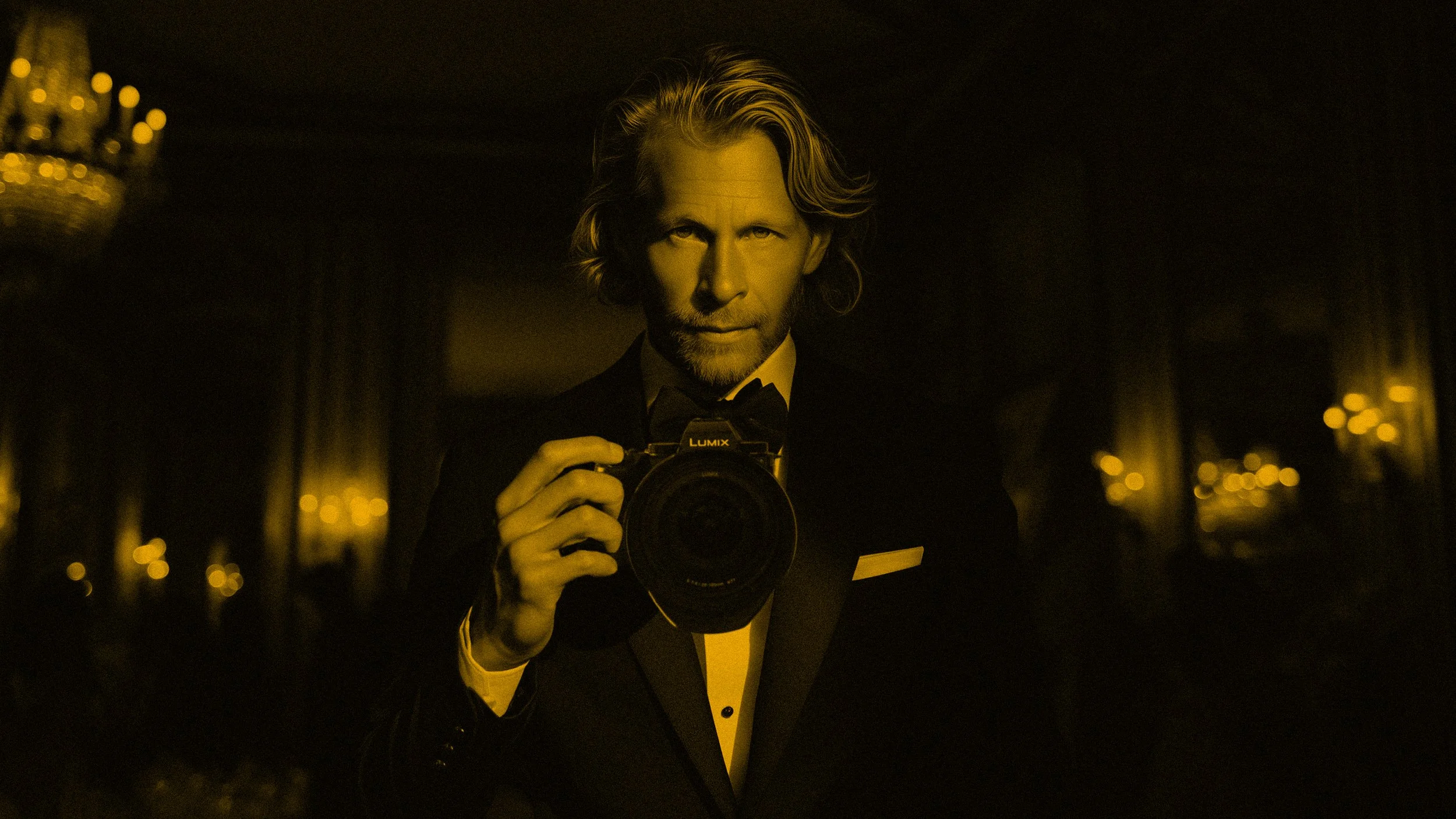
The Art of Filming Live Music: Where Cinematography Meets Music Production
Seeing and Hearing a Performance Through a Musician's Eyes
Music has been part of my life for as long as I can remember. I've spent countless hours performing onstage, recording in studios, recording and producing my own music, and working with other musicians. Photography and filmmaking have been equally important creative pursuits, and over the years I've discovered how naturally these disciplines complement one another. When I'm hired to film a concert or produce a promotional demo for a band, I'm bringing more than cameras and recording equipment to the assignment. I'm bringing the perspective of someone who understands what it's like to be on the other side of the lens, trying to deliver a performance that connects with an audience.
A live performance is an interesting thing to capture because so much of its energy exists in the moment. Musicians respond to one another, audiences react, and the character of a song can change subtly from one performance to the next. A well-produced concert film should preserve that spontaneity while presenting the musicians in a way that communicates their talent, personality, and stage presence. That requires thoughtful cinematography, but I've found that the quality of the audio is just as important, if not more so.
Over the years, I've created performance films and promotional demos for solo artists, tribute bands, and professional entertainment groups. Three projects illustrate the different ways I approach this work: Matt Eckstine's John Prine tribute concert in the Savannah area, Running on Empty which is a Jackson Browne tribute band in Connecticut, and Dean St. Hillaire and Friends, a wedding and event band represented by Hilton Head Entertainment. Each performance had its own musical character, but all three benefited from an approach that combined multiple camera angles with carefully recorded and produced audio.
Matt Eckstine and a Tribute to John Prine at Tybee Post Theater
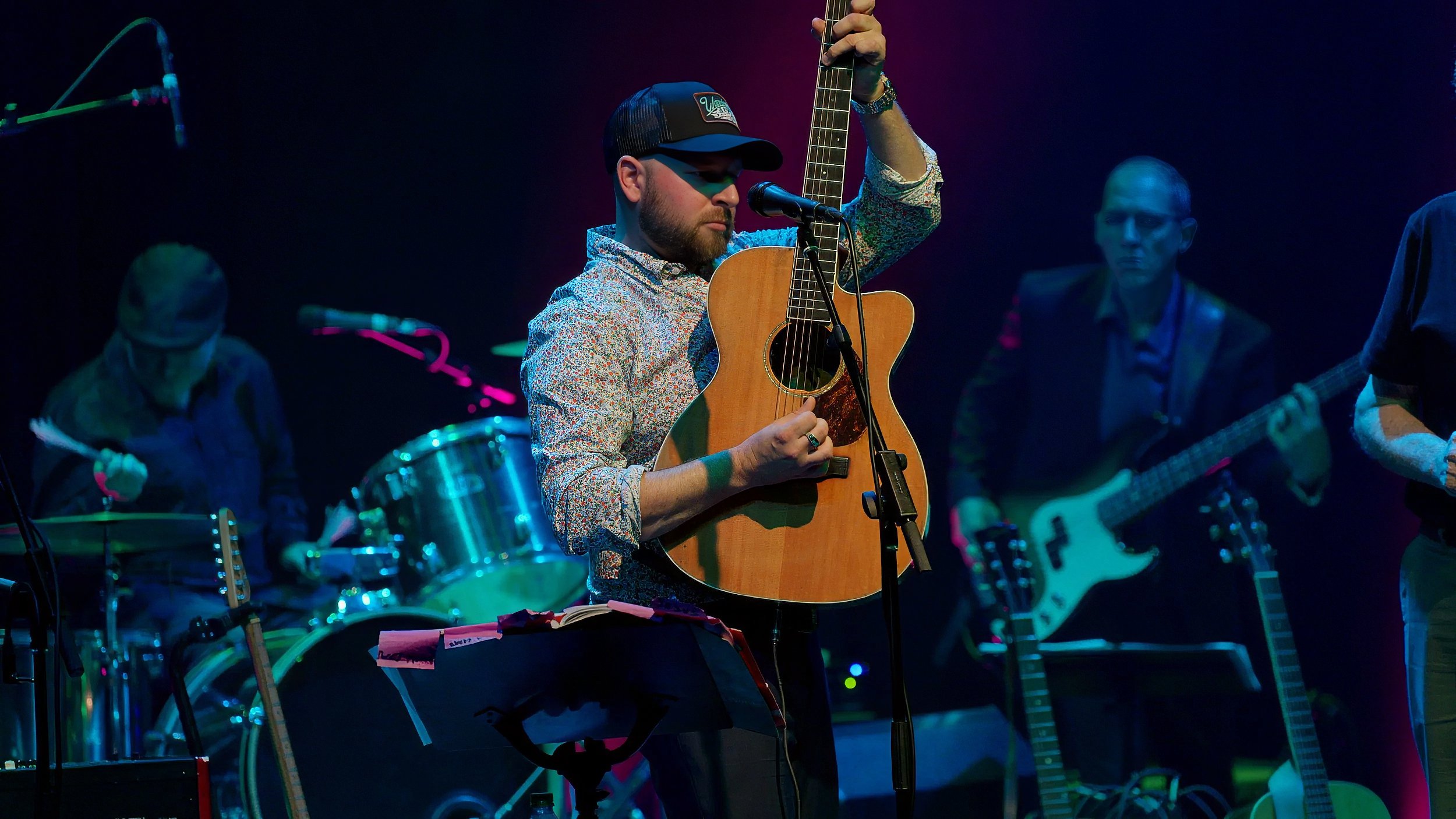
Musicians sharing the stage during the John Prine tribute concert. Capturing the relationships between performers is an important part of my approach to live music photography and filmmaking.
Savannah has a wonderfully diverse music community, and Matt Eckstine is one of the talented musicians who contributes to its character. A singer, songwriter, and performer with a strong presence in the local music scene, Matt assembled a group of musicians for a John Prine tribute concert at the Tybee Post Theater on Tybee Island. The performance brought together musicians celebrating the work of a songwriter whose music has meant a great deal to generations of listeners.
Matt Eckstine and fellow musicians performing a tribute to John Prine at the Tybee Post Theater near Savannah, Georgia. Multi-camera concert filming and audio production by Charles Maring.
John Prine had an extraordinary ability to find humor, tenderness, and humanity in ordinary experiences. His songs often sound deceptively simple, yet the stories and emotions beneath them are anything but. As a songwriter and performer myself, I appreciate that kind of musical honesty, and I understood why Matt wanted to create a performance that honored Prine's work.
Matt approached me about filming the concert and producing a video he could share with venues interested in booking the tribute show. This is one of the most practical reasons musicians invest in professional performance films. A venue or booking agent may never have the opportunity to experience a band in person before making a decision, so a well-produced demo needs to communicate the quality of the music, the presence of the performers, and the atmosphere of the show.

A promotional image I created for future performances of Matt Eckstine's John Prine tribute. I combined my wide-angle concert photograph with an artistic image of Prine in the background, transforming a moment from the live show into a piece of promotional artwork.
Beyond filming the performance, I also photographed the musicians and created promotional imagery that could be used to introduce the show to future audiences. One of my favorite images began as a wide photograph of the entire ensemble onstage at the Tybee Post Theater. In postproduction, I composited an artistic silhouette of John Prine into the background, creating a visual connection between the musicians performing his songs and the songwriter whose work inspired the evening. The finished image became promotional artwork for future shows. I enjoy this kind of creative opportunity because it demonstrates how photography can evolve beyond documenting an event into helping an artist communicate the identity and spirit of a performance.
I filmed the concert using multiple camera angles, giving me the ability to move visually between individual musicians, the larger ensemble, and the energy of the performance. In editing, those perspectives become part of the storytelling. A close-up can draw attention to a vocal phrase or instrumental passage, while a wider composition can reveal the relationship between the musicians and the audience. The goal is to create a viewing experience that feels musical rather than simply documenting the stage from one position.
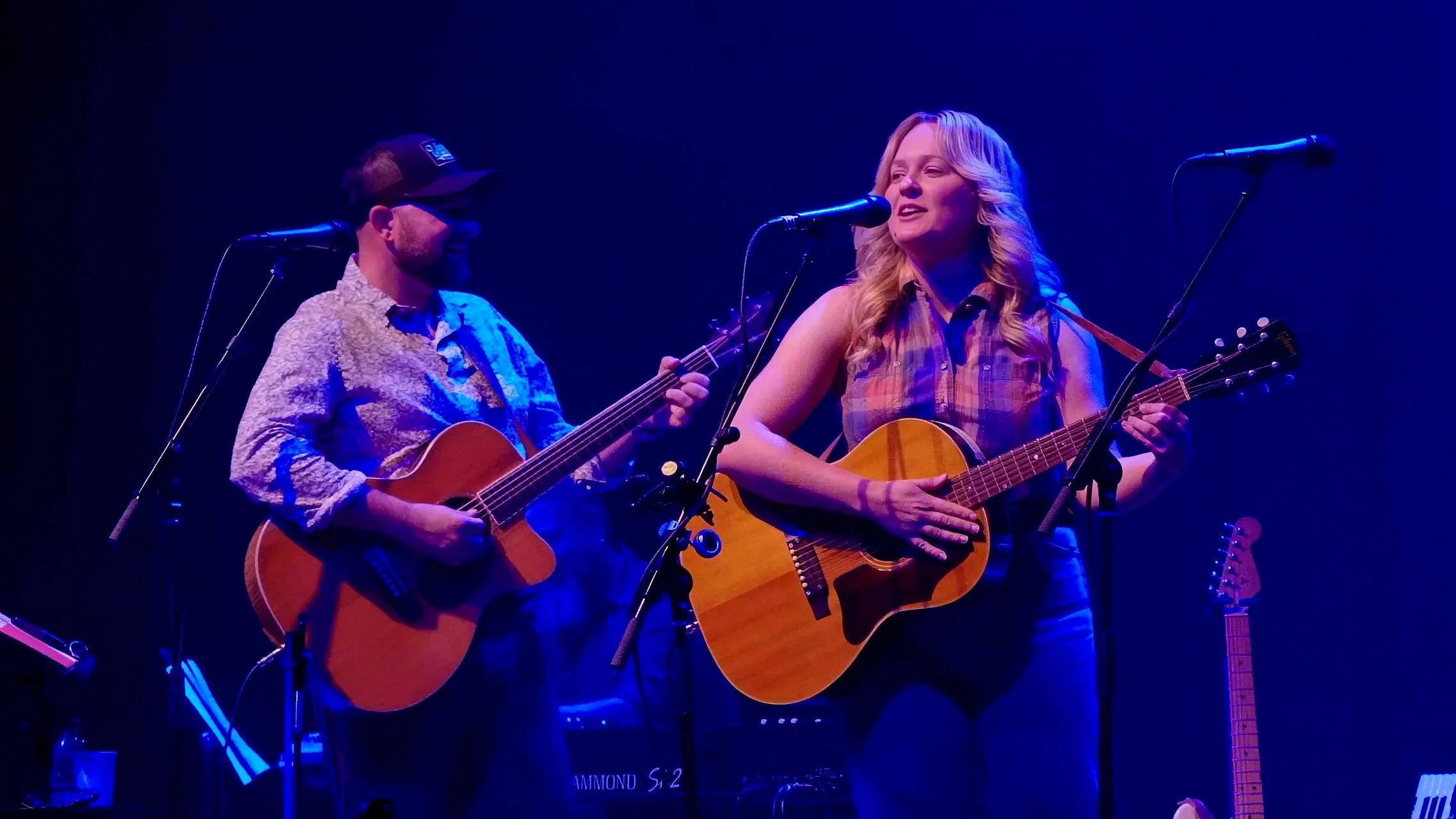
Musicians sharing the stage during the John Prine tribute concert. Capturing the relationships between performers is an important part of my approach to live music photography and filmmaking.
Running on Empty: From Concert Photography to Music Production
My relationship with Running on Empty, a Connecticut-based Jackson Browne tribute band, began with photography. I had the opportunity to photograph several of their live performances, capturing the musicians onstage and the moments of connection that happen when a group of talented performers comes together around music they genuinely love. As a musician myself, I've always enjoyed photographing live performances because I understand how much is happening beyond what an audience might immediately notice. The subtle exchanges between musicians, the concentration during an instrumental passage, and the expressions that accompany a particularly meaningful lyric are all part of the story.
Those early photography assignments gave the band an opportunity to see how I approached their performances creatively. Over time, that relationship developed into the trust that led them to commission me to produce a professional video demo. I think that progression is meaningful because creating a promotional film requires musicians to place a great deal of confidence in the person behind the cameras. The finished production will represent their talent to venues, booking agents, and audiences who may be discovering them for the first time.
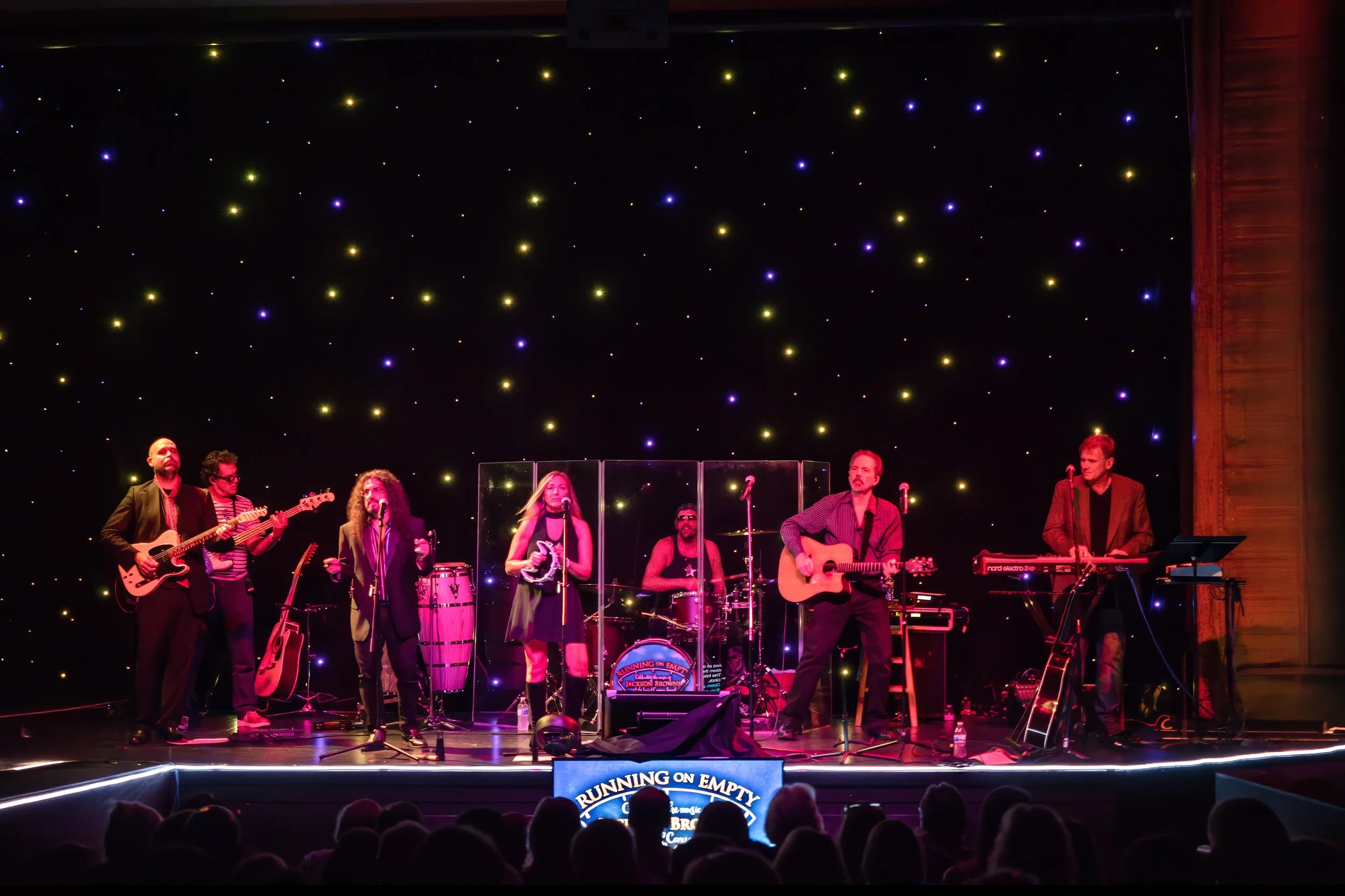
Running on Empty performing live in Connecticut. My relationship with the band began through concert photography before evolving into a multi-camera video and audio production.
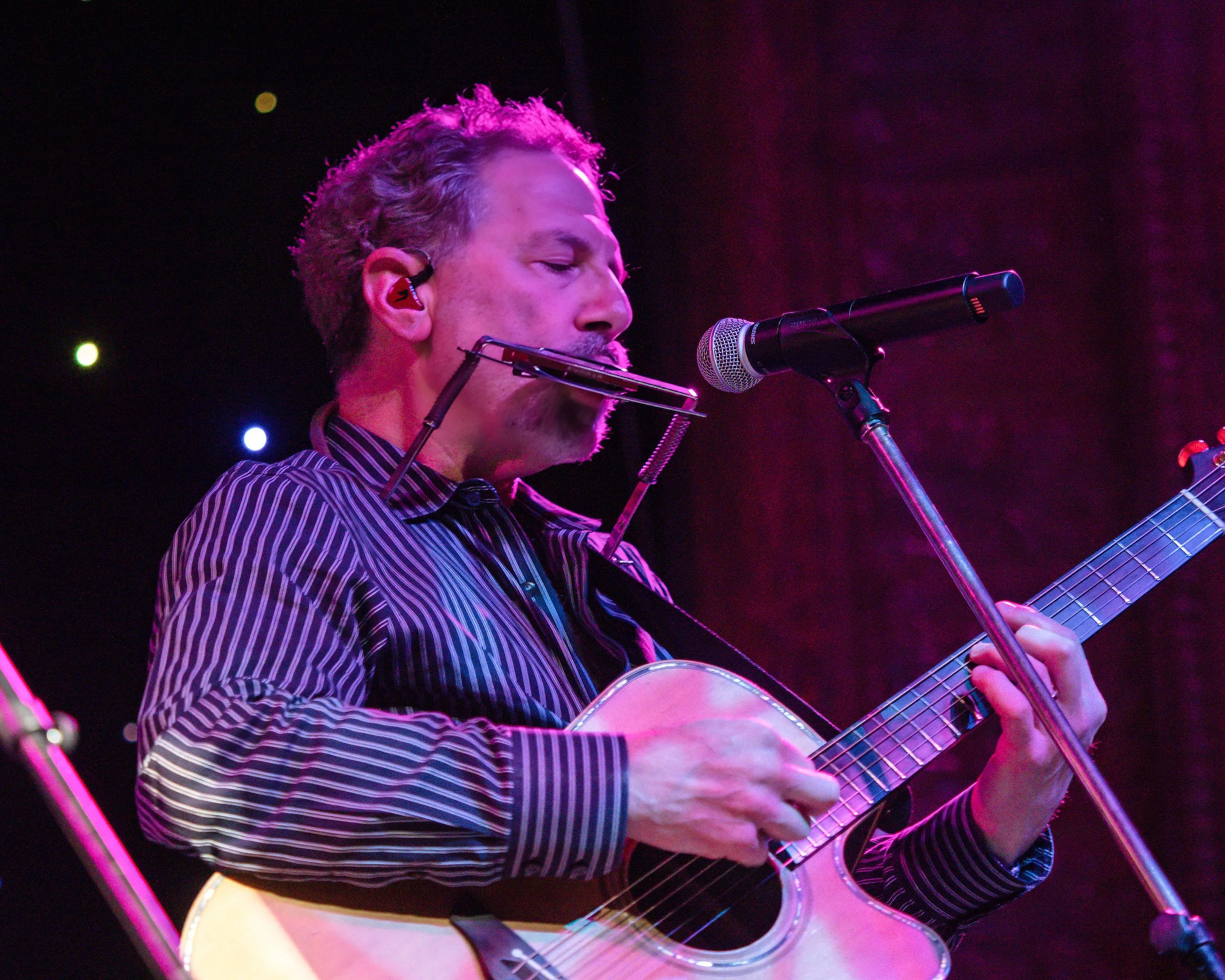
An intimate view of a Running on Empty performance, capturing the relationship between the musician, his instruments, and the music. These are the kinds of details I seek out in both concert photography and filmmaking.
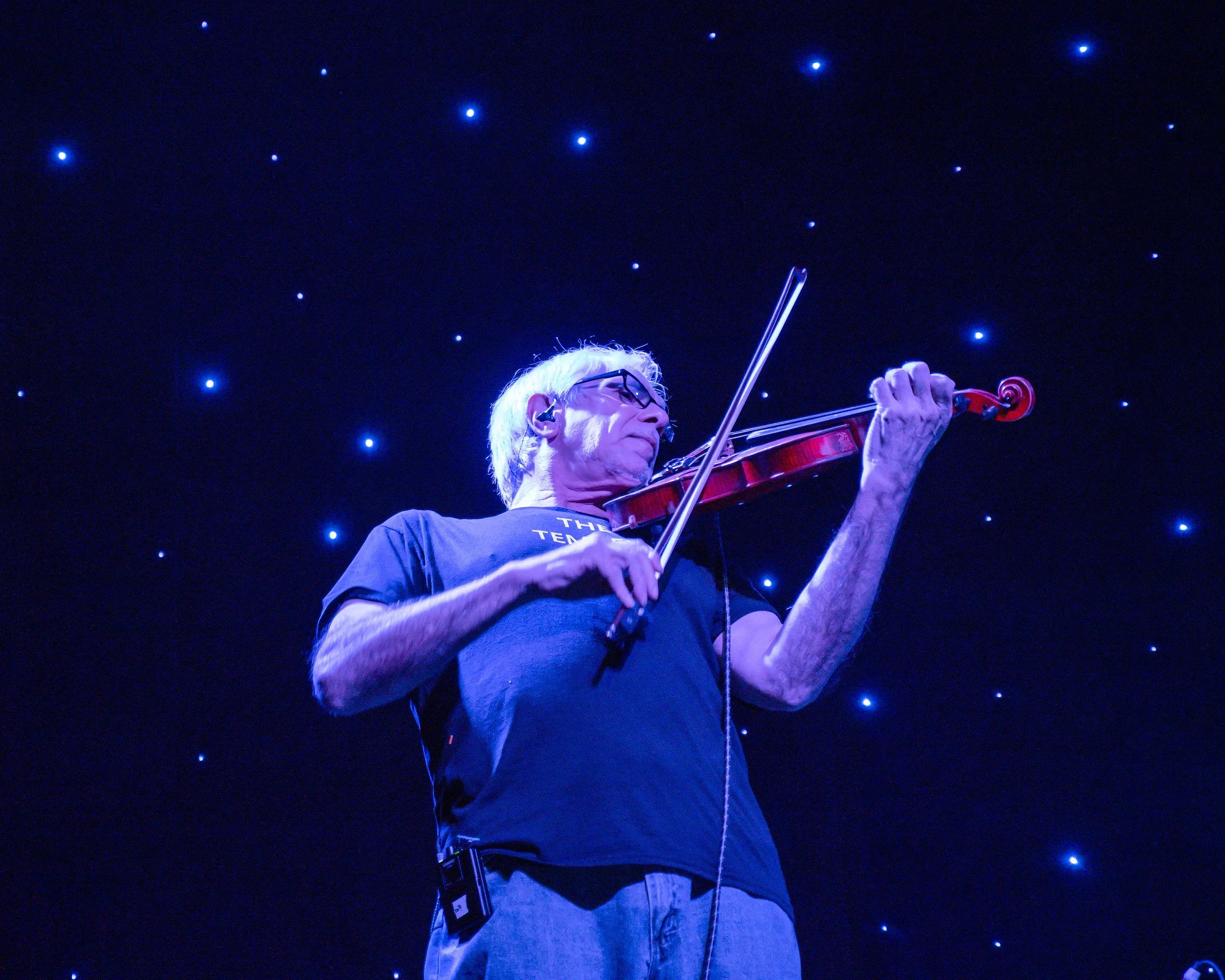
A violinist performing with Running on Empty. Individual moments like this reveal the musicianship and expressive details that I look for when photographing live performances.
Jackson Browne's music presents an interesting challenge for a filmmaker and audio producer. His songs are built around thoughtful lyrics, expressive vocals, and arrangements where each instrument contributes something important to the overall sound. Capturing that musical balance was a priority when I began planning the band's demo. I wanted the video to communicate not only the energy of their live performance but also the musical detail and craftsmanship that make their interpretation of Browne's catalog so enjoyable.
For the video production, I filmed the band using multiple cameras and angles while recording individual audio channels from the mixing console directly into Logic, the digital audio workstation I use to record and produce my own music. This gave me the ability to approach the soundtrack as a multitrack recording rather than relying solely on a finished stereo mix from the venue's soundboard.
That distinction makes a significant difference. A live sound engineer is mixing for the people in the room, taking into account the acoustics of the venue, the volume of instruments onstage, and what the audience is already hearing naturally. The soundboard mix may be excellent for the live audience but doesn't necessarily translate the same way to a recording played through headphones or speakers at home. Having access to the individual tracks allowed me to make more precise creative decisions about how the music would ultimately be heard.
Working in Logic, I could shape individual instruments and vocals using equalization, compression, reverb, and other production techniques. These are tools I use regularly when producing my own recordings, and they allow me to pay attention to the musical relationships within an arrangement. I could refine the tonal balance, manage dynamics, and create a cohesive listening experience while preserving the character and spontaneity of the live performance. My objective wasn't to transform the band into something they weren't. It was to present their musicianship with the clarity, warmth, and impact it deserved.
Once the audio production was developed, I brought that same musical perspective into the visual edit. Multiple camera angles allowed me to move between the performers, highlight instrumental passages, and follow the natural progression of the songs. Having spent so much of my life performing and recording music, I find that I instinctively recognize moments when the visual perspective should change. A guitar solo, a vocal phrase, or a subtle exchange between musicians can suggest its own cinematic treatment.
Running on Empty, a Connecticut-based Jackson Browne tribute band, filmed with multiple cameras and recorded through a multitrack audio workflow. Charles Maring produced the performance film and refined the individual instruments and vocals in Logic.
What began as a concert photography relationship ultimately became a much more involved creative collaboration. For me, that's one of the most rewarding aspects of working with musicians. The trust developed through one assignment can open the door to a larger creative vision, and the combination of photography, filmmaking, and music production allows me to contribute in ways that go well beyond simply documenting a performance.
Dean St. Hillaire and Friends: Bringing the Camera Into the Performance
Dean St. Hillaire and Friends is a wedding and event band represented by Hilton Head Entertainment. When I set out to create their promotional music demo, I wanted the finished film to communicate more than the musicians' technical abilities. A great live band creates an atmosphere. There is a connection between the performers, a sense of spontaneity, and an energy that moves through the music. My goal was to capture those qualities in a film that would give prospective clients a genuine sense of what it feels like to experience the band.
I approached the production with four cameras capturing the performance simultaneously. Each camera provided a different perspective, allowing me to move between the lead performers, individual musicians, and the full ensemble in the edit. We recorded the primary material in a single take for each musical selection, which gave me the foundation for a cohesive performance film. But as I watched the band, I realized there was another perspective I wanted, something less observational and more immersive.
I asked the musicians to perform one additional take so I could move onto the stage with a camera mounted on a gimbal. Rather than watching the performance from a fixed position, I could now move among the musicians, approach the vocalists, travel past the instruments, and capture expressions from angles that made the viewer feel closer to the music. The resulting footage brought a different emotional quality to the film. It felt less like watching a band from the audience and more like being invited into the performance itself.
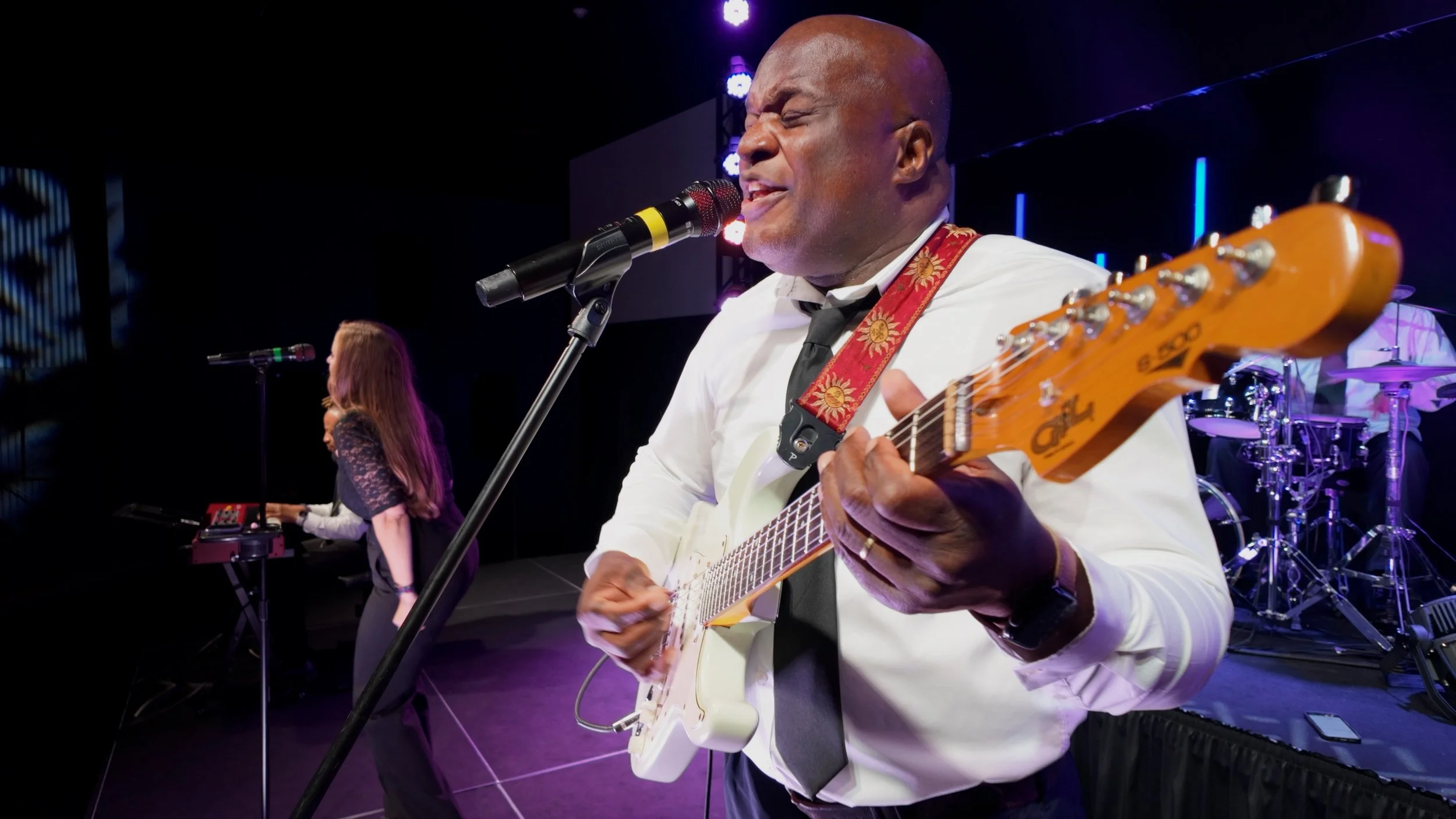
Moving among the musicians with a gimbal allowed me to capture expressions and perspectives that stationary cameras couldn't provide.
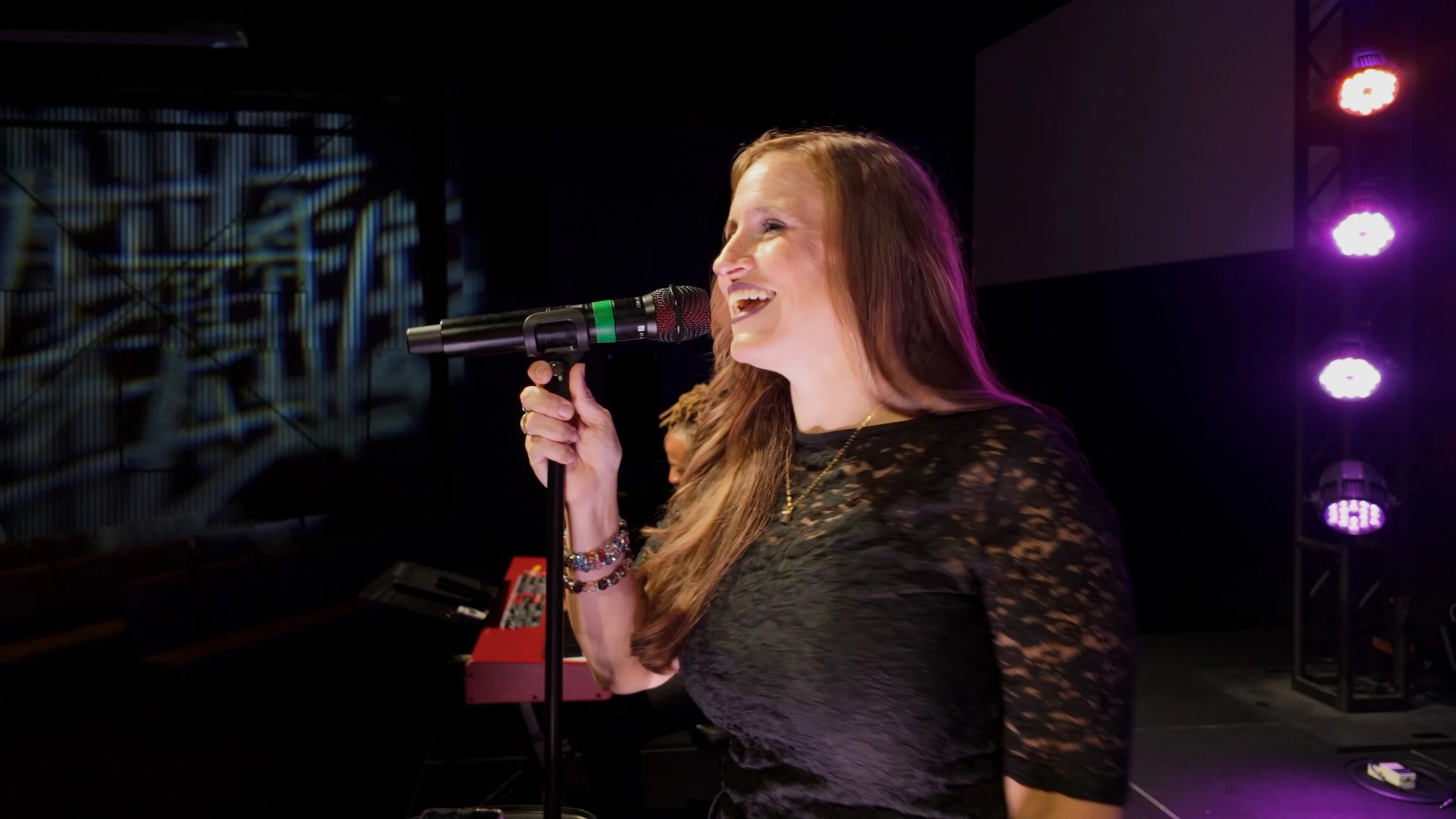
A moment captured during the additional gimbal take, bringing the camera closer to the performers and giving the finished film a more personal perspective.
Of course, filming an additional take introduces a challenge that is easy to overlook. Musicians don't perform a song with exactly the same timing twice. A phrase might be held a little longer, a drummer may push a beat differently, or a vocalist may shape a lyric with slightly different timing. Simply placing the new footage over the original recording would create noticeable synchronization problems, particularly when a singer's lips or a musician's movements didn't match the audio.
In postproduction, I worked through those differences, adjusting the timing and speed of individual shots so the additional gimbal footage could be integrated convincingly with the original performance. It required careful attention to the relationship between sound and picture, but that work allowed me to preserve the spontaneity of the moving camera without sacrificing the continuity of the music.
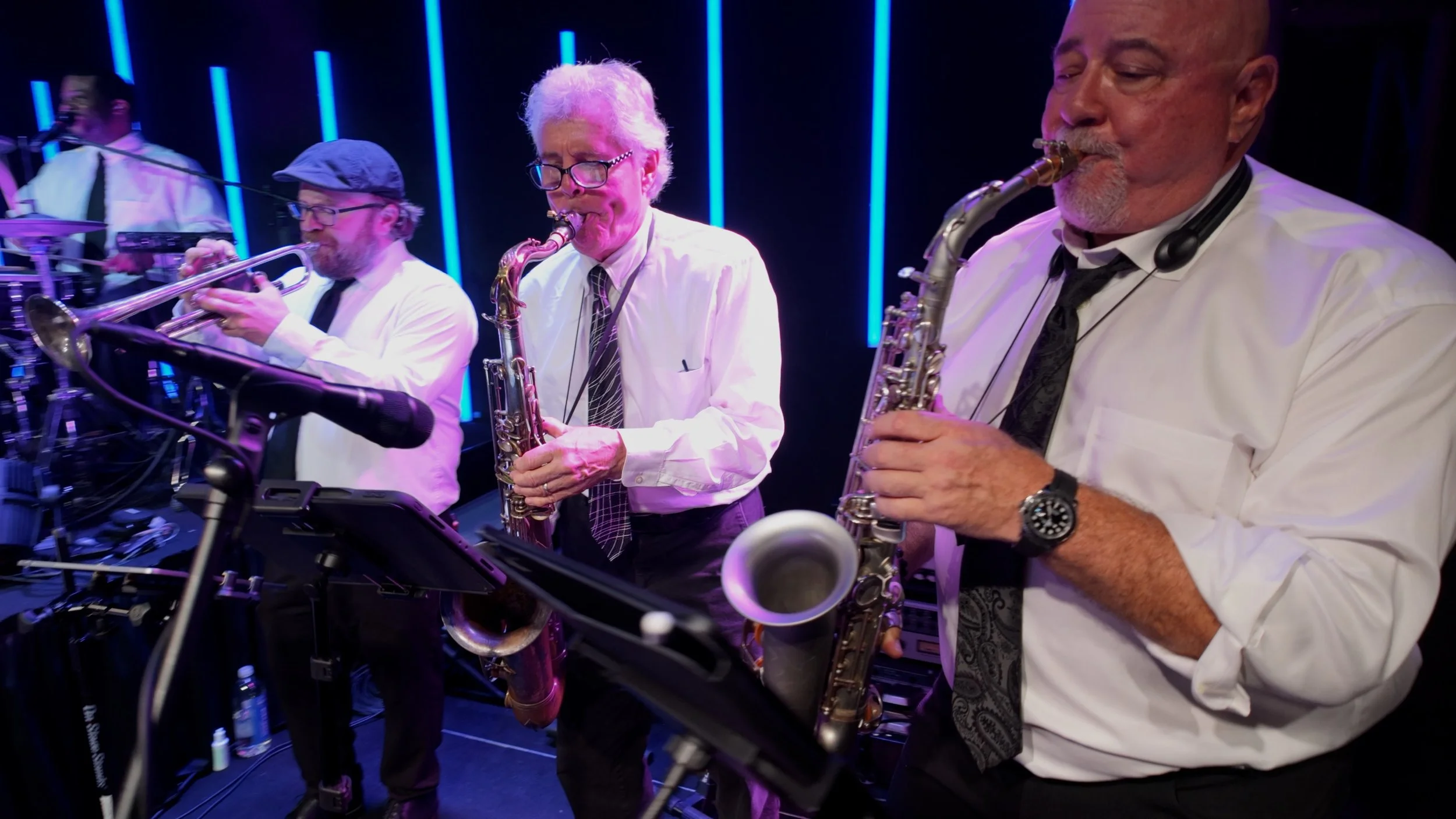
Moving the camera into the horn section created a more immersive view of the musicians, capturing the energy of the ensemble from within the performance.
This is where my experience as a musician becomes especially valuable to my filmmaking. I understand how musicians phrase, how arrangements develop, and where the emotional emphasis of a performance naturally falls. That perspective influences not only how I record and engineer live sound, but also where I place a camera, when I choose to move, and how I cut between musicians. The edit should feel connected to the music rather than simply keeping pace with it.
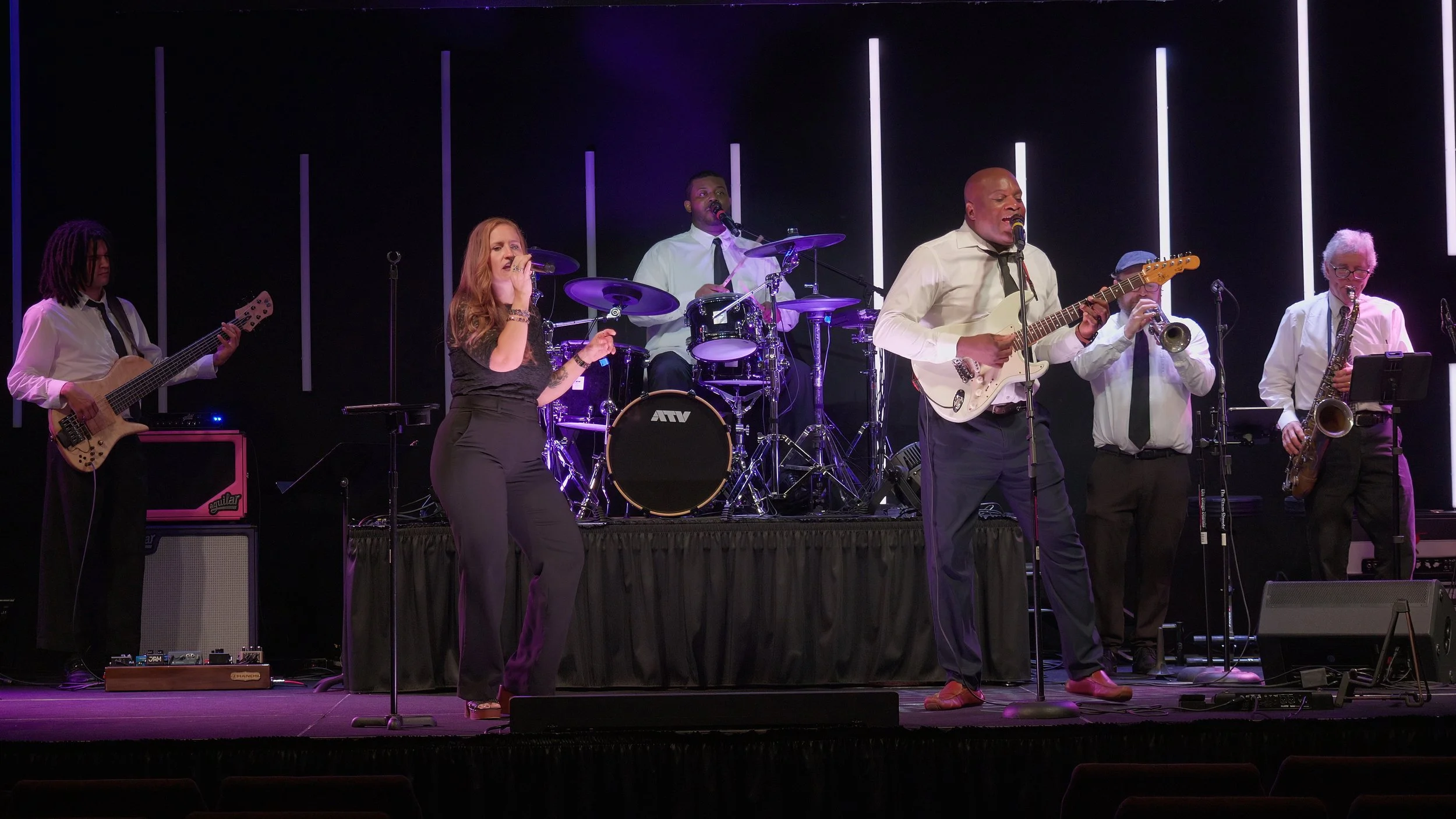
A wide view of Dean St. Hillaire and Friends, showing the complete ensemble and the stage environment that the multi-camera production was designed to capture.
Dean St. Hillaire and Friends, a professional wedding and event band represented by Hilton Head Entertainment. Multi-camera performance filming and audio production by Charles Maring.
The finished demo combined the reliability of the four-camera recording with the immediacy of the additional moving-camera footage. For me, that balance is what makes a compelling live music film. The production should reveal the skill of the musicians, but it should also preserve something less tangible: the personality, chemistry, and excitement that make people want to experience the band in person.
Why Great Concert Audio Requires More Than a Soundboard Feed
People sometimes assume that recording a concert is as simple as connecting a recorder to the venue's mixing console. That can certainly provide a useful starting point, but capturing a signal and producing a compelling soundtrack are two different things. The soundboard mix is designed primarily to support the live experience, while the finished video must stand on its own for someone who wasn't there.
My approach depends on the performance, the available equipment, and the recording opportunities at the venue. Whenever possible, I capture a clean feed from the mixing console and preserve enough flexibility to refine the sound afterward. When individual channels are available, as they were for Running on Empty, I can take the production further by treating the recording as a multitrack music project if the budget allows that level of time and skill commitment.
Equalization allows me to shape the frequency balance of an instrument or vocal so that it sits more naturally within the arrangement. Compression can help manage dynamic differences while preserving the musical expression of a performance. Reverb can provide a sense of space and cohesion, particularly when individual sources have been recorded more directly than they were heard in the room. These are familiar tools to anyone who spends time producing records, but using them effectively requires listening carefully and understanding the musical relationships within an arrangement.
I don't believe the objective should be to remove every imperfection or make a live performance resemble a heavily manufactured studio recording. Part of the appeal of live music is its spontaneity. Musicians breathe together, react to one another, and occasionally take a phrase somewhere unexpected. I want to preserve those qualities while making sure the recording is enjoyable to hear and represents the performers well.
Multiple Cameras, Musical Timing, and the Art of Editing
The visual side of concert production presents its own challenges. Unlike a scripted commercial, a live performance doesn't stop so that a filmmaker can adjust a light, reposition a camera, or ask the musicians to repeat a moment. The show continues, and the responsibility is to anticipate what matters while maintaining reliable coverage of the performance.
Working with multiple cameras provides valuable options in the editing room, but simply having more angles doesn't automatically make a better film. I think about where the viewer's attention should be directed and how each camera perspective contributes to the musical experience. Sometimes a close-up of a guitarist's hands is appropriate, while another moment calls for the expression of a singer or the interaction between musicians. Wider views establish the ensemble and the atmosphere of the performance.
My experience as a performer influences those decisions. I can often anticipate musical transitions, recognize when an instrumental passage is approaching, and understand when a particular musician is likely to become the focus of the arrangement. That awareness helps me make more purposeful choices when capturing and editing a performance.
I also believe editing should respect the music. Cutting between cameras simply because another angle is available can become distracting. The timing of a visual transition should feel connected to the phrasing, energy, or emotional direction of the song. When the cinematography and audio production are working together, the viewer becomes immersed in the performance rather than thinking about the mechanics of how it was filmed.
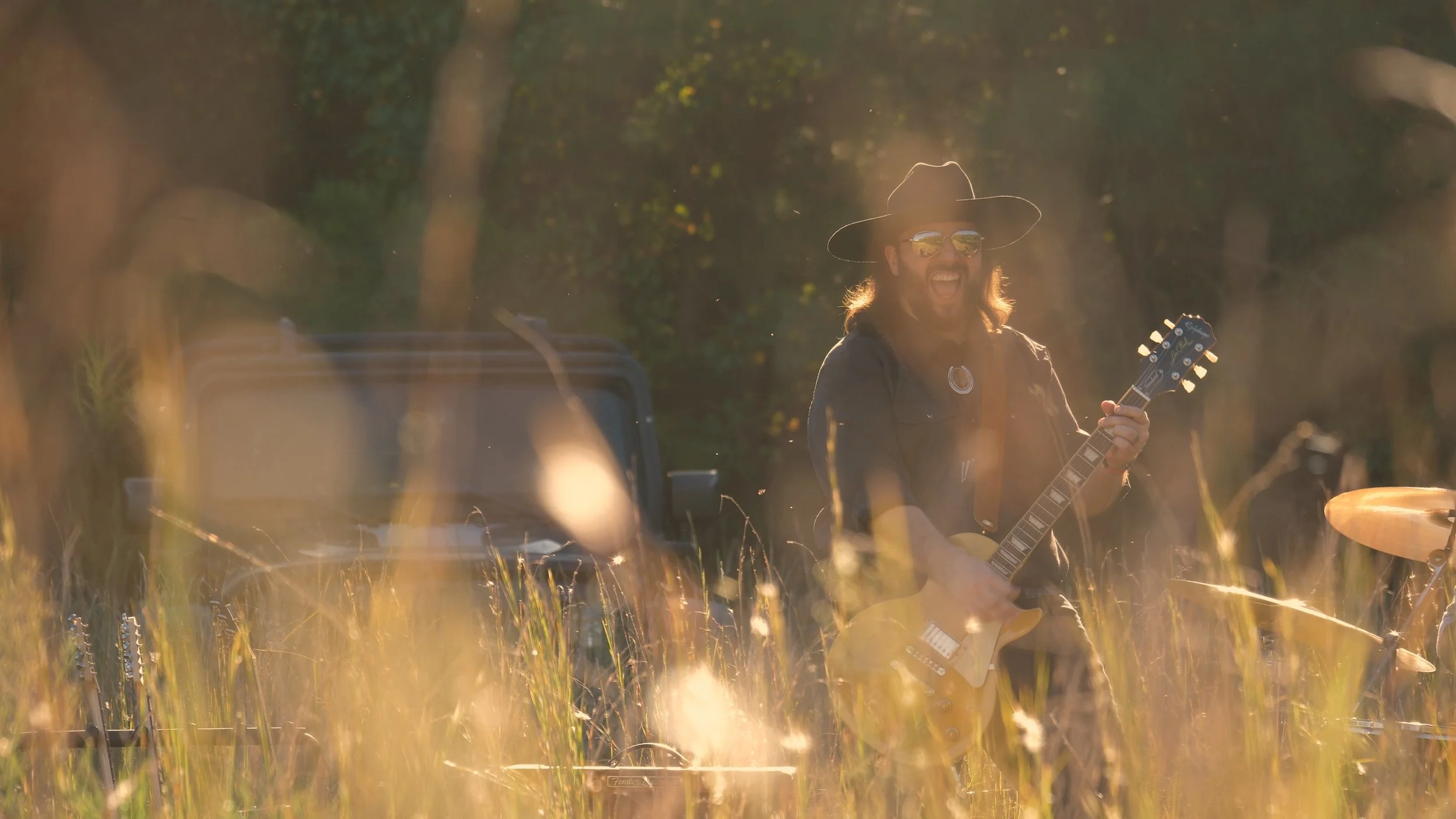
Nic Ziter performing in the golden light during production of Delta Circle's My Own Doctor. The setting sun and Jeep in the background became part of the visual atmosphere, illustrating how natural light and location can help shape the emotional character of a music video.
Beyond the Stage: Directing Original Music Videos
My work with musicians also extends beyond concert films and promotional performance demos. I enjoy collaborating with artists to create original music videos that interpret a song visually, bringing together storytelling, cinematography, creative direction, and the spontaneity that makes filmmaking exciting.
One example is my collaboration with Savannah band Delta Circle on the official music video for their original song, My Own Doctor. What began with my spontaneously filming one of their performances at Honky Tonk South eventually developed into a more ambitious project, combining a narrative inside a busy downtown bar with cinematic performances in a field outside Savannah.
I developed the visual concept around the contrast between those two environments. Inside the bar, the camera stays close to the characters and the world described in the lyrics. Outside, the landscape opens up as the afternoon sun descends, eventually giving way to dusk and the glow of vehicle headlights. The changing light, camera movement, and color grading helped create a visual journey that complemented the music without attempting to illustrate every lyric literally.
You can explore the creative process, production decisions, and finished film in my journal story, Making My Own Doctor: A Music Video for Delta Circle.
For me, this is another expression of the same creative philosophy that guides my concert films. Whether I'm documenting a live performance or directing an original music video, the goal is to make something that feels authentic to the musicians while giving their audience a deeper connection to the music.
The Advantage of Being Both a Musician and a Filmmaker
I've never viewed music and visual storytelling as completely separate parts of my creative life. They influence one another constantly. Performing has taught me about timing, improvisation, collaboration, and the importance of listening. Recording and producing my own music have given me an understanding of audio engineering and the countless small decisions that shape a finished song. Photography and filmmaking have taught me how composition, lighting, movement, and editing can guide an audience's attention. That intersection of disciplines is something I explore in my keynote, The Creative Flywheel, where I share how creativity in one area of life can inspire new ideas, strengthen other skills, and open doors to possibilities we might never have imagined.
When I'm creating a music demo or concert film, those experiences come together in a very practical way. I understand the technical requirements of recording a performance, but I also understand the emotional investment musicians make in their work. I know what it feels like to rehearse for hours, walk onto a stage, and hope that everything comes together in the moment. That perspective matters to me because the finished film may become an important part of how an artist introduces their music to the world.
A thoughtfully produced demo can help a musician approach venues, communicate with booking agents, and reach audiences who haven't yet experienced a live performance. For a professional event band, it can help prospective clients understand the quality and character of the entertainment they're considering. For a tribute act, it can communicate both the musicianship and the experience audiences can expect from the show.
I enjoy these assignments because they allow me to contribute to another musician's opportunities while drawing upon several of the creative disciplines that have shaped my own career. Whether I'm filming a singer-songwriter in Savannah, a tribute band in Connecticut, or a professional entertainment group in the Lowcountry, the objective is the same: create a film that looks beautiful, sounds exceptional, and communicates something genuine about the people making the music.
Ultimately, I want someone watching the finished film to experience a little of what made the performance special. If the cinematography, editing, and audio production have done their jobs well, the viewer shouldn't be thinking about cameras, compressors, or microphones. They should be listening to the music and wishing they had been there.
Explore more of my work in Creative Direction & Film, where I bring together filmmaking, photography, music, and production to create stories for artists, businesses, and organizations.
Charles Maring | Artist, Musician, Photographer, Filmmaker & Creative Director