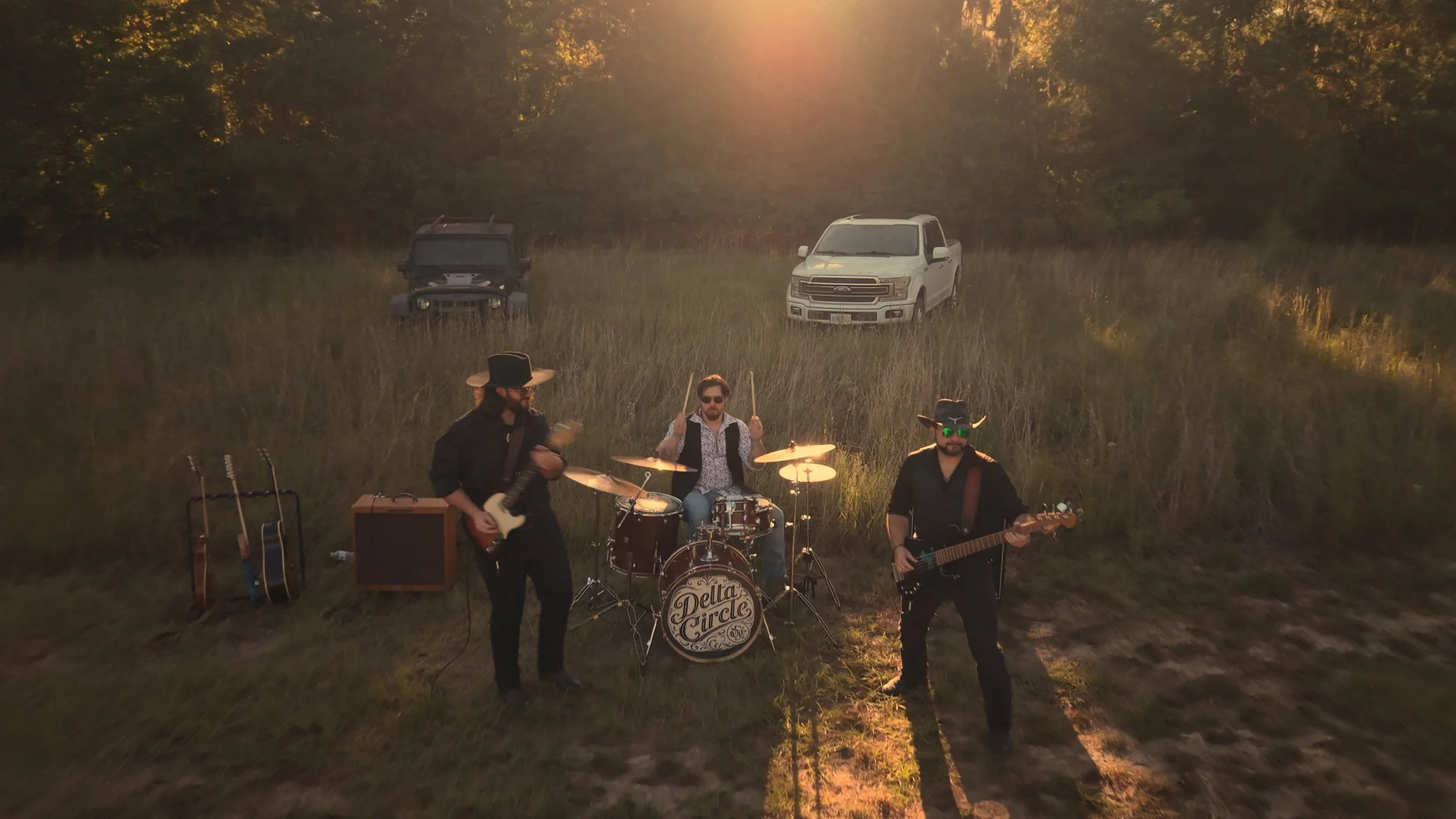
Delta Circle performs “My Own Doctor” in a field outside Savannah as the late afternoon sun settles behind the band.
From One Song at Honky Tonk South to “My Own Doctor”
There are few things I enjoy more than collaborating with others and taking on the role of a creative director and producing storytelling films. Sometimes I work on films that begin with a treatment, a crew, a schedule, and a carefully planned production. This one began because I happened to have a camera with me.
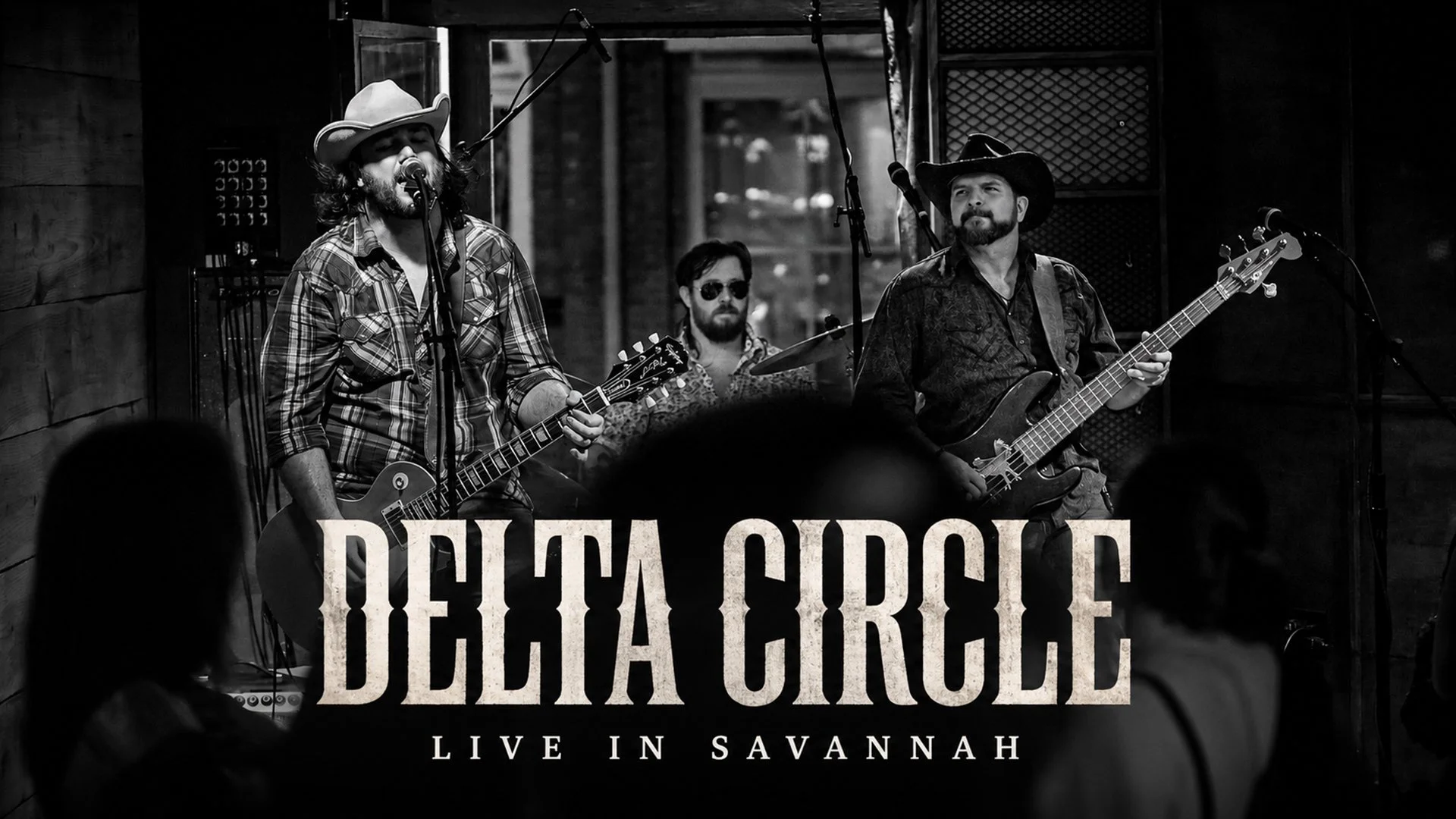
Delta Circle photographed by Charles Maring at Honky Tonk South in L-Monochrome Black and White. Image from a previous story from a night of live music in Savannah GA.
I was at Honky Tonk South in downtown Savannah when Delta Circle took the stage. The room was alive, the band had a natural connection with the audience, and the light had that imperfect quality that often makes a live performance feel more honest. I decided to film their opening song.
There was no assignment and no expectation attached to it. I simply saw something worth capturing.
I set the camera to Lumix L Monochrome and filmed intentionally in black and white. L Monochrome has a proprietary quality that I love. It does not feel like color footage converted afterward. The tones have character from the beginning. Faces, reflections, smoke, stage light, and the grain of the room all settle into a visual language that feels timeless.
I filmed only the opening song, edited the footage, and sent it to the band. I also created an editorial story for Savannah Proper about Delta Circle and the experience of seeing them perform at Honky Tonk South.
The band loved what I had made.
That spontaneous decision to bring a camera into a night out became the beginning of something larger.
The official music video for Delta Circle’s “My Own Doctor,” featuring Nic Ziter, Earnest Spiva, and Darrell Anthony. Directed, filmed, color graded, and edited by Charles Maring in Savannah, Georgia.
When One Piece of Work Leads to the Next
Delta Circle reached out when they were preparing to release a new original single called “My Own Doctor.” The song follows a man sitting in a bar, telling himself that he is doing fine while ordering another round and finding reasons not to go home.
The band already understood that the bar needed to be part of the film. The lyrics made that world unavoidable. They knew people at Boomy’s in downtown Savannah, which made it a natural location both creatively and practically.
We arrived on a Saturday afternoon during football season. The bar was packed, every television had a game on, bartenders were moving constantly, and the room had its own momentum. It was not a controlled set. It was a working downtown bar filled with customers, friends, and fans.
That became part of the film.
The band arrived early enough to secure a place at the end of the bar. Nic Ziter took the central position, while Earnest Spiva and Darrell Anthony joined him as friends gathered at the tables behind them. The background never feels staged because it was not. The room was doing exactly what the room does.
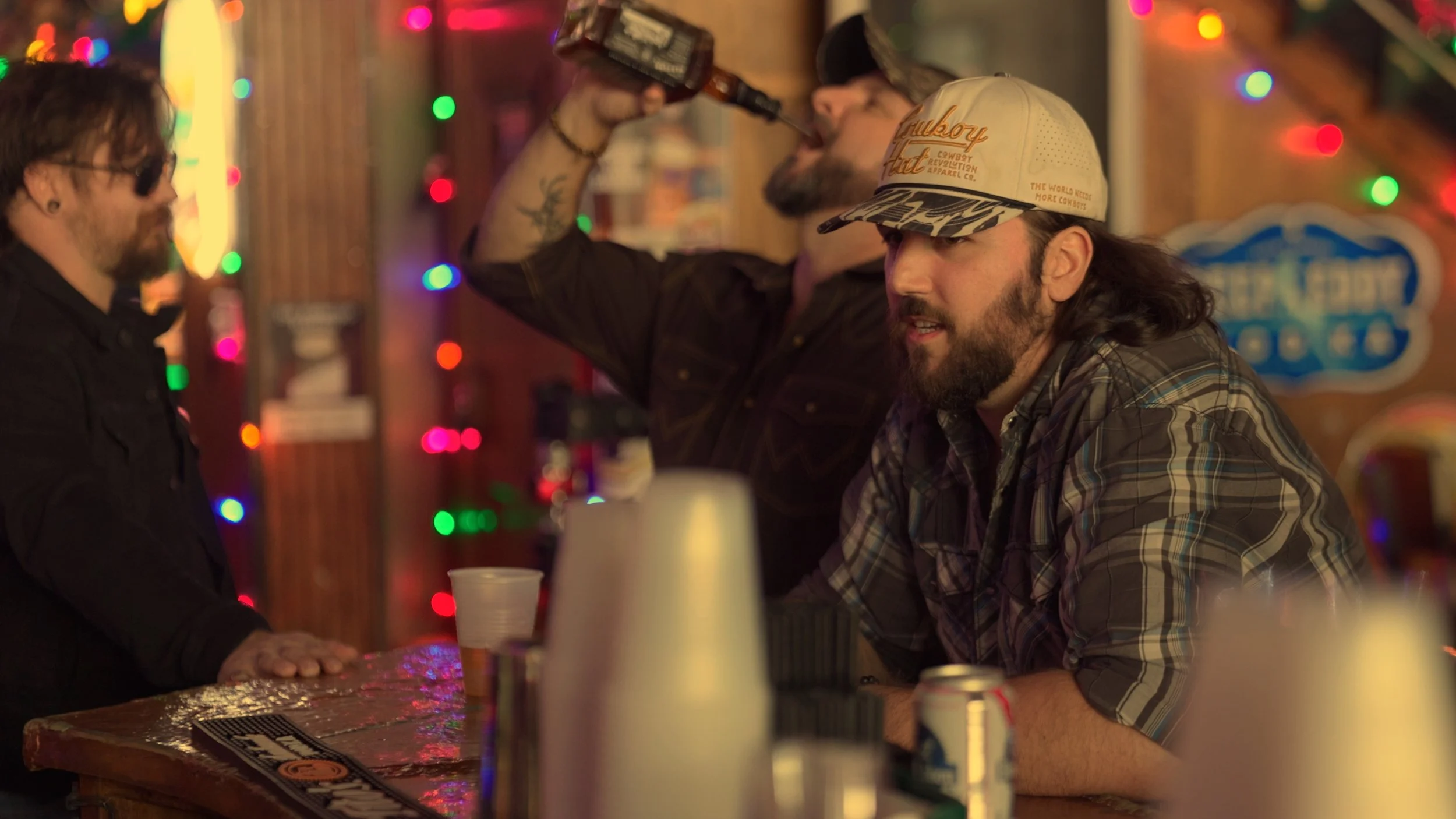
Nic Ziter, Earnest Spiva, and Darrell Anthony bring the song’s barroom story to life inside Boomy’s in downtown Savannah.
The challenge was to film a synchronized performance without interrupting the business around us.
I brought a small Bluetooth speaker and connected it to my phone. We positioned it close enough for Nic to hear the track clearly, but kept it quiet enough that it did not compete with the games, conversations, or work happening throughout the bar. Nic performed the song three times while I filmed from different positions.
It was a remarkably simple solution, and it gave us exactly what we needed.
Knowing When Available Light Is Enough
I filmed the bar performances with a Lumix S5II and a Lumix S1. A 24 to 70mm lens gave me the primary medium coverage. A 70 to 200mm allowed me to work from the side and compress the room. A 50mm f1.4 created the intimate close views with shallow depth of field that bring the audience close to Nic’s face, hands, glass, and small changes in expression.
I had lighting available, but I chose not to bring it into the bar.
Years of experience told me the existing light was already giving the scene what it needed. The colored practical lights, televisions, illuminated signs, reflections, and warmth of the bar created a believable environment. Additional fixtures would have complicated the space, restricted the bartenders, and made our small production more intrusive.
Knowing how to light a scene is important. Knowing when not to light it can be just as important.
The decision preserved the authenticity of Boomy’s. Nic is not isolated from the room. He belongs inside it. People move behind him, drinks appear on the bar, conversations continue, and life carries on around the performance.
For the entrance and exit, I changed the camera language. I used a DJI Osmo 3 to follow Nic as he entered the bar and approached Earnest and Darrell. I used it again as he left, appearing far less steady than when he arrived. Those moving shots give the bar sequence a beginning and an end while adding a subtle narrative beyond the synchronized performance.
Finding the Field
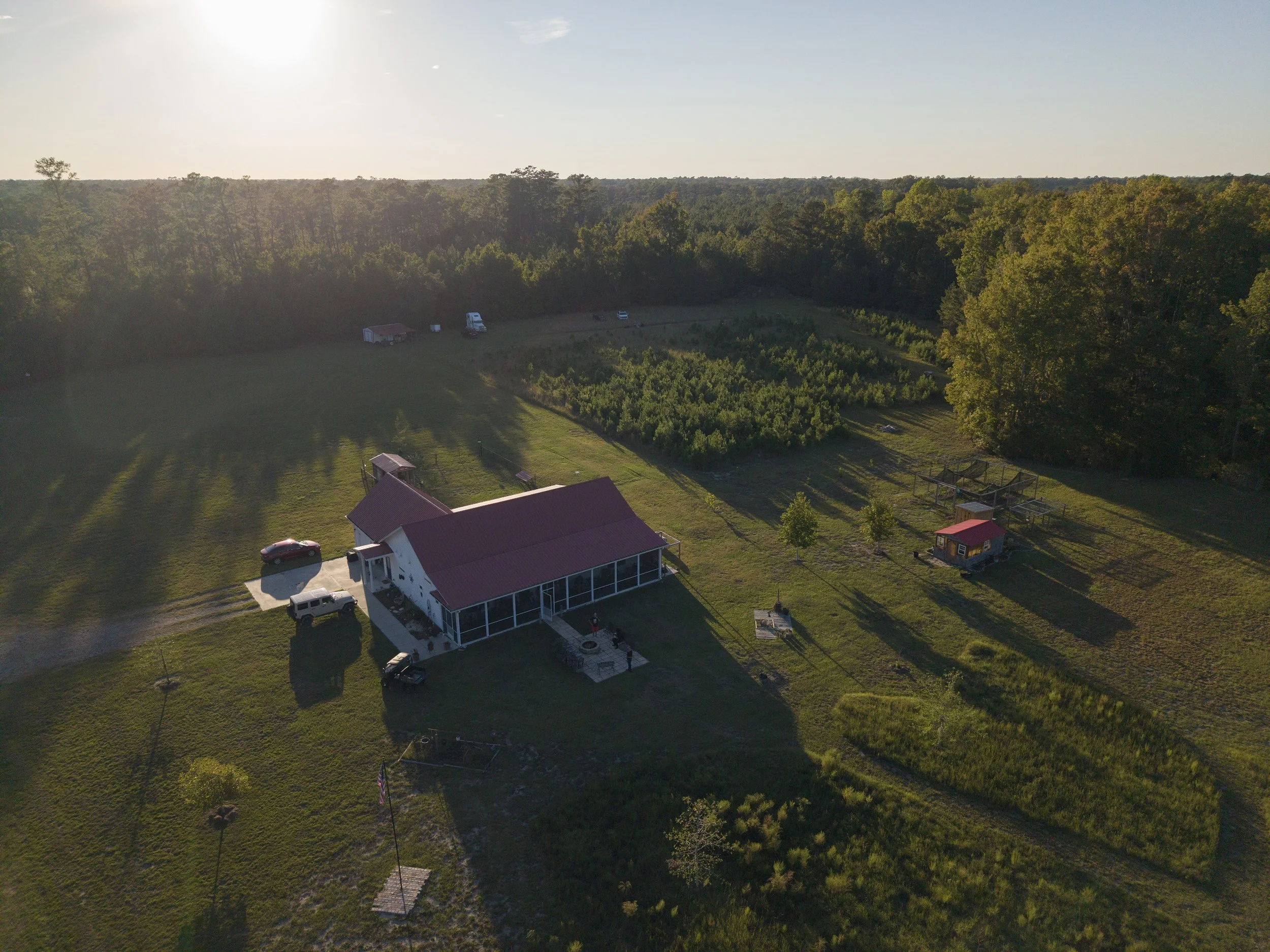
Charles Maring found the perfect afternoon light to captured the sun flared scenes in the outdoor field.
The second part of the film took us outside Savannah to a property belonging to friends of the band. We had approximately 30 acres to explore, and the possibilities felt almost endless.
Too many possibilities can be as challenging as too few. The important decision was not simply finding an attractive field. It was finding the position where the landscape, the band, and the afternoon light could work together.
I settled on a location that allowed me to point the cameras toward the descending sun. I have always loved lens flare. When it is intentional, flare can become more than an optical effect. It can create atmosphere, soften the boundary between subject and environment, and make light itself feel present in the story.
We filmed three complete performance takes during the later afternoon, again changing lenses and camera positions to create choices in the edit. The field gave the band room to breathe. Where the bar scenes feel close, warm, and crowded, the outdoor performance feels expansive.
The contrast between those environments became the structure of the finished film.
I am also a certified drone pilot, so I used the drone selectively for several field angles. Some were captured in the later afternoon, when the landscape still carried warmth and definition. Others were filmed closer to dusk, when the field became moodier and the band appeared smaller within the surrounding land.
The aerial footage was never intended to dominate the video. A few carefully placed perspectives were enough to establish scale and give the edit moments of release.
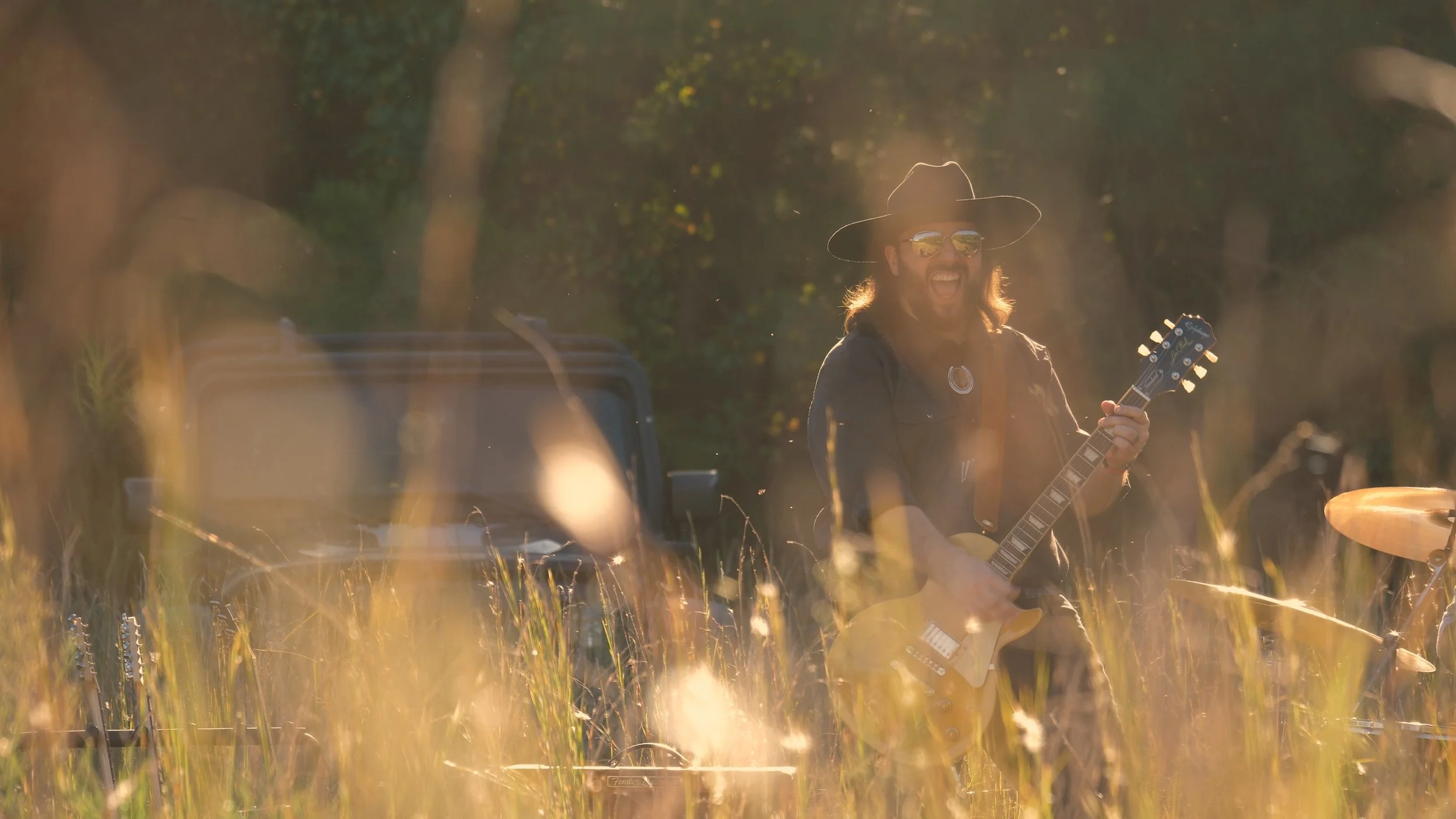
Golden light, lens flare, and genuine laughter became part of the creative energy surrounding the field performance.
Waiting for the Light to Change
After the afternoon performance coverage was complete, we waited.
As the sun disappeared, the field moved from gold into cooler dusk tones. We positioned a Jeep Wrangler and a truck behind the band and switched on their headlights. The beams gave us a practical source that felt appropriate to the rural location while producing separation, haze, silhouette, and flare.
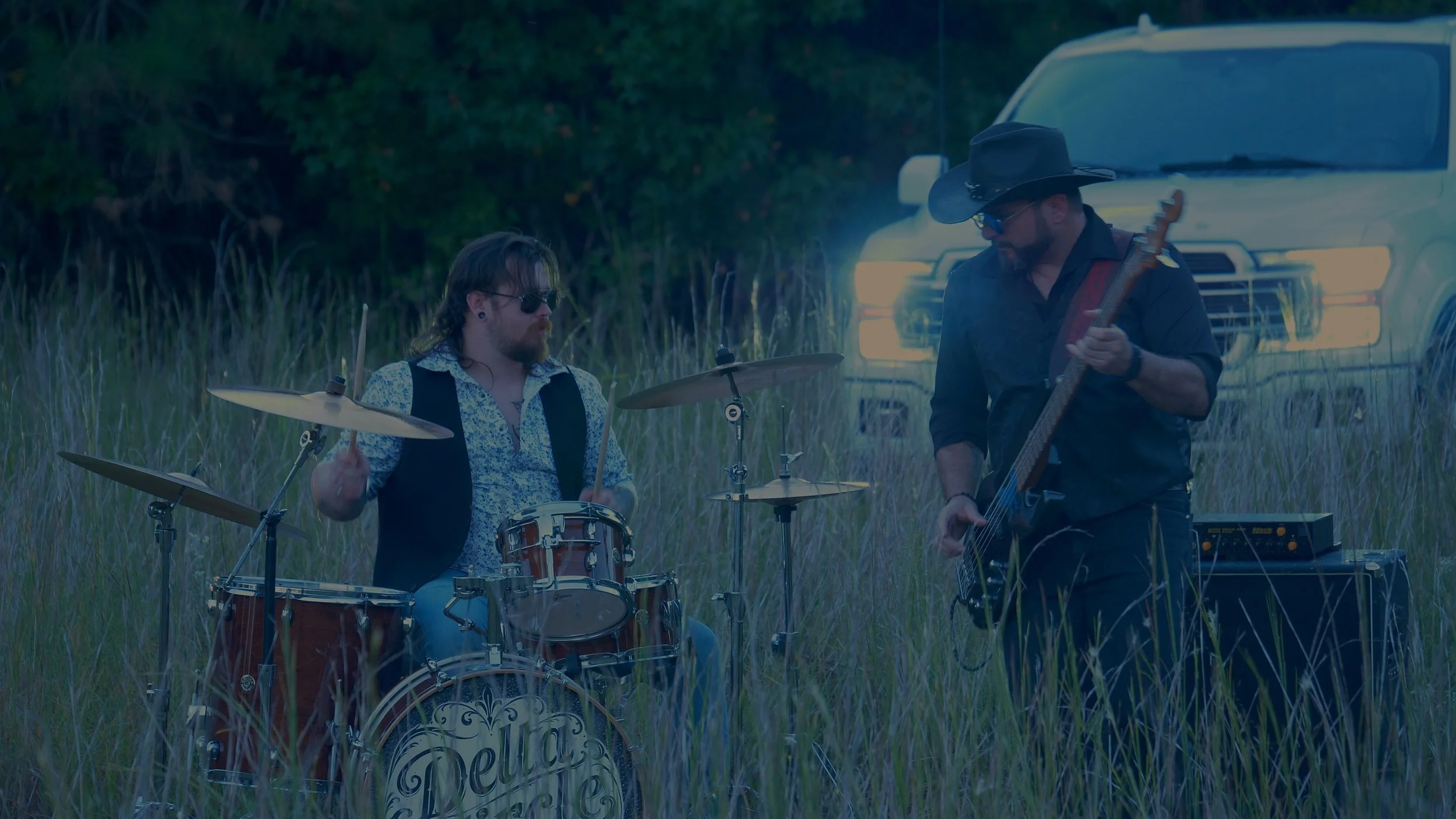
Darrell Anthony and Earnest Spiva perform at dusk as vehicle headlights begin shaping the next visual chapter of the film.
The headlights also created a visual echo of the setting sun. During the afternoon, natural light pushed directly into the lens. At dusk, the vehicle lights continued that same visual idea through a different source.
That continuity helped the film move from day into night without feeling as though we had entered an unrelated scene.
The changing light gave the field performance depth. Warm afternoon views transition into deeper greens, blue evening tones, silhouetted figures, and glowing points of light behind the musicians. The music does not remain visually static. It travels.
Bringing the Two Worlds Together
The bar and the field began with very different color environments. Boomy’s contained warm practical lamps, colored signs, television light, wood, skin, bottles, and reflections. The field moved from direct sun and dry grass into green woods, cooler shadows, dusk, and vehicle headlights.
The color grade became the thread connecting them.
I introduced a gold overtone across the film, especially within the highlights. I deepened the midtones and added contrast so the images retained weight. The treatment allowed the whiskey, wood, skin, grass, sun, and headlights to share a related warmth even as the dominant light changed.
The grade did not make every scene look the same. It gave them a common visual memory.
The final movement from the warm bar to the golden field, into deep evening blue, and back again creates a circle. The field can be read as freedom, memory, imagination, or simply the larger world of the song. The bar remains the place where the story begins and where its central tension lives.
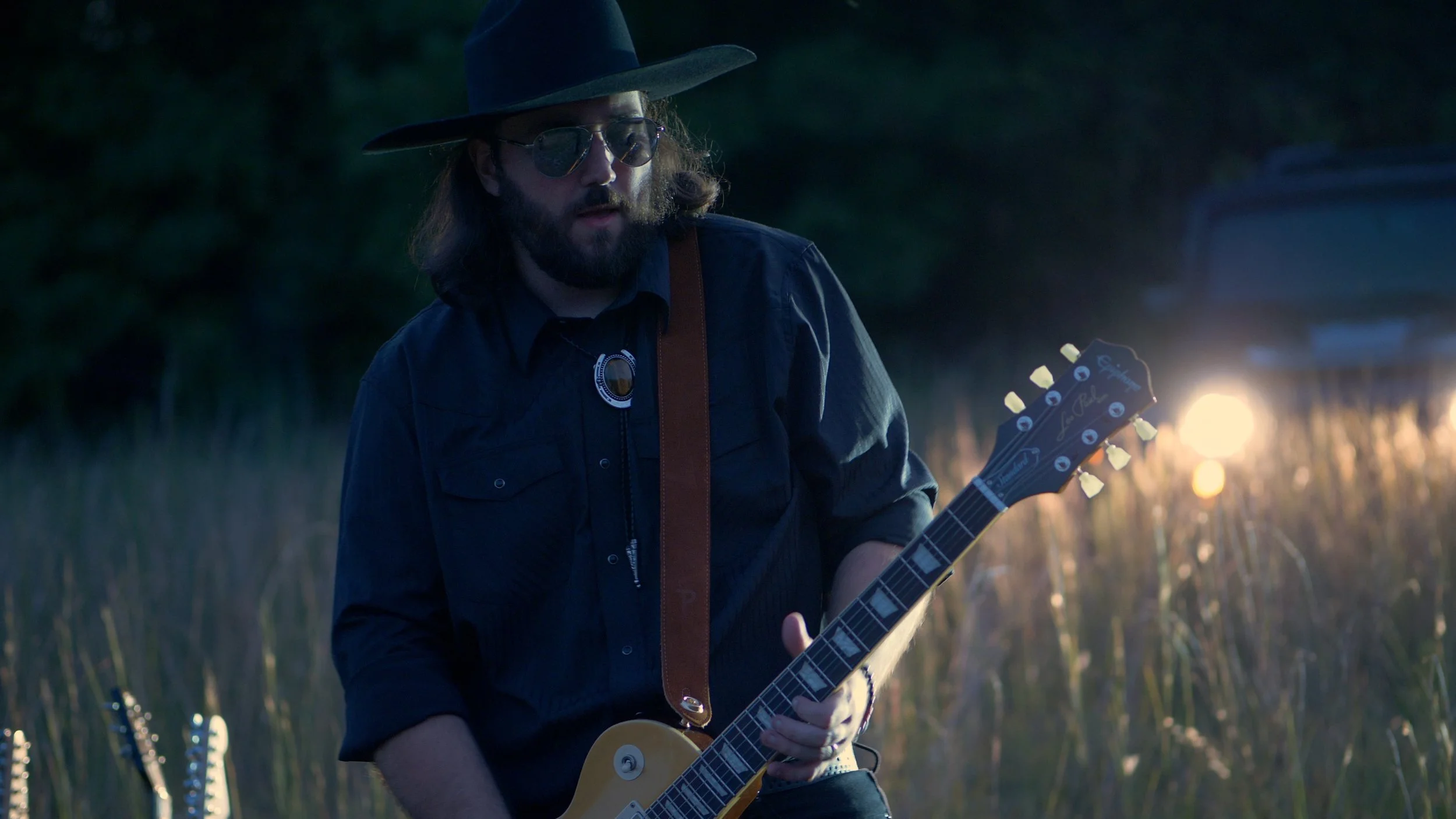
Nic Ziter performs during blue hour, when the warmth of the setting sun gave way to the cooler tones of evening.
The band also revised the audio mix before the final export, bringing Nic’s vocal farther forward. That adjustment gave the lyric and the image the same center of gravity. His face carries the film, and the new mix allows his voice to occupy that position as well.
The Film We Found
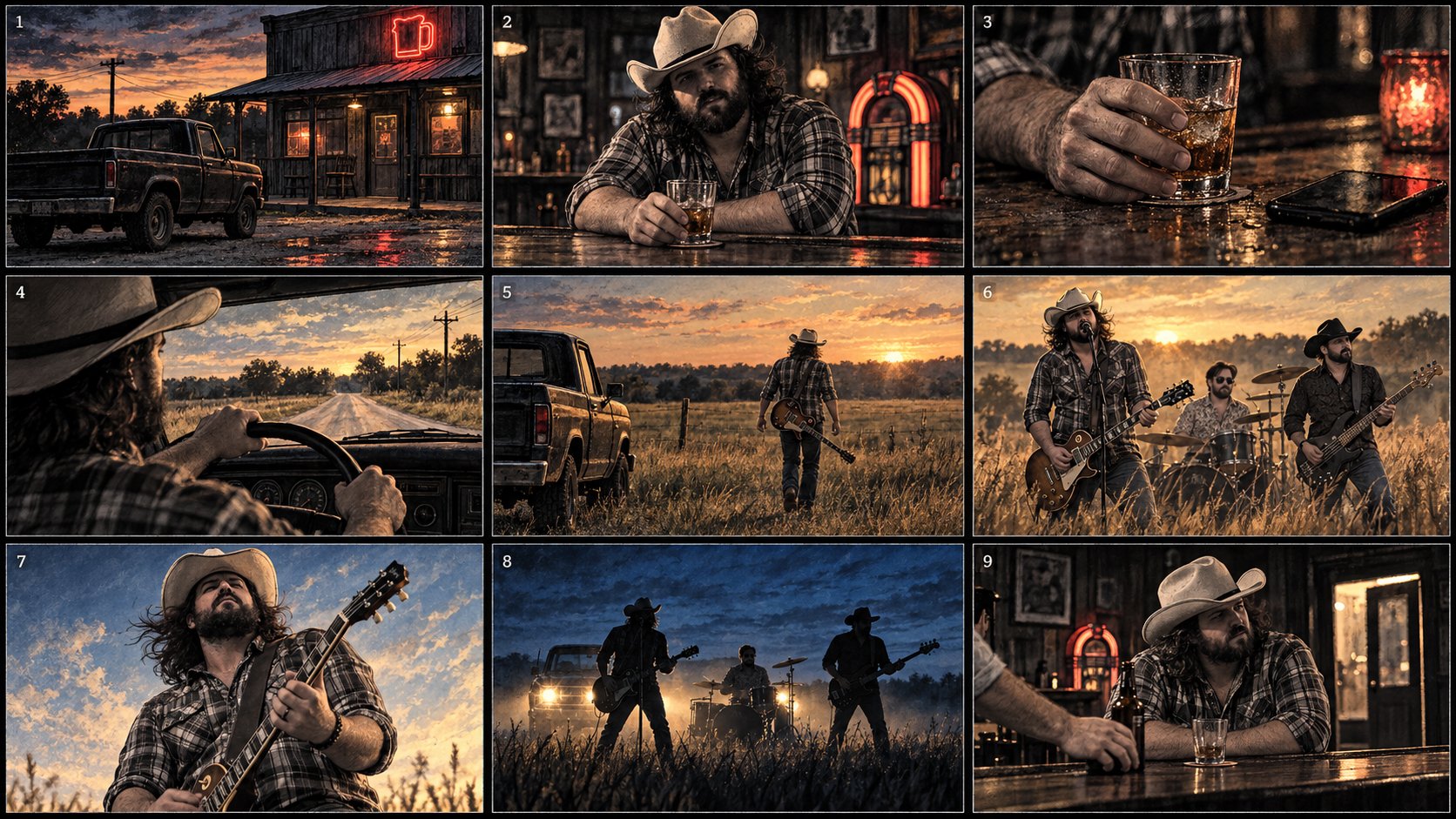
The original storyboard established the bar, field, vehicles, and changing light as the visual foundation for “My Own Doctor.” The finished film evolved as the locations and performances revealed new possibilities.
The completed video is different from the storyboard we discussed before filming. That is not unusual. A plan provides direction, but filmmaking also requires attention to what is actually happening in front of the camera.
Boomy’s was louder, busier, and more crowded than a controlled treatment might have imagined. The field offered more scale, flare, texture, and changing light than we could have predicted. The people, locations, and weather all contributed something that could not have been manufactured in advance.
The work was to recognize those gifts and build the film around them.
What began with one black and white song at Honky Tonk South became an editorial story, a relationship with the band, and eventually the official music video for “My Own Doctor.”
That progression matters to me. It is a reminder that creative work does not always arrive as a defined opportunity. Sometimes it begins by paying attention, trusting an instinct, and making something because the moment deserves to be seen.
Delta Circle is Nic Ziter on lead vocals and guitar, Earnest Spiva on bass, and Darrell Anthony on drums.
“My Own Doctor” was directed, filmed, color graded, and edited by Charles Maring in Savannah, Georgia.
Let’s Make Something Worth Remembering
The strongest films begin with trust, a clear idea, and the freedom to recognize possibilities that no storyboard can fully predict. If you are an artist, musician, brand, or creative team with a story worth bringing to life, I would love to hear what you are imagining.