Why I Photographed Delta Circle in Black and White
Delta Circle live at Honky Tonk South, photographed and filmed entirely in black and white to reveal the light, movement and connection between the musicians and the packed Savannah crowd.
What being a musician taught me about photographing the moment before it happens
Some performances ask to be photographed in color. The lighting, wardrobe and atmosphere become inseparable from the story.
This was not one of those nights.
When I photographed and filmed Delta Circle at Honky Tonk South in Savannah, I decided the entire story belonged in black and white. The room was packed. The stage was alive. People were dancing, singing and moving in every direction. Yet beneath all that energy, what interested me most was something quieter: the relationship between three musicians, their instruments and the audience they were holding for the night.
Color would have described the room. Black and white revealed its character.
The complete story of the band, its original music and its growing place in Savannah's music scene appears in Inside the Circle on Savannah Proper. This collection is about something different. It is about how I saw the performance and why photographing musicians feels unlike almost anything else I do with a camera.
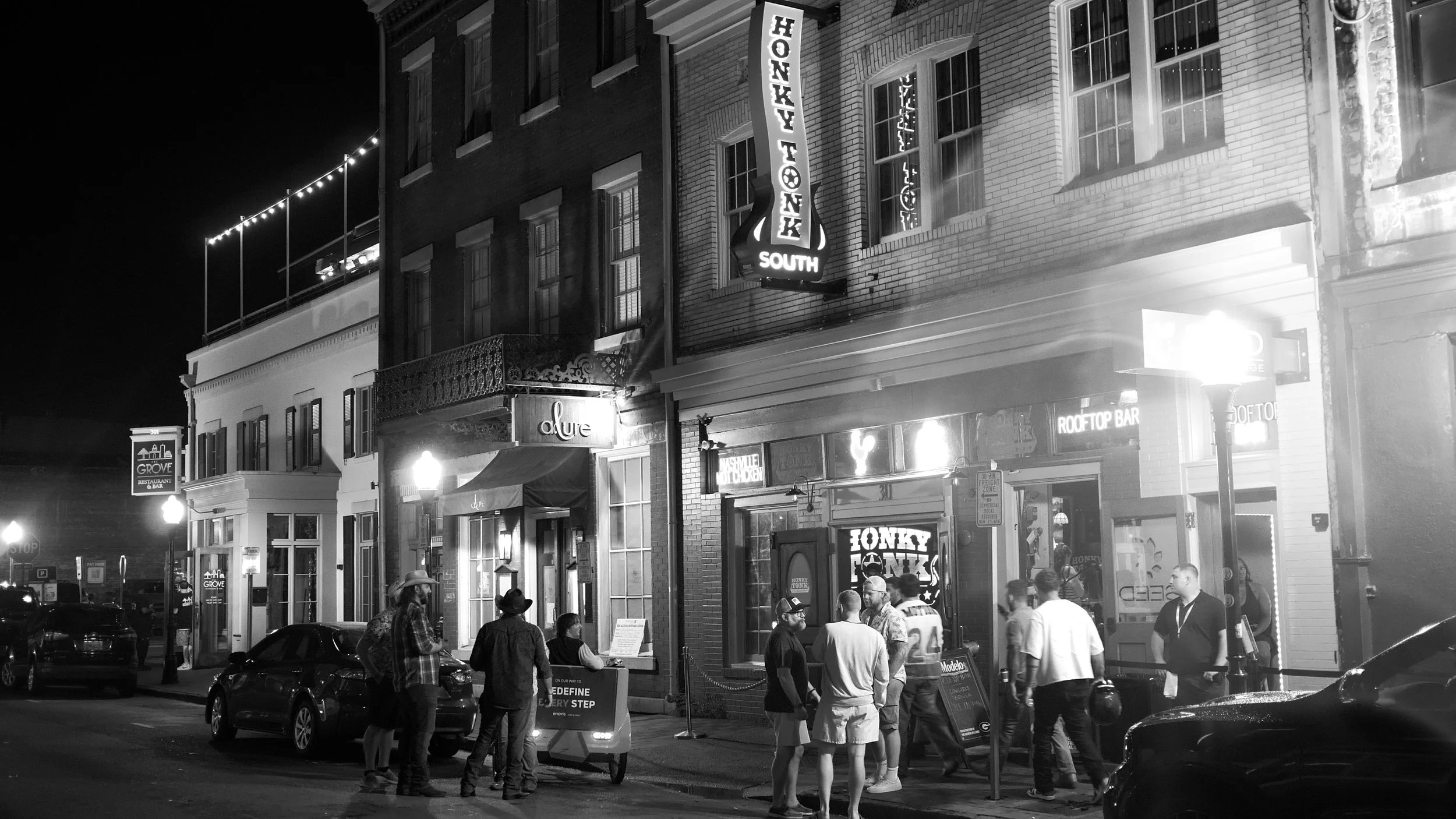
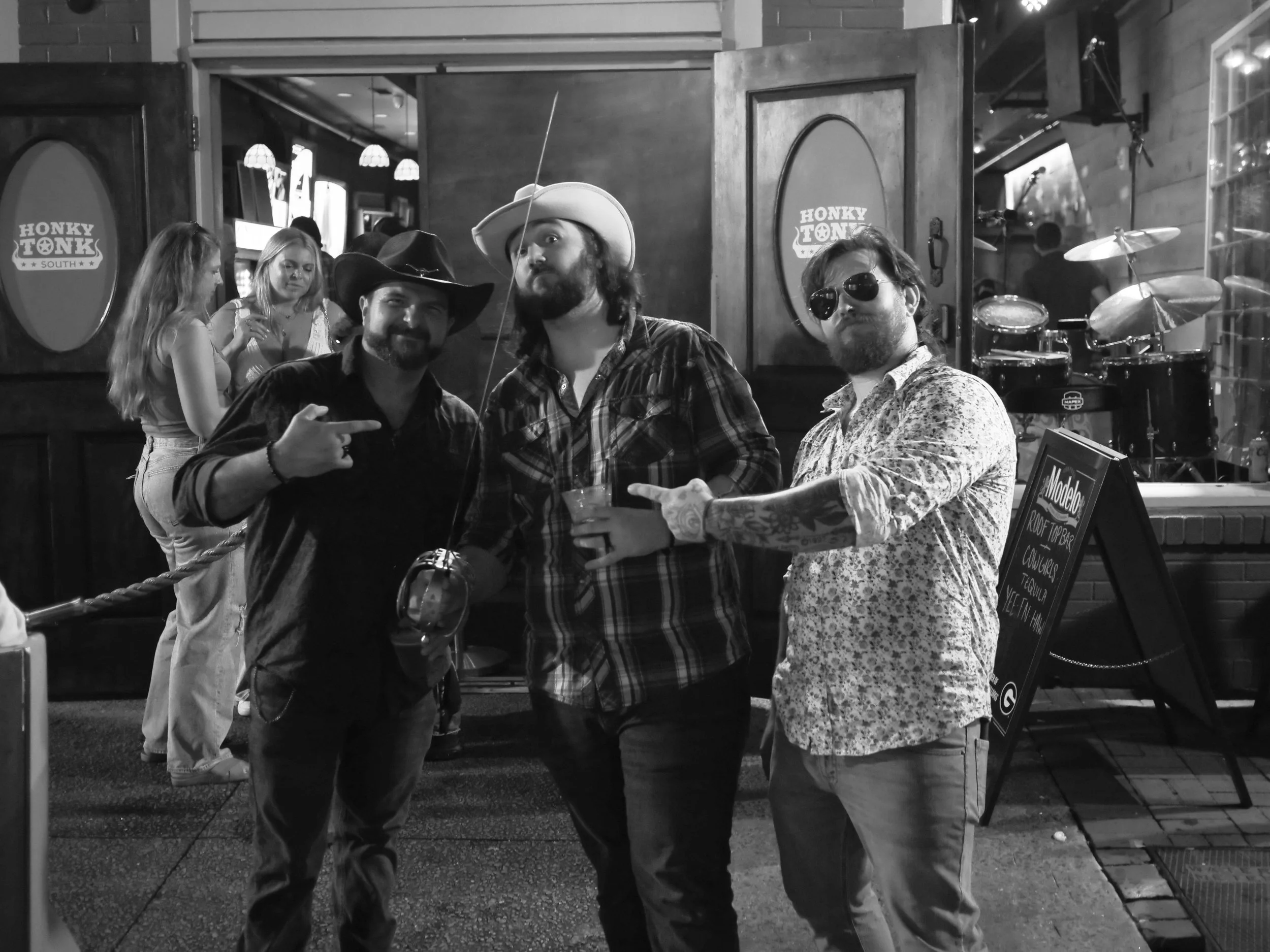
Outside Honky Tonk South, musicians and guests gather beneath the lights of West Congress Street before the night moves inside.
Before the first note
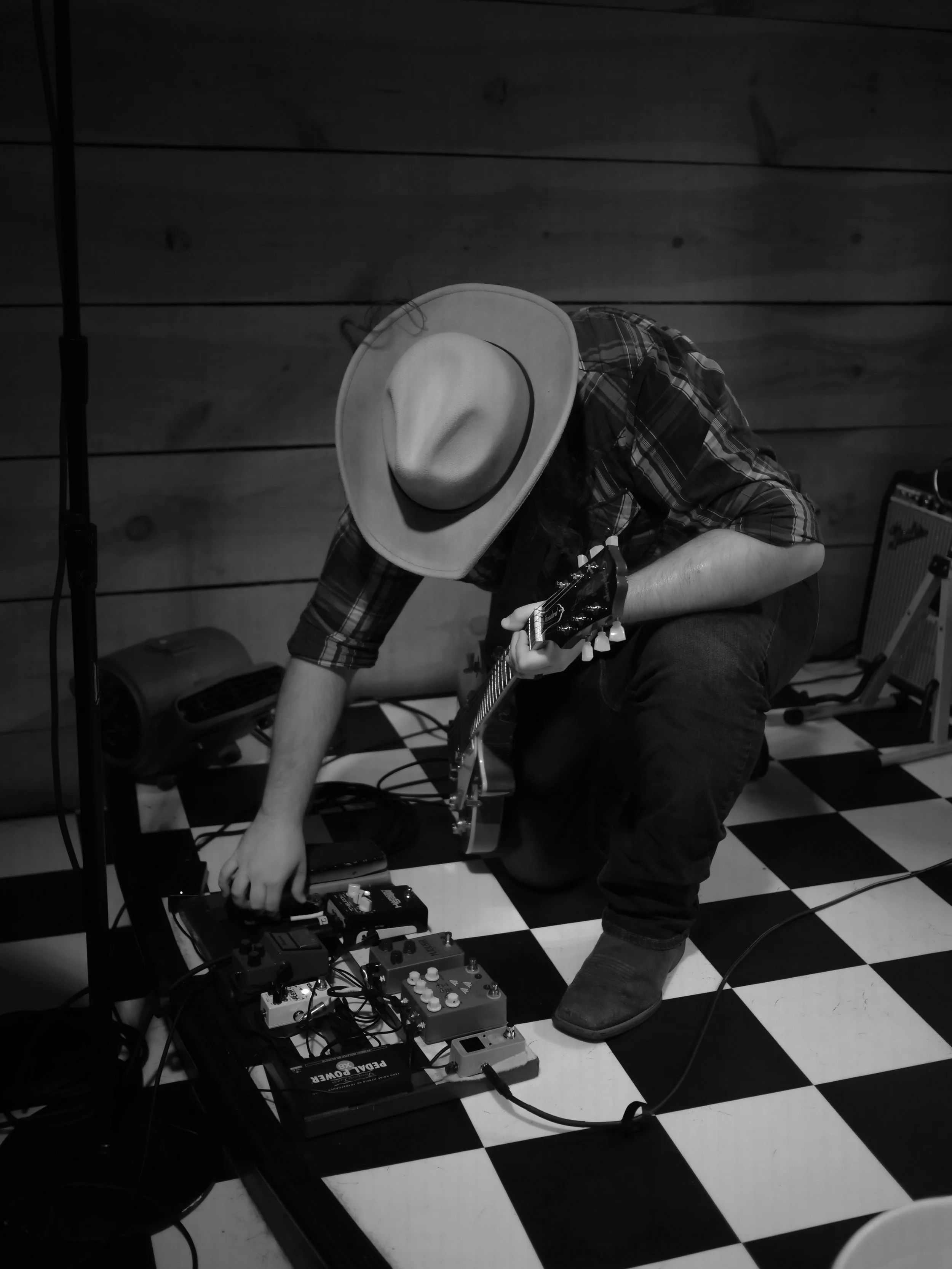
The performance begins before the first note, with instruments, cables and effects prepared for the night ahead.
Delta Circle was already hanging outside Honky Tonk South when an impromptu portrait came together. Nothing about it needed to be elaborate. The venue was behind them, the city was still moving around them and the performance was waiting just beyond the doors.
That brief moment gave the story a beginning.
The three musicians were relaxed and playful outside. Minutes later, they would be under stage lights opening the night with "Beer Never Broke My Heart" in front of a packed house. I wanted the photographs and film to hold both sides of that transition: the people before the performance and the performers once the music took over.
I have always believed that a strong visual story needs more than a collection of peak moments. It needs anticipation. It needs pauses. It needs enough room for the viewer to feel that something is about to happen.
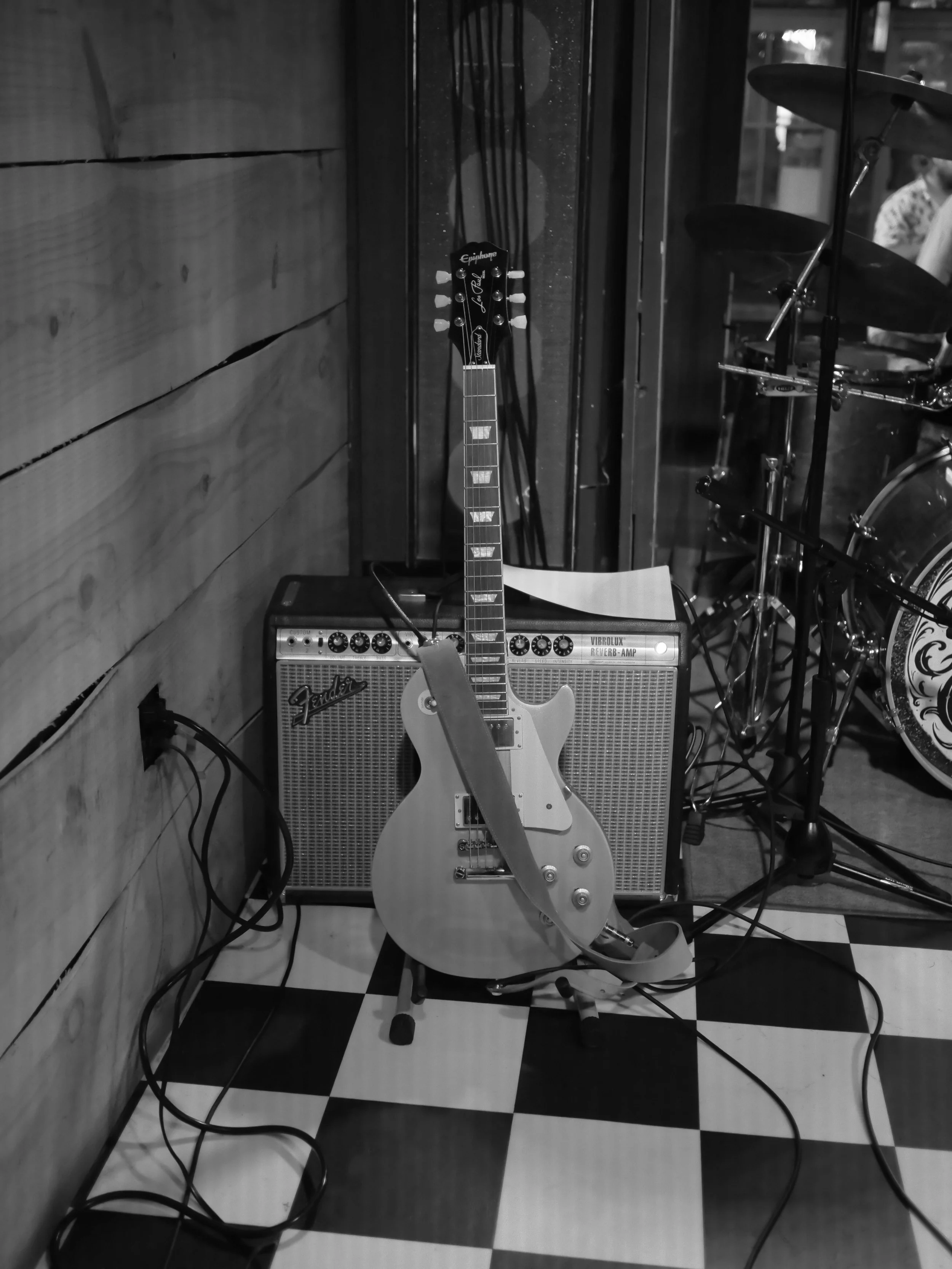
A guitar and amplifier wait beneath the stage lights before Delta Circle begins its performance.
Hearing the photograph before seeing it
Being a musician changes the way I photograph live music.
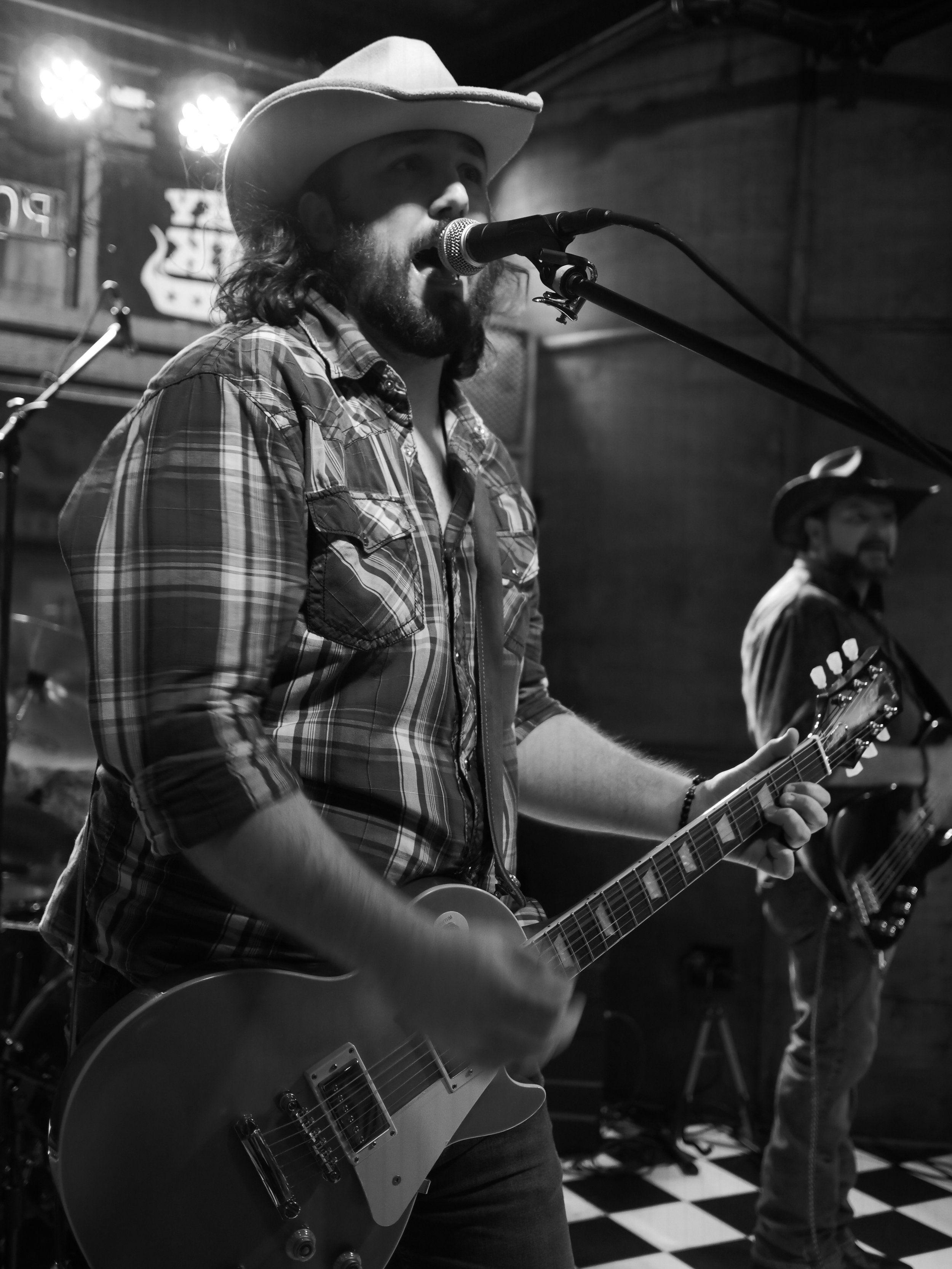
Nic Ziter leads Delta Circle from the microphone as the band opens the night in Savannah.
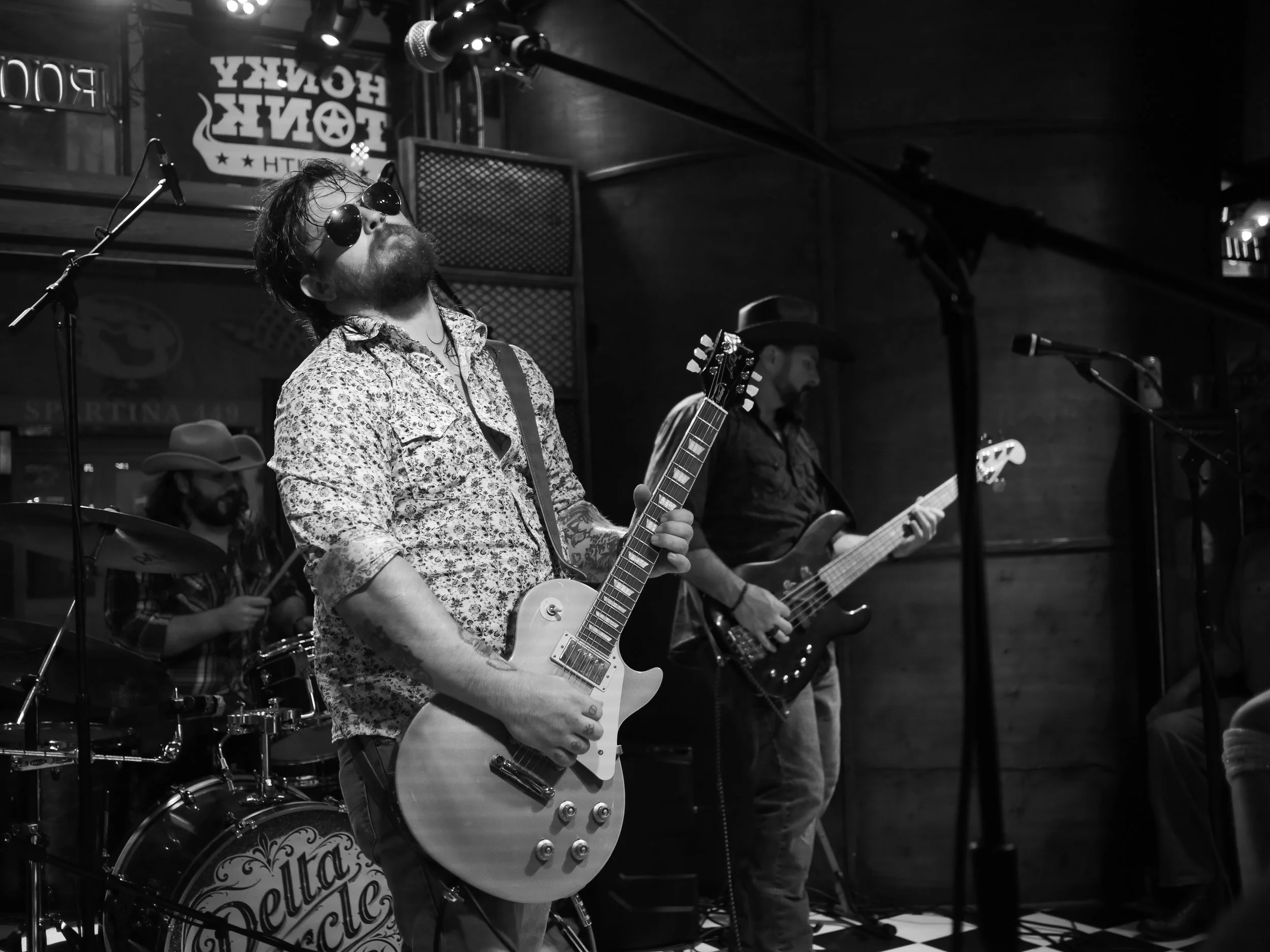
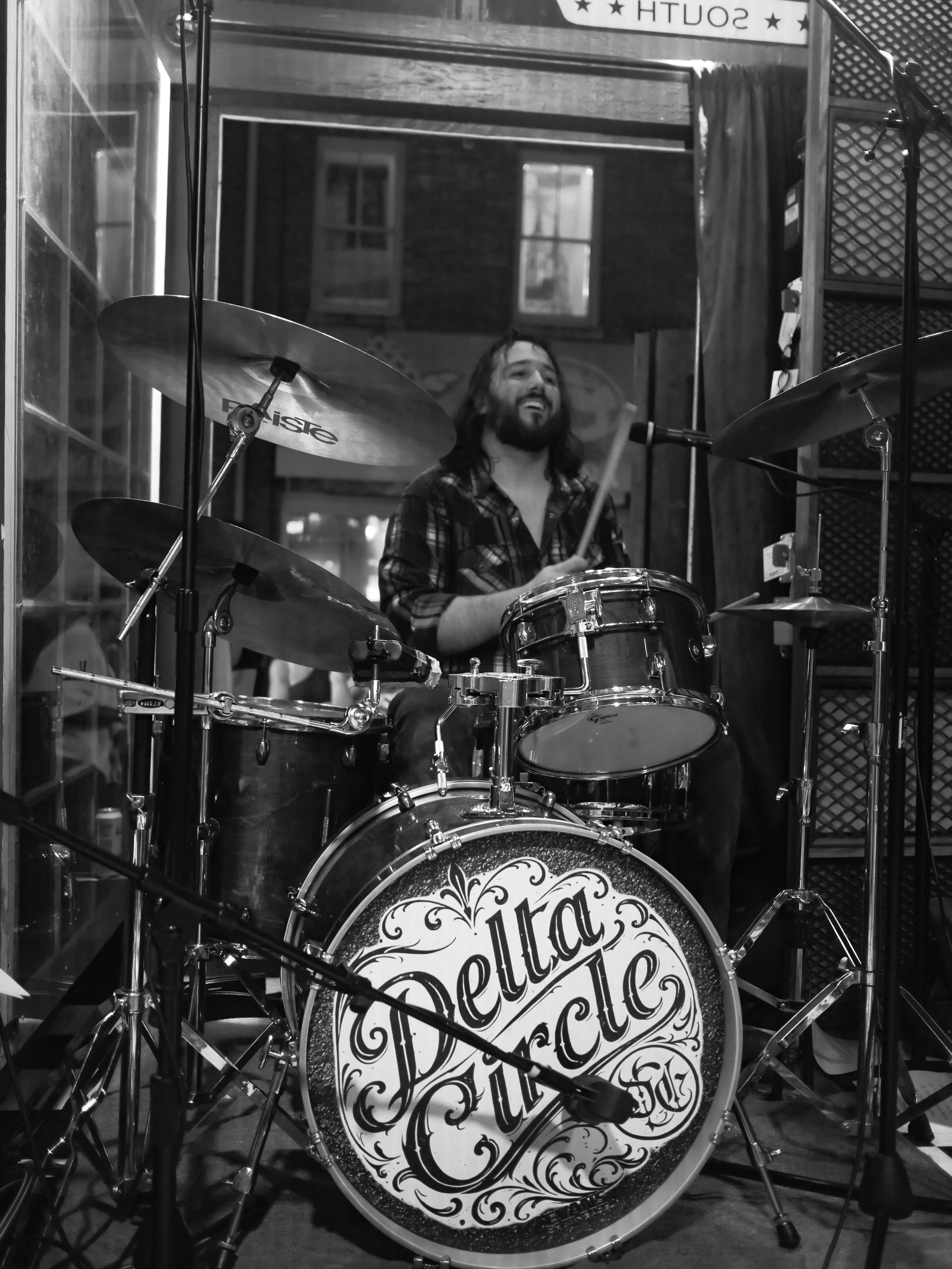
I am not only watching the stage. I am listening for structure. I can feel when a verse is beginning to build, when a chorus is about to open up and when a guitarist is preparing to lean into a phrase. I watch the drummer for the lift that comes just before an accent. I notice when musicians exchange a glance because something has clicked between them.
Those moments are often over before they can be consciously analyzed. The camera has to arrive early.
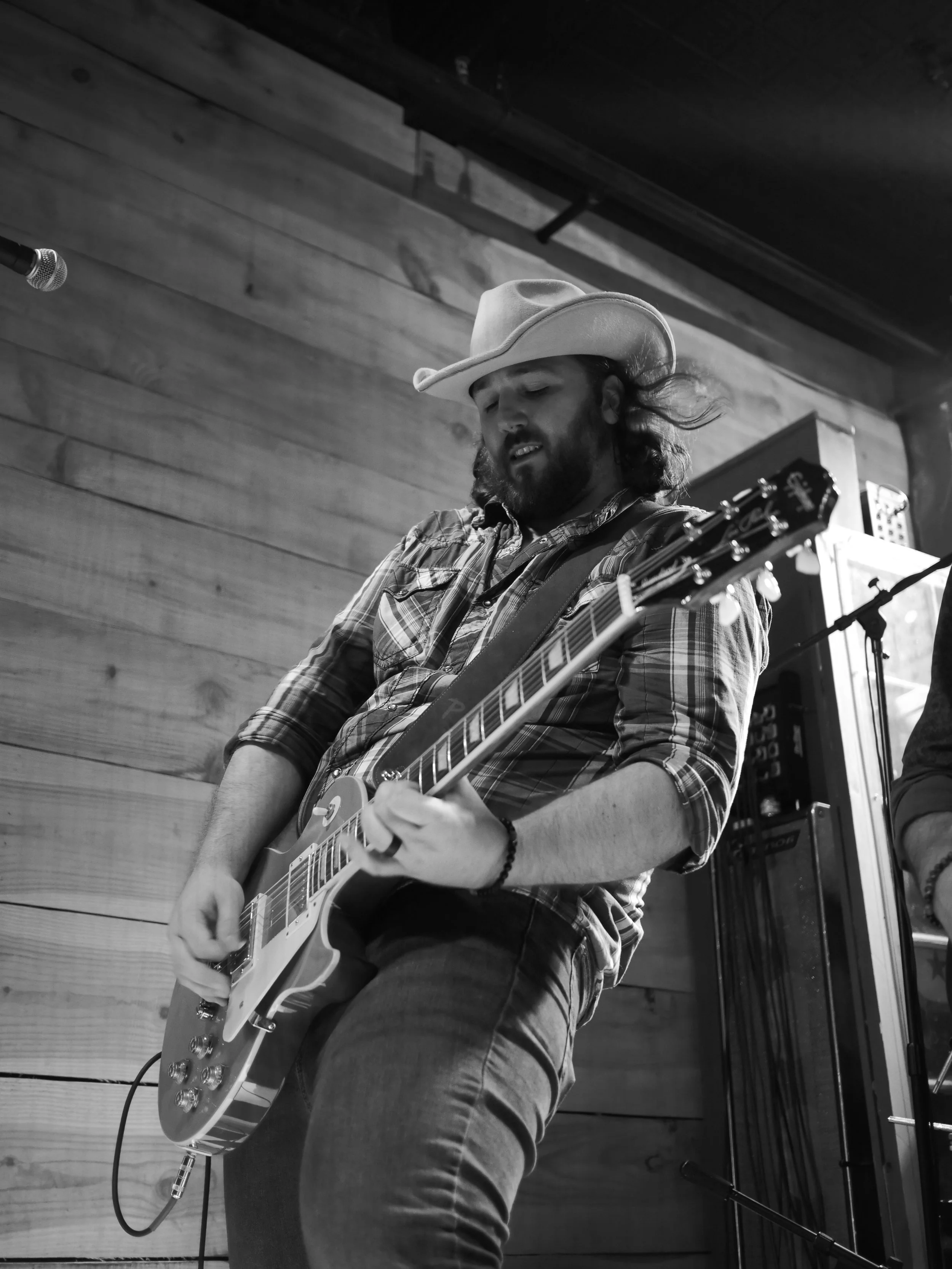
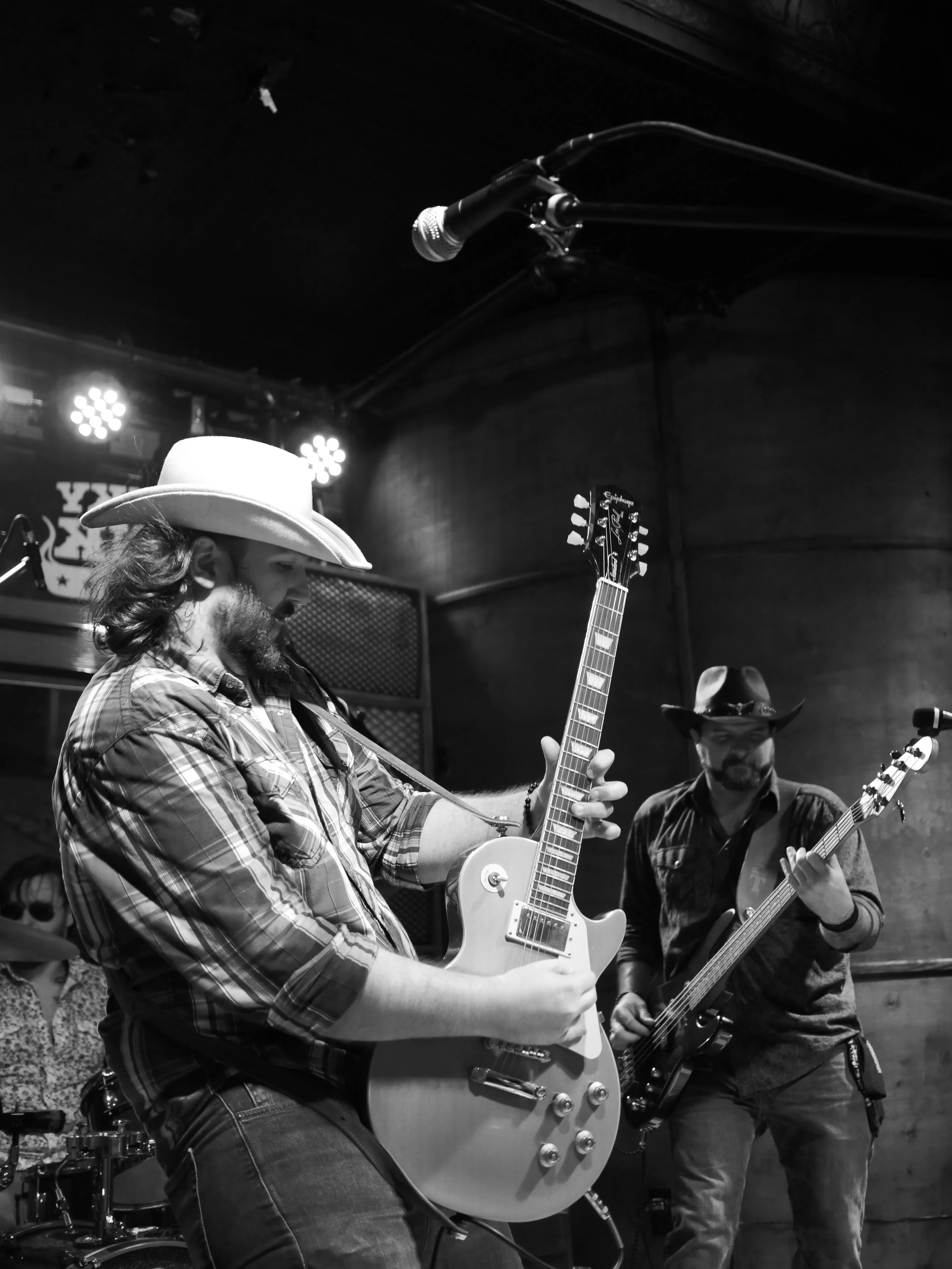
Live music photography is not simply about reacting quickly. It is about recognizing patterns and anticipating where the energy is going next. Sometimes the photograph is the singer at the microphone. Sometimes it is a hand tightening around a guitar neck. Sometimes it is the space between musicians as they listen to one another.
And sometimes the real photograph is behind you in the crowd.
The audience is part of the band
Delta Circle understood how to hold the room that night. They perform a broad mix of country, Southern rock and familiar songs people immediately recognize, but their appeal is not built on recognition alone. It comes from the way they involve the audience in the performance.
That exchange matters visually.
A live performance is incomplete without the people receiving it. Raised hands, silhouettes, movement across the dance floor and faces turning toward the stage all become part of the composition. The crowd is not an obstacle between the photographer and the band. It is evidence that the music is working.
In several of my favorite frames, the audience occupies the foreground while Delta Circle performs beyond it. The silhouettes give the photographs depth, but more importantly, they establish a relationship. The band is not playing into an empty room. It is sending energy outward and receiving it back.
That is the story of a successful live show.
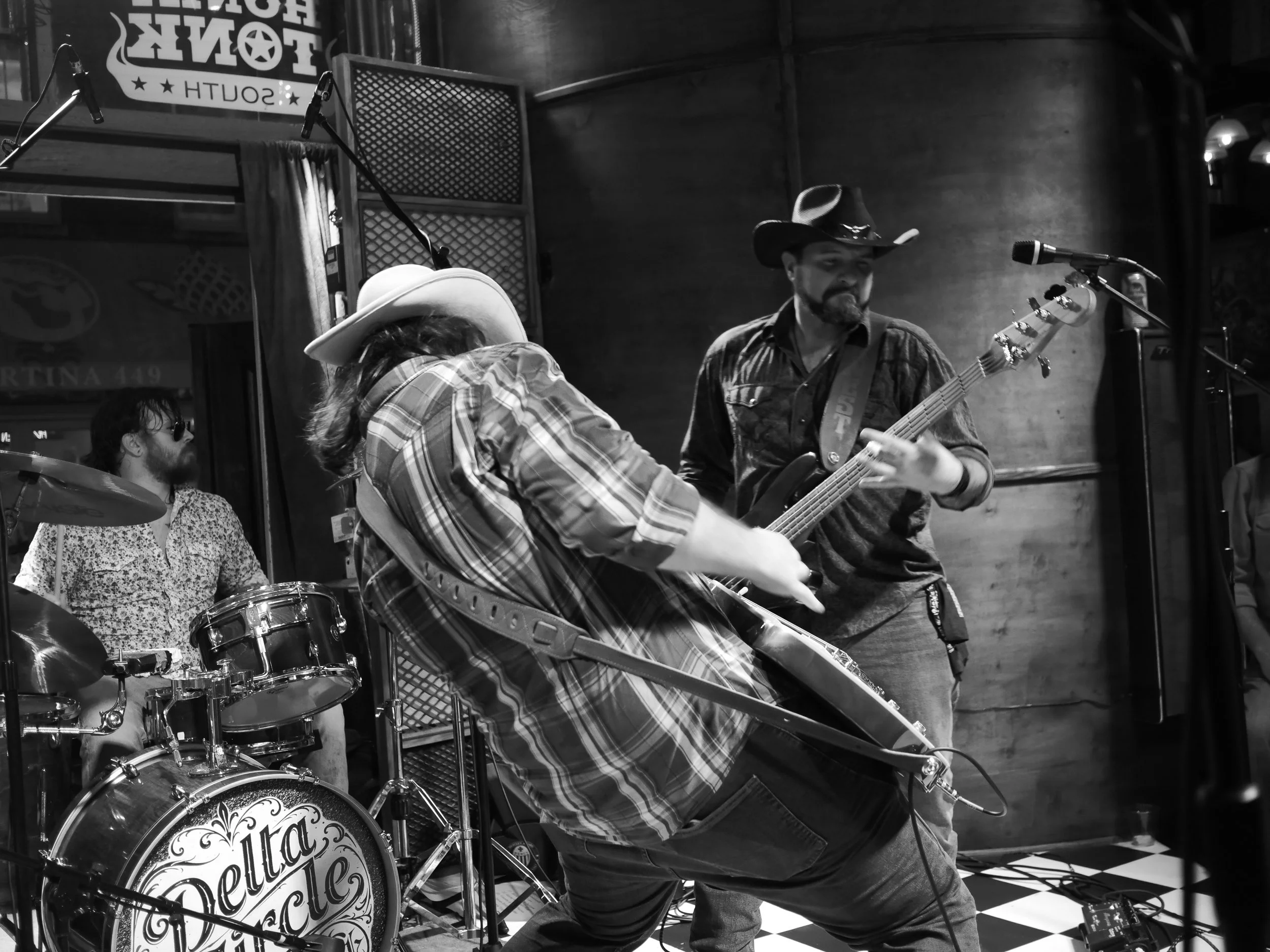
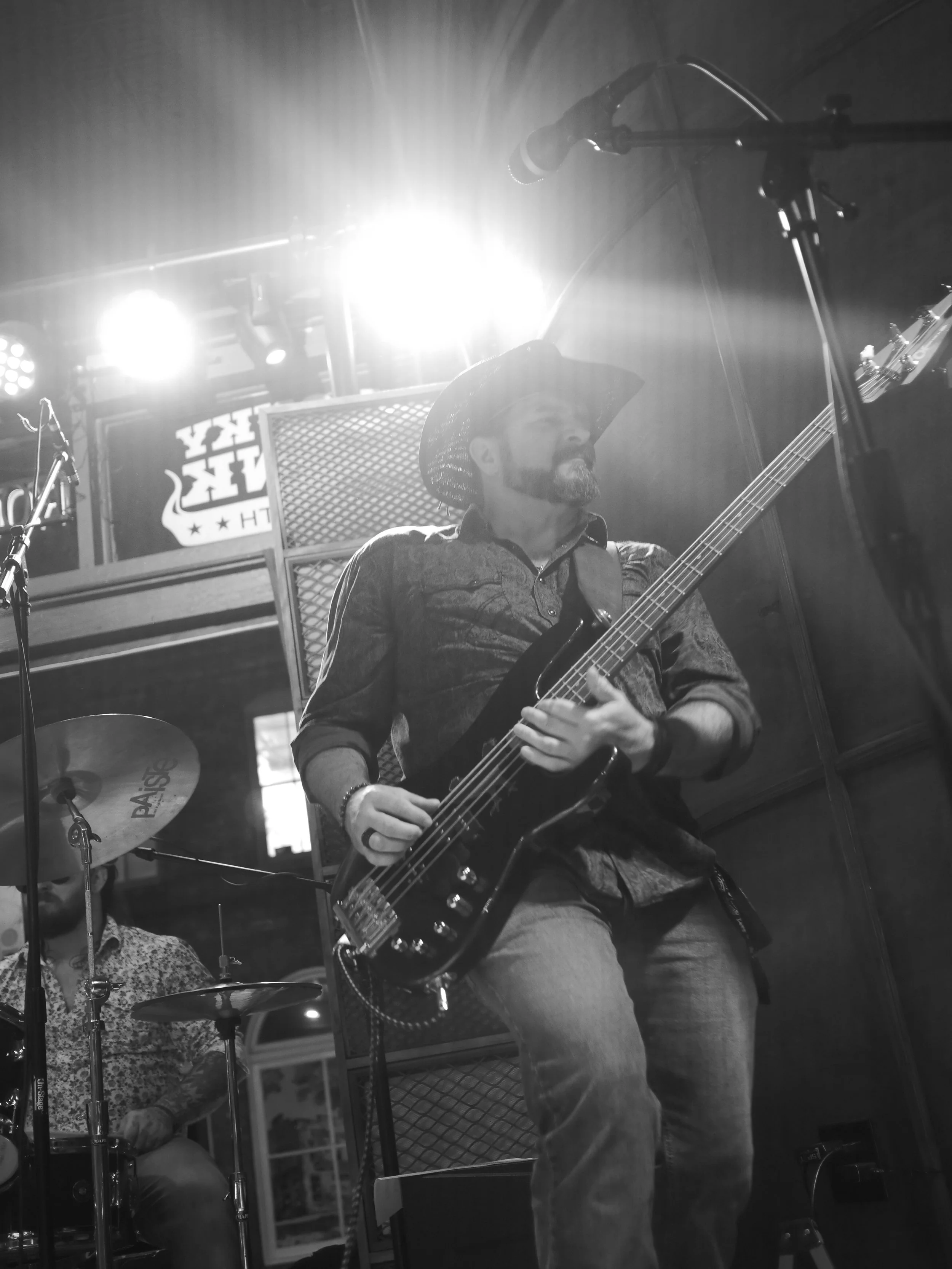
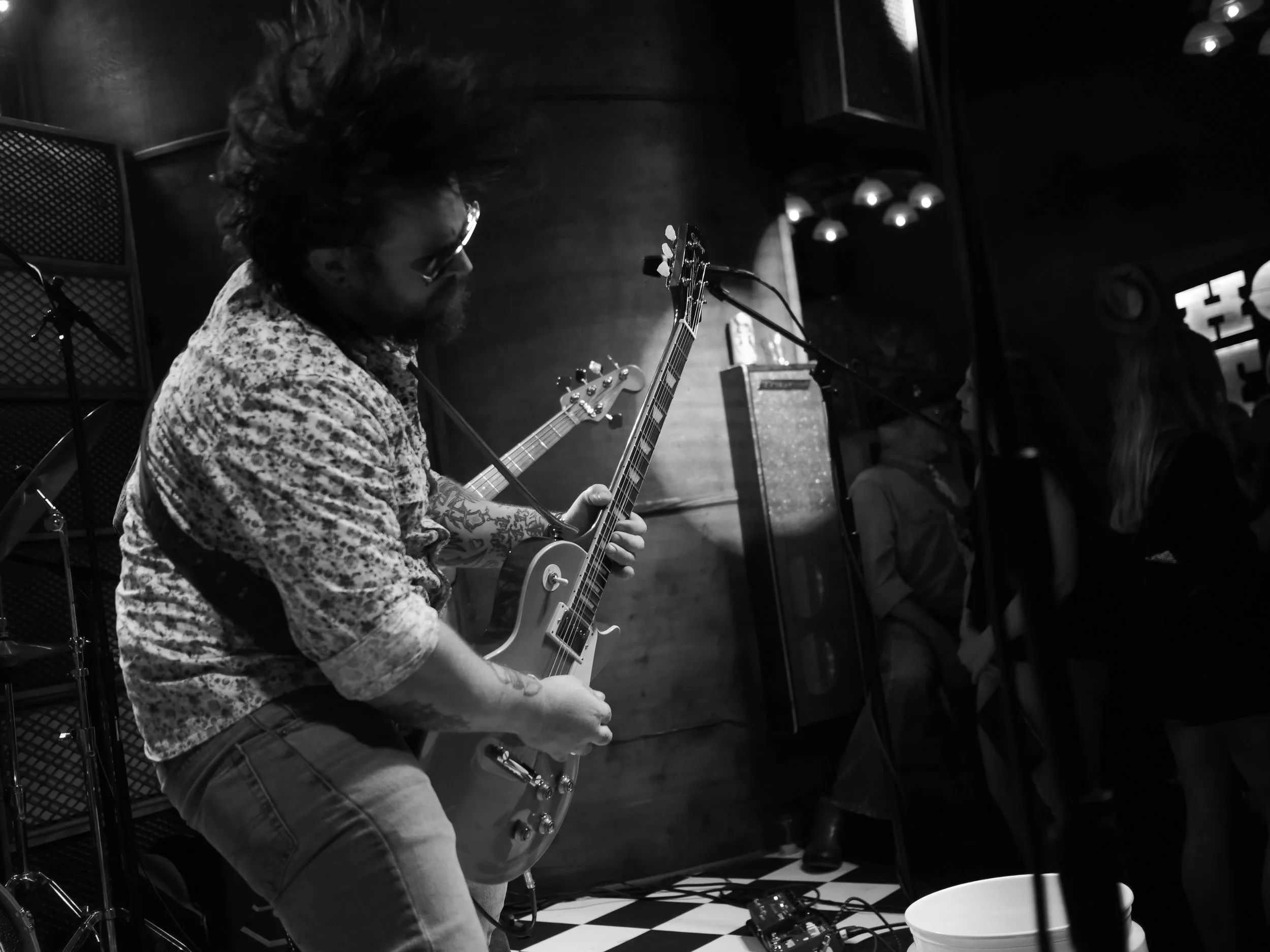
Delta Circle in motion, with each musician responding to the same rising pulse.
Why black and white
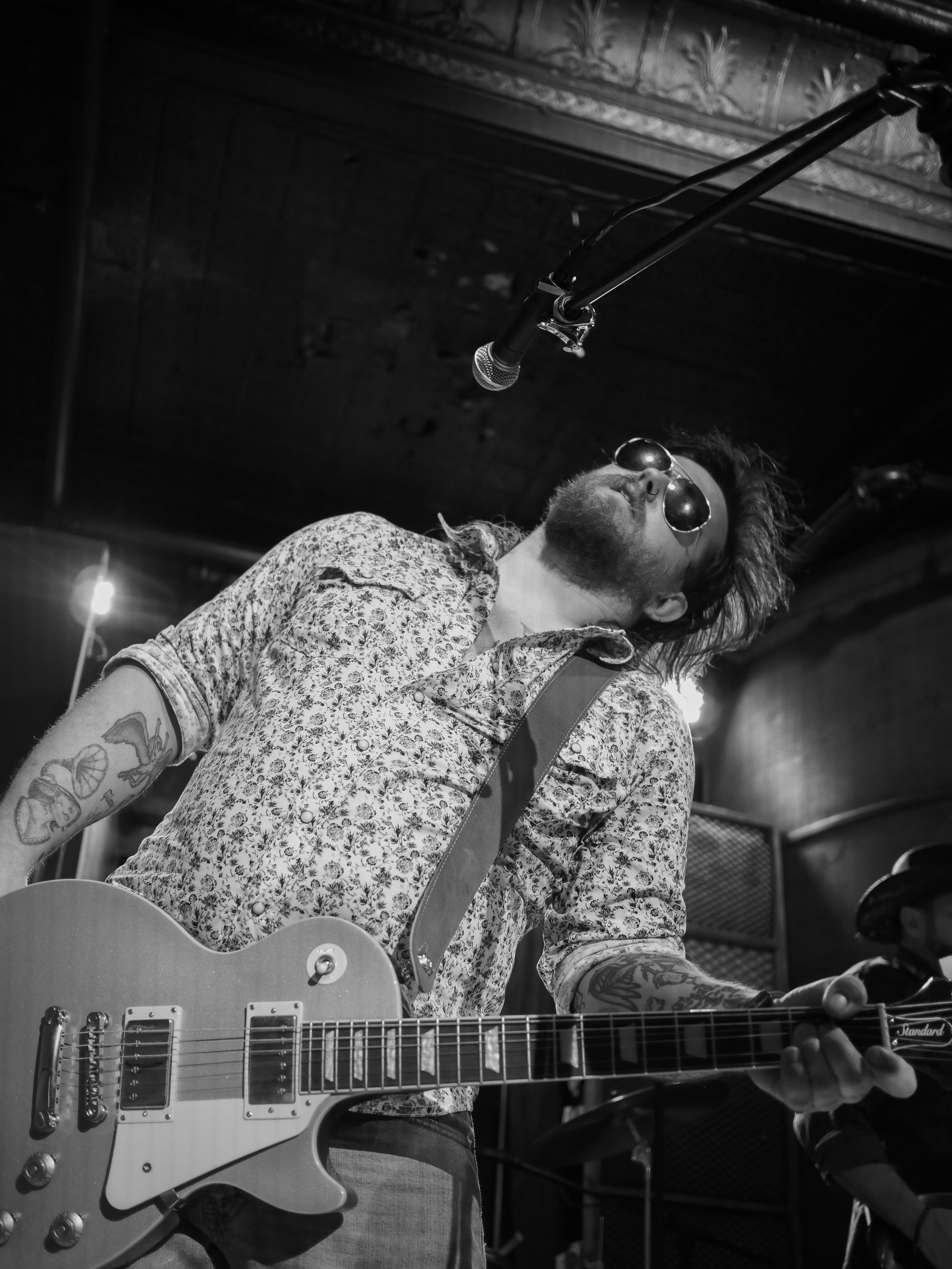
A fraction of a second turns the speed and force of a guitar performance into a still image.
Stage lighting can be spectacular, but it can also become the loudest thing in a photograph. Colors compete with clothing, instruments, skin tones and one another. In the wrong moment, the lighting describes the equipment more than the performance.
Black and white changes the hierarchy.
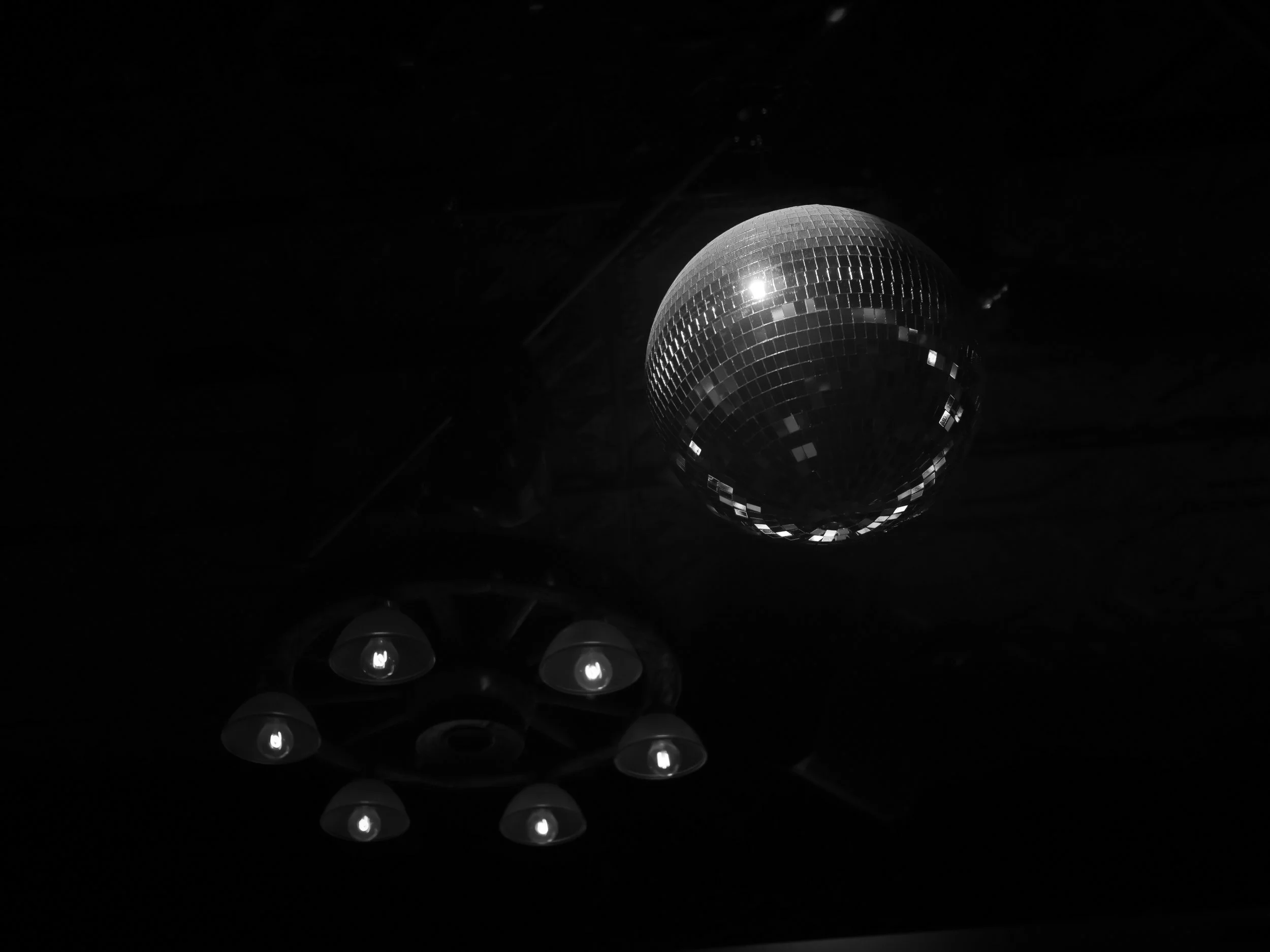
It makes light itself visible. A bright flare behind a musician becomes atmosphere. Sweat, texture, smoke, reflections and the grain of the room begin to matter. A cowboy hat becomes a shape. A guitar becomes a line cutting through the frame. The audience becomes a moving field of shadow.
Most importantly, expressions become harder to ignore.
Removing color also gave the still photographs and the film one visual language. The street footage, the performance, the crowd and the exterior of Honky Tonk South all feel as though they belong to the same memory. The finished piece is less like a recording of a song and more like a short concert film discovered inside a Savannah night.
Still photographs and motion
Photographing and filming the same performance requires two different kinds of attention.
A still photograph asks for one decisive fraction of a second. Motion asks the moment to continue. In a photograph, a gesture can become permanent. In film, the viewer experiences how that gesture arrived, what it sounded like and what followed it.
Neither replaces the other.
Together, they give the story dimension. The film preserves the momentum of Delta Circle opening the night. The photographs slow that momentum down enough to reveal individual expressions, details and relationships that might otherwise disappear inside the speed of the performance.
That combination has become central to the way I tell stories. I am always looking for the image that can stand alone, but I am also listening for the larger rhythm connecting one image to the next.
Photographing the work
There is a particular honesty in photographing musicians at work.
The stage may be designed for entertainment, but the effort is real. The hours behind the instruments are real. So is the challenge of walking into a room, earning its attention and keeping it for an entire night.
Delta Circle did exactly that at Honky Tonk South.
My job was not to manufacture the energy or make the room appear more alive than it was. My job was to recognize what was already happening, move through it without interrupting it and translate the experience into photographs and film.
That is what I want from live music imagery. Not simply proof that a performance happened, but a sense of what it felt like to be there when the room and the band became part of the same thing.
For this night, black and white said it best.
Photography and film by Charles Maring of Maring Visuals, based in Savannah, Georgia.