Finding the Work: Before the City Wakes
A cinematic journey through painting, photography, songwriting, Savannah, and the creative community that makes the work meaningful
The clock read 5:55 when I turned on the camera, but I had already been awake for more than an hour.The loft was dark. Savannah was still sleeping beyond the terrace, and the only warm light in the room came from the lamp above my easel.I stood in front of a painting that had been hanging in the loft for some time. Technically, it was finished. I had lived with it, studied it in different light, and waited for it to say something back to me. It never really did.There comes a point when an artist has to admit that something is not finished, even when it appears complete. Rather than continue protecting what was already there, I picked up an oil stick and began painting over it.I did not have a new image in mind. I was simply building texture and trying to find the energy hidden beneath the surface.That was the beginning of this film and the beginning of Finding the Work.
Creativity Often Begins Without an Answer
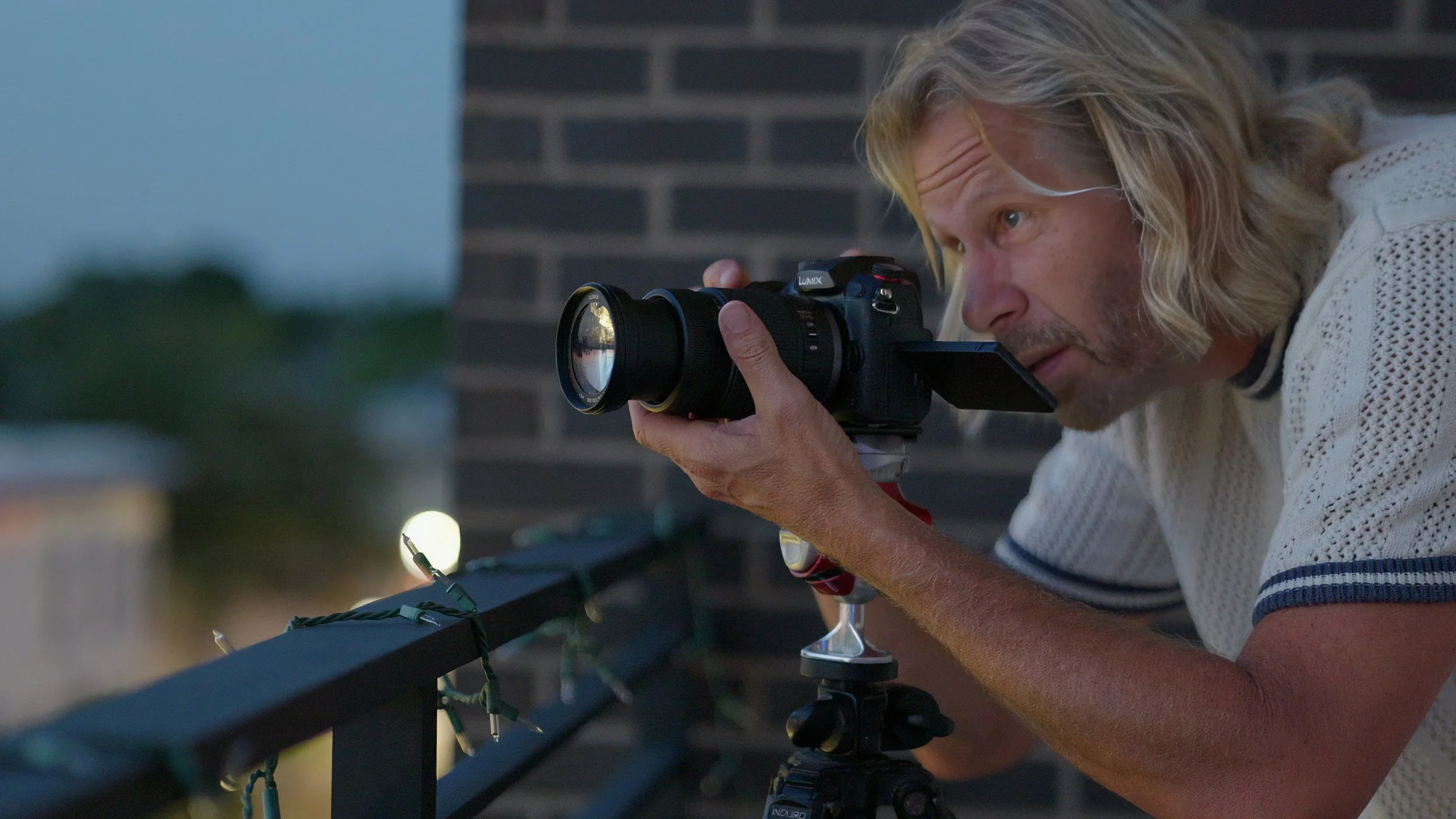
From the loft terrace, Charles turns toward photography and waits to see what the moving clouds and changing Savannah light will reveal.
There is a romantic idea that artists receive fully formed inspiration and simply bring it into the world. My experience is usually different. Sometimes creativity begins with movement. You make the first mark. You pick up the camera. You write down a line. You play a chord. You follow the light. You do something before you completely understand where it is leading. Painting gives me the freedom to bring together memory, imagination, color, texture, and experience without requiring them to make immediate sense. My fine art paintings often evolve slowly, revealing themselves over weeks, months, or even years. This smaller canvas was still raw. The Shiva Oilstick moved differently than a brush, leaving physical evidence of the gesture. I peeled away the skin that had formed around the paint and began again. The dog watched while I worked. Eventually, I sat beside her and stared at the canvas, studying what was there and trying to discover what might come next. Outside, clouds were moving above the Savannah skyline. I prepared a camera, carried it onto the terrace, and set up a time lapse. Four hundred frames, one photograph every five seconds. Painting asks me to create the moment. Photography asks me to recognize it. Both require patience.
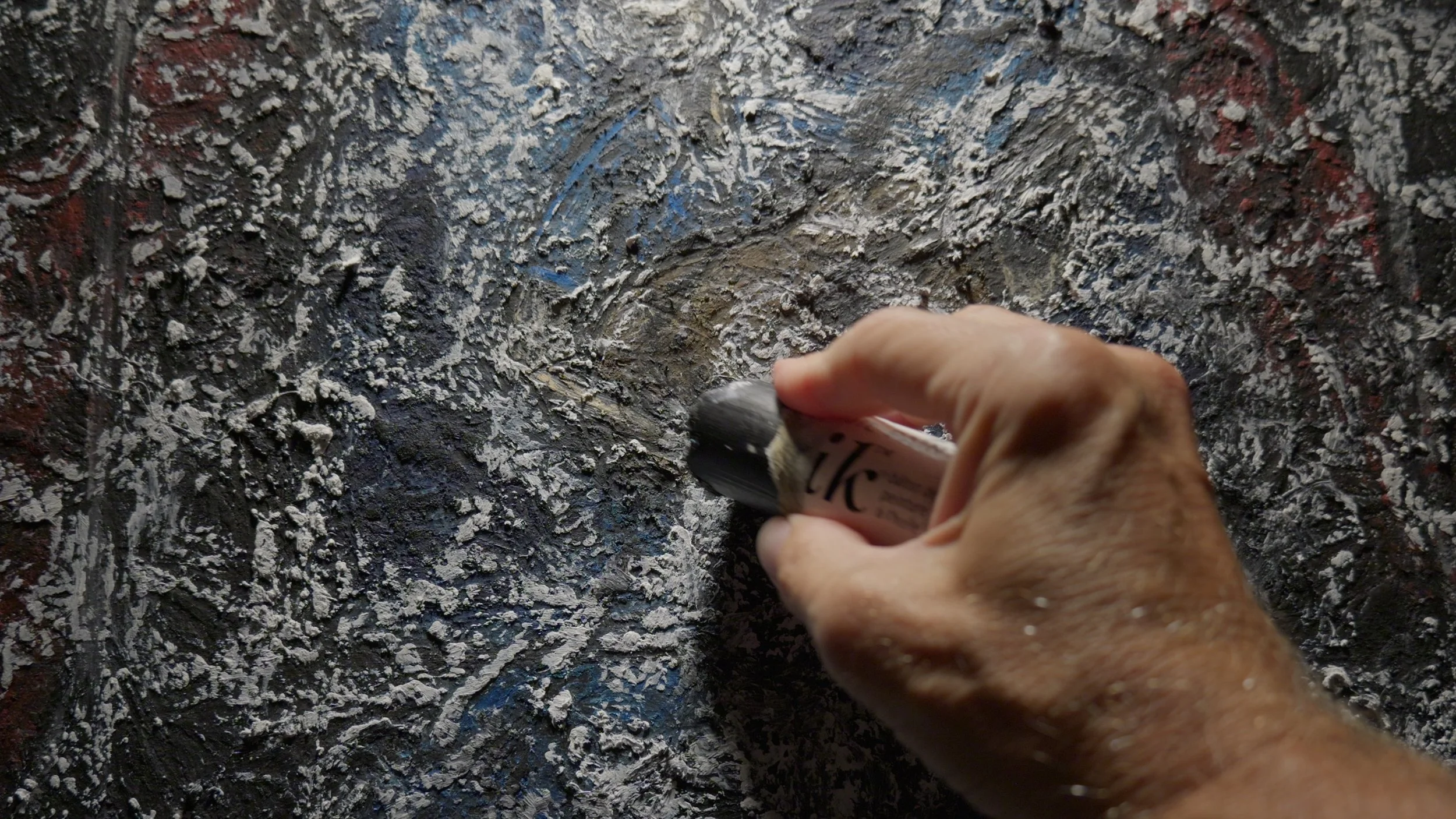
A Shiva oil stick moves across layers of existing paint as texture, gesture, and uncertainty begin transforming the canvas.
The Practical Side of a Creative Life
While the camera continued recording the sky, I sat down at the computer. A request had arrived for a music performance at Sea Pines in Hilton Head. I reviewed the details, looked at my availability for a prime date and submitted a quote for $1,200. Weekend nights when I am available are rare, and I have to find the right balance. A significant photography assignment could arrive at the last minute, but once I make a commitment, it is set in stone. What I charge depends not only on the talent and time required, but also on the value of the date itself. I make my living through creativity. It is not a side hustle. I live and breathe art and music. This is another part of the creative life. There are paintings, songs, performances, photographs, and films. There are also inquiries, estimates, emails, consultations, marketing decisions, and the constant question of what your time and abilities are worth. Creating the work and sustaining a life from the work are not separate pursuits. They often happen at the same desk and sometimes within the same hour. That reality has shaped my professional career through Maring Visuals, where decades of photography and filmmaking experience are applied to weddings, portraits, corporate events, commissioned films, and visual storytelling. Personal work keeps my vision alive. Professional work allows me to continue building a life around that vision. Each strengthens the other.
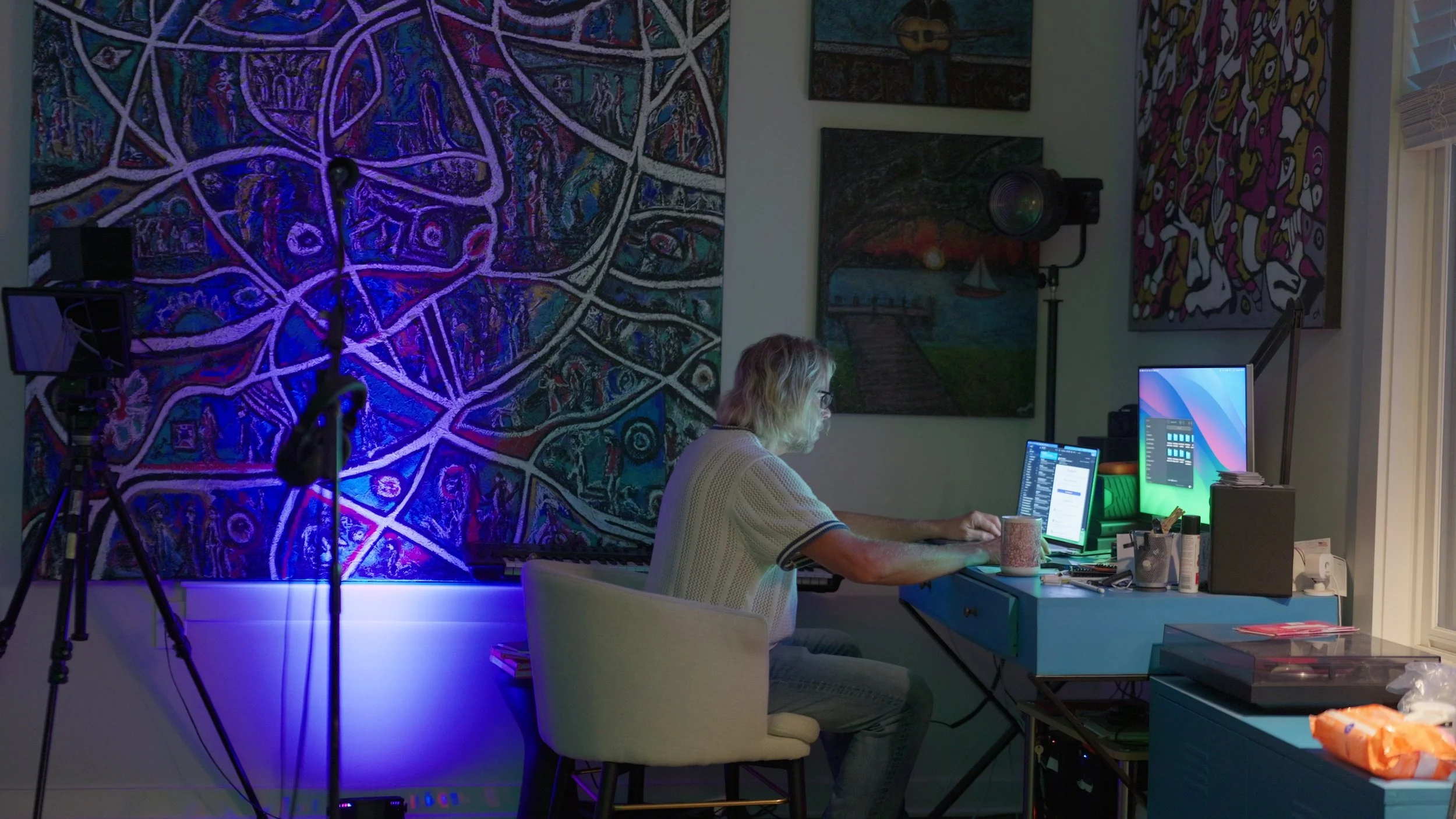
The creative life also happens at a desk through inquiries, estimates, marketing, planning, and the daily work required to sustain an artistic career.
When Memories Become Songs
Later that morning, I pulled an acoustic guitar from the wall and sat down among notebooks and loose pages. A close view of my songbook shows me writing lyrics for a newer original song called The Golden Road. A guitar pick and capo rest nearby, small pieces of the process surrounding the words as they find their way onto the page. Holding the guitar, I talk about where the song came from.The Golden Road carries something of the spirit of the Grateful Dead. It brings back memories of good friends, summer tours, shared stages, open mics, and the experience of following music simply because it made life feel larger. Most of my songs begin with something real. A friend. A family member. A place I lived. A road I traveled. An ocean crossed. A memory that stayed with me long enough to find its way into a lyric or melody. I do not perform the song in this film. Instead, the moment offers a glimpse into the experiences that inspire my songwriting and the physical process of putting those memories onto paper. Like the painting at the beginning of the day, the song is still becoming what it will eventually be. You can explore more of my original music and live performances.
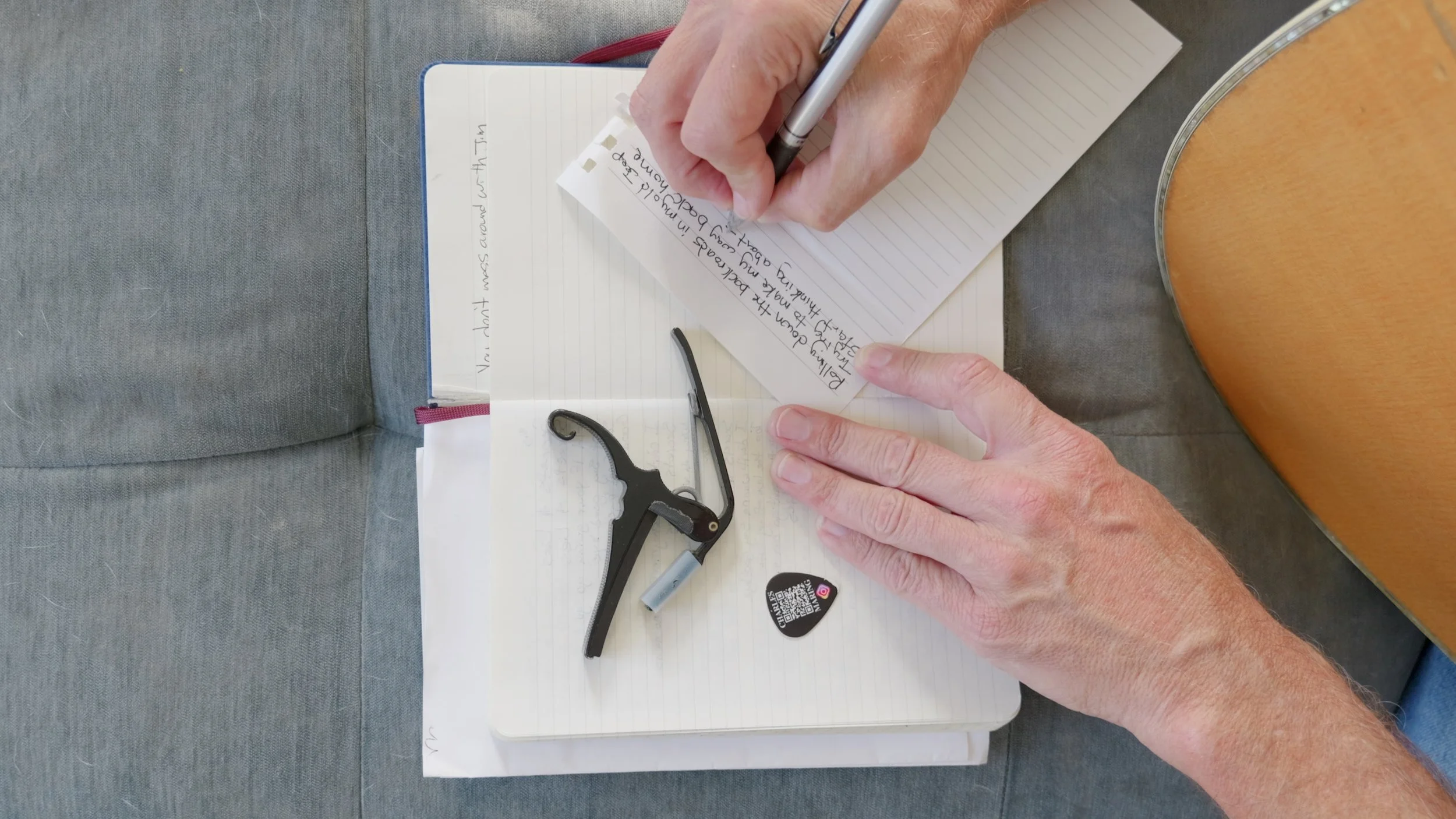
Lyrics for The Golden Road take shape beside an acoustic guitar, capo, and pick as memories begin finding their way onto the page.
Following the Story Into Savannah
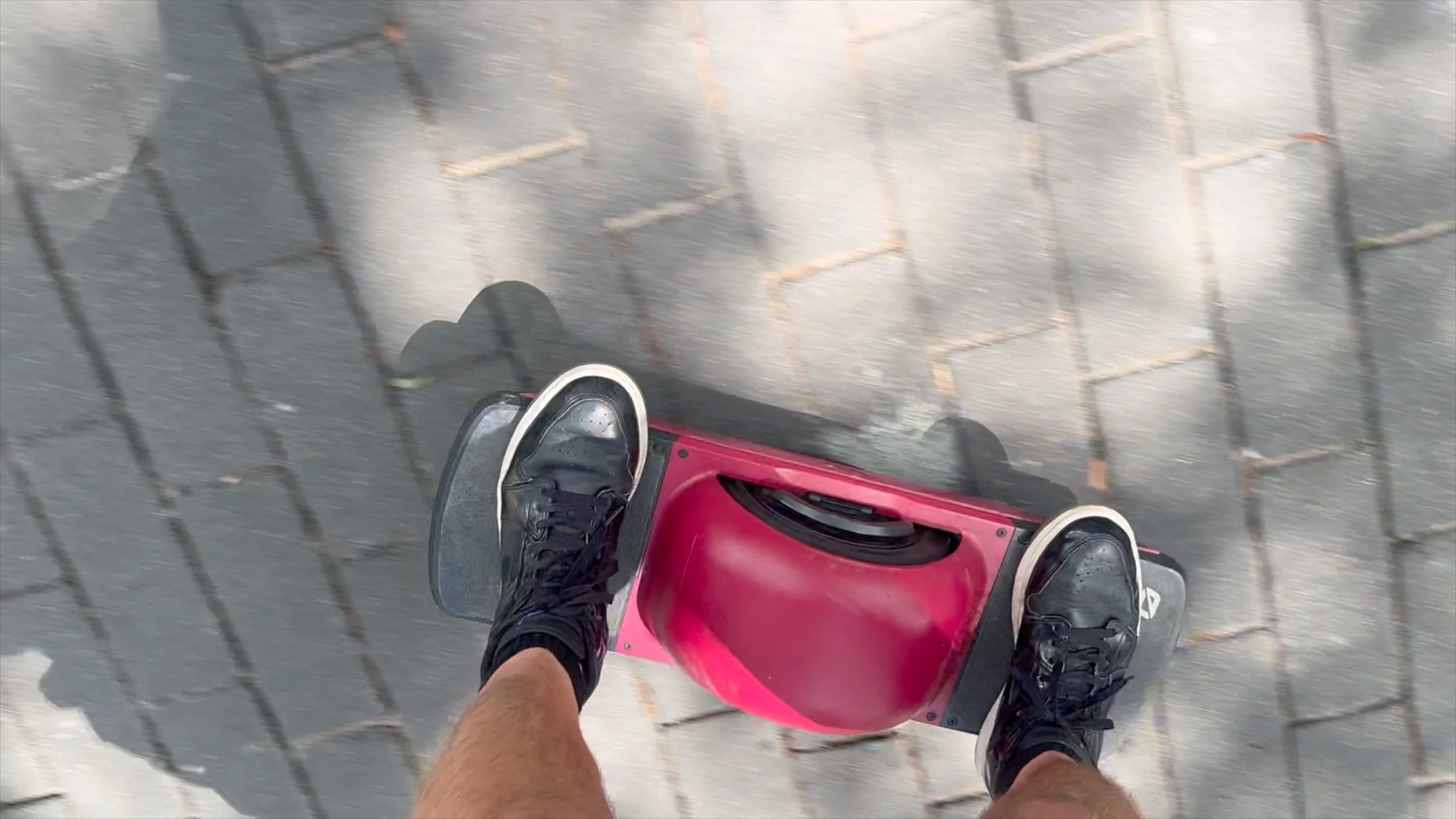
The story moves beyond the loft as Charles travels through downtown Savannah toward Johnson Square.
The morning eventually carried me beyond the loft.I took my OneWheel through the streets of downtown Savannah, moving across cobblestones and beneath live oaks until I reached Johnson Square. Established in 1733, Johnson Square was Savannah’s first square. It remains one of the city’s most historically layered public spaces, yet many people pass through it without noticing the markers, monuments, architectural details, and stories surrounding them.With a small action camera mounted to my photography camera, I began documenting the square from a photographer’s perspective. My hand rested on the lens as I composed photographs of the monument, surrounding architecture, and historical markers that reveal pieces of Savannah’s past. Through the camera, I begin to notice details that might otherwise be overlooked. The photographs become individual pieces of a much larger story. That curiosity is central to Savannah Proper.
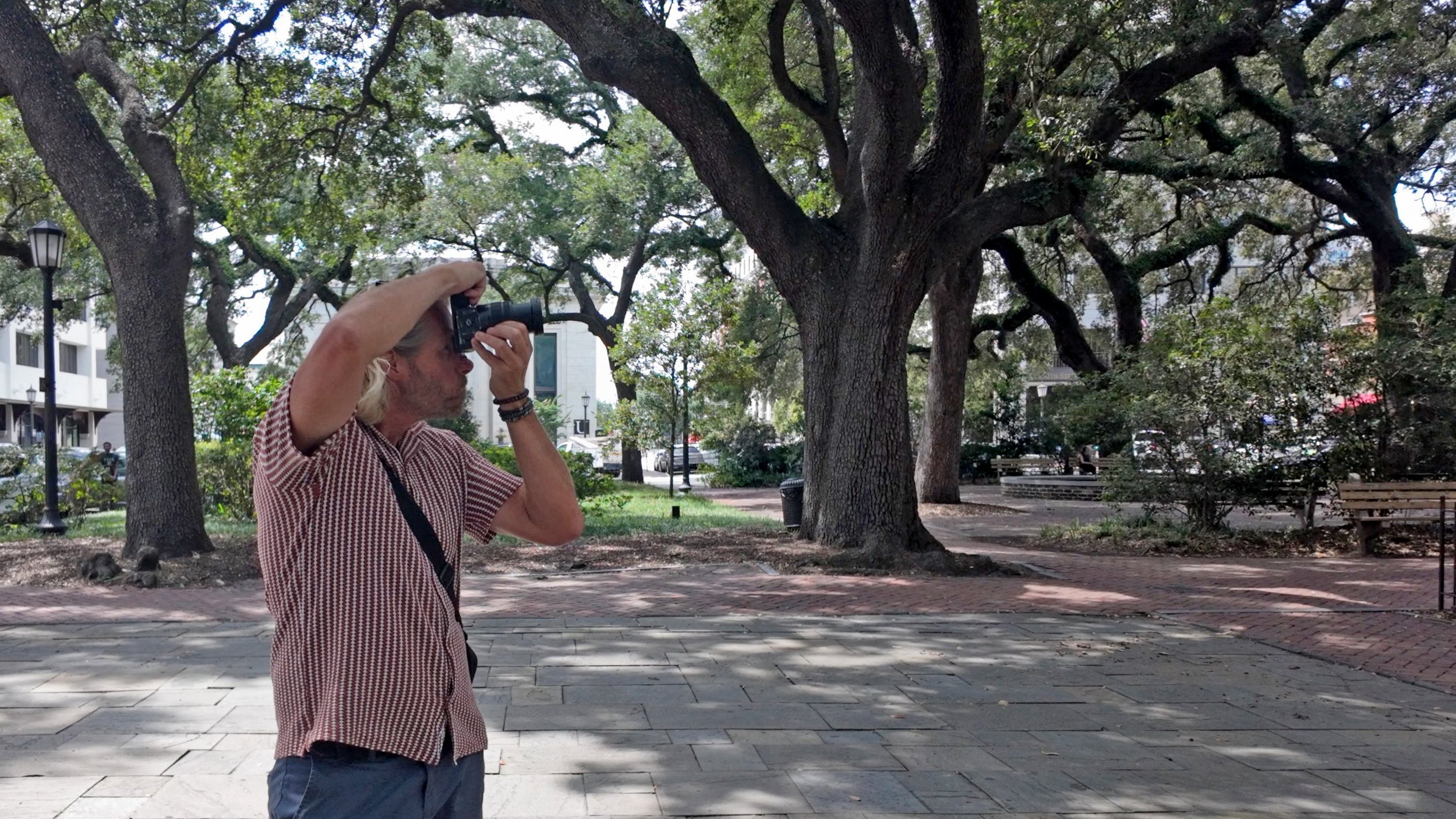
In Johnson Square, Charles uses photography to document the monuments, markers, and overlooked details that connect Savannah’s present with its past.
I created Savannah Proper as a place where photography, film, writing, history, art, music, culture, food, and travel could meet. It gives me a way to illuminate the people, places, and experiences that make Savannah what it is. Like the painting in the loft, Savannah Proper continues to evolve. I am still discovering what it wants to become. The project is not only about preserving stories from the past. It is also about documenting the Savannah unfolding around us now. The photographs from this morning became part of Johnson Square: Where Savannah’s Story Began, an illustrated story exploring the square’s history, monuments, landmarks, and continuing place in the life of the city. No one hired me to make those photographs or write that story. I did it because I believed the story was worth telling.
Creating the Soundtrack
Nearly all the music underscoring this film comes from my own catalog of original songs. The instrumental versions allowed me to weave different compositions beneath the narration without competing with the story. One song could carry the quiet of the loft. Another could introduce movement as I traveled through Savannah. Together, the music became more than a background element. It became another layer of authorship. The same experiences that inspire my paintings, photographs, and stories also find their way into my songs. Using my original music gives Finding the Work its own emotional language. As the series continues, certain compositions can return in new settings and take on different meanings. A song associated with memory in one film may accompany travel, friendship, uncertainty, or discovery in another. The paintings shape the environment. Photography and film create the visual language. Experience provides the stories. My original music becomes the score connecting them.
Why Showing Up Matters
I have always believed that much of the work I receive comes from investing in the success of other people. I go to gallery openings. I attend live performances. I photograph musicians, artists, planners, florists, designers, and other creative professionals. When I capture something meaningful, I often share the imagery with them so they can use it to tell their own stories. Savannah Proper takes that idea even further. It allows me to invest time in photographing people, filming their work, and writing stories that help others see what they contribute to the city. It is not a transaction. I do not expect someone to return the favor the following week. But over time, something comes back. People remember who showed up. They remember who cared about their work. They remember who helped them look their best and communicate what they created. Referrals, friendships, collaborations, and unexpected opportunities grow naturally from those relationships.
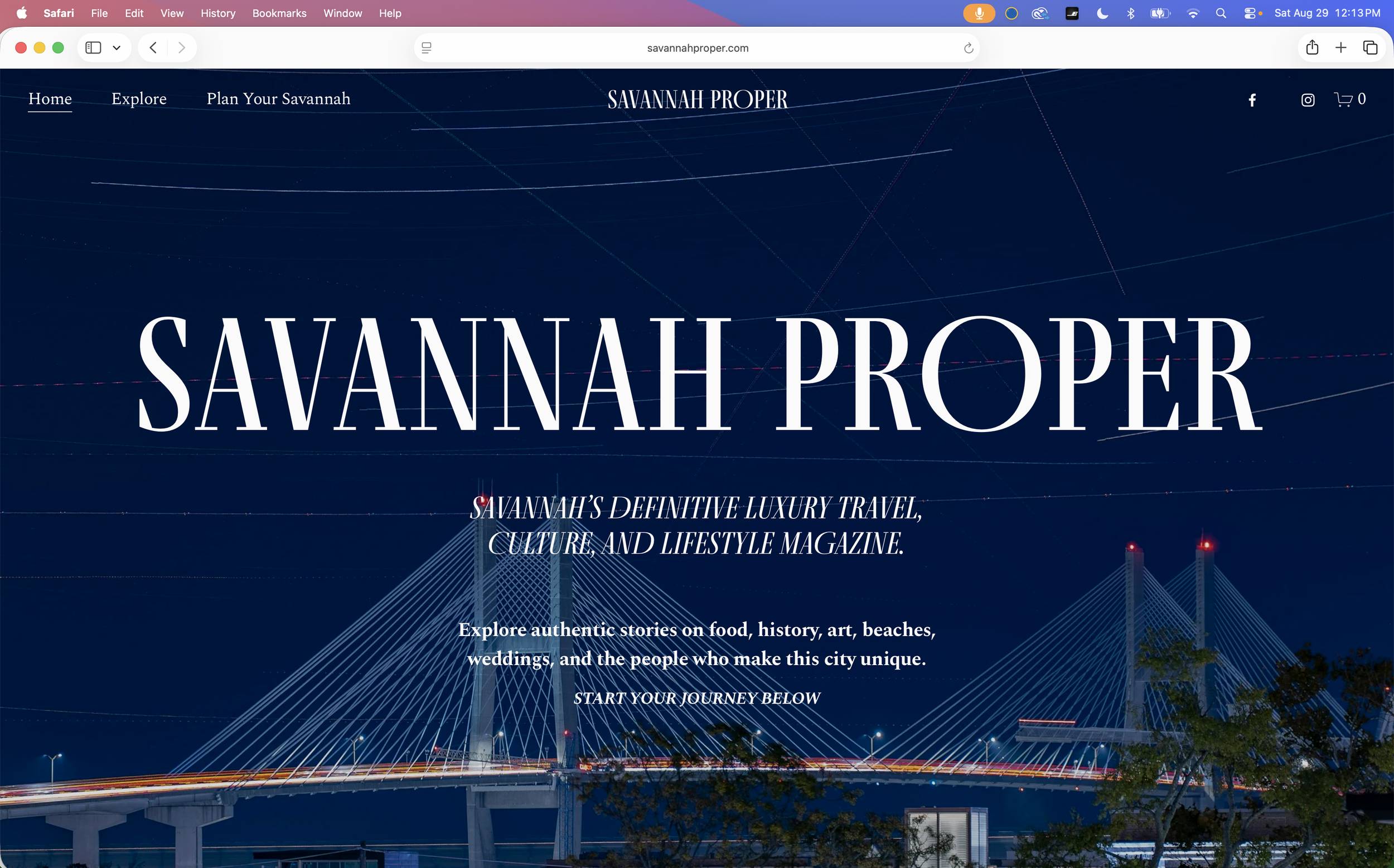
Savannah Proper brings photography, film, writing, history, art, music, culture, and travel together through stories about the people and places shaping Savannah.
Ending the Day with Music
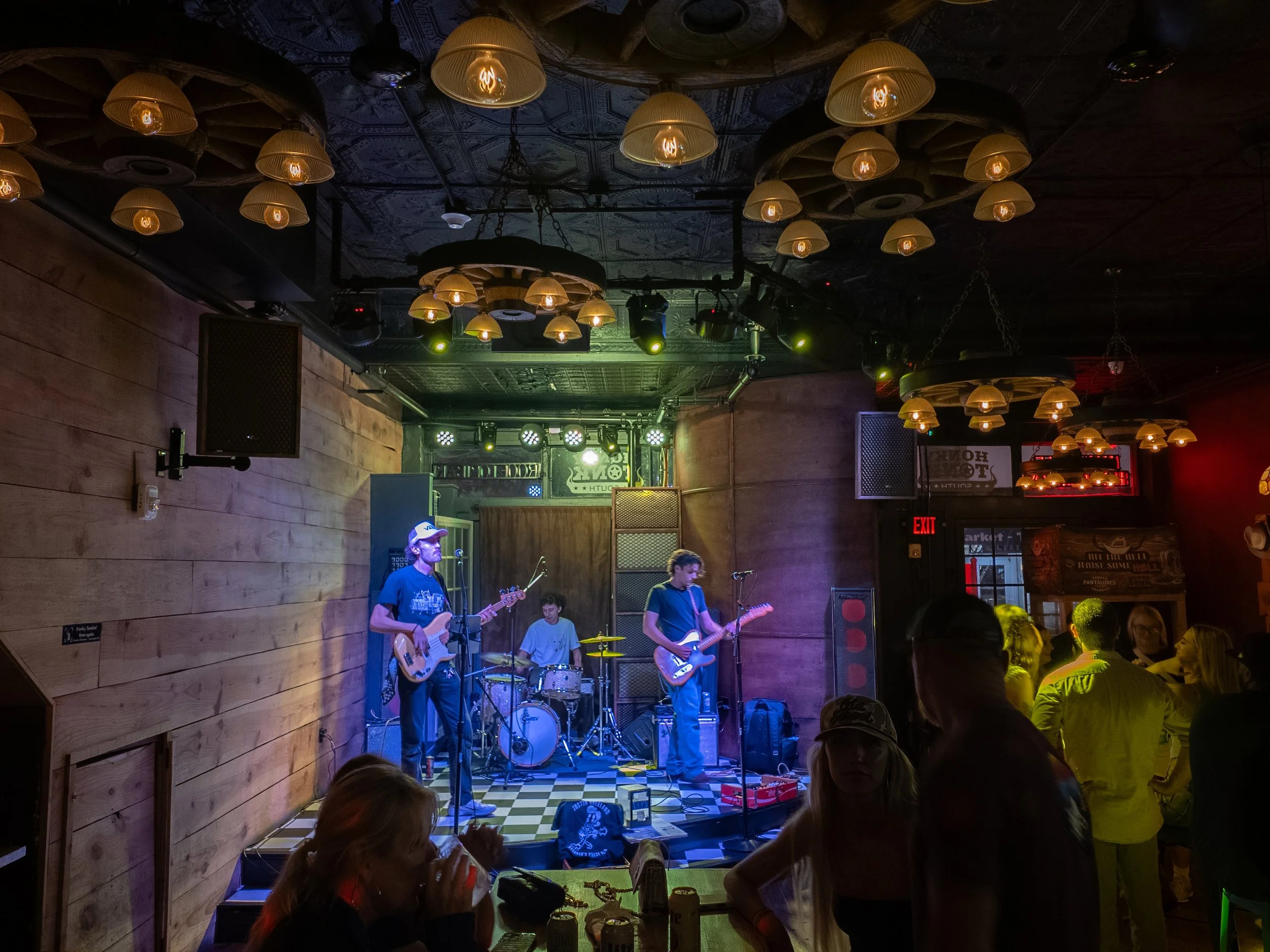
Justin Vreeland and Friends perform at Honky Tonk South as the day ends among fellow musicians and Savannah’s creative community.
That evening, I walked down Congress Street to Honky Tonk South, where Justin Vreeland and Friends were performing. I have crossed paths with the musicians in the band through shared stages, open mics, performances, and the creative community surrounding Savannah music. As I approached the venue, they were gathered outside beneath the sign. They saw me coming and greeted me by name. It was a small moment, but it expressed the entire idea more honestly than any explanation could. I had shown up. Inside, Justin Vreeland and Friends performed while my friend Steve mixed the show from the middle of the room. Every person had a role in creating the night, including those whose work happened away from the stage. The film closes with approximately thirty seconds of the band performing “Good Directions,” a song made famous by Billy Currington. It is the only portion of the soundtrack that is not my original music. The transition feels appropriate. After spending the day inside my own creative process, the film ends by making room for someone else’s performance. You can discover more from Justin Vreeland on YouTube.

Honky Tonk South brings a Nashville inspired live music experience to Congress Street in downtown Savannah.
Finding the Work
The creative life can feel solitary. There are long hours spent alone with a canvas, a camera, a guitar, or a screen. There is uncertainty. There are unfinished ideas and unanswered quotes. There are days when the direction feels obvious and others when the only thing to do is make the first mark.But none of us builds a creative life alone. Sometimes finding the work means following an idea. Sometimes it means creating an opportunity. Sometimes it means telling a story that deserves to be preserved. And sometimes it simply means showing up for the people doing the work beside you.
Finding the Work will continue exploring that process through painting, photography, filmmaking, original music, travel, memory, business, and the people encountered along the way. The first film began before sunrise in a quiet Savannah loft. By the time the city returned to darkness, the day had moved through a painting, a photograph, a song, a historic square, and a room filled with music. The work was there all along. I simply had to begin looking for it. Follow Artist Charles Maring on YouTube to watch future films from Finding the Work.