The Story Before the Photograph
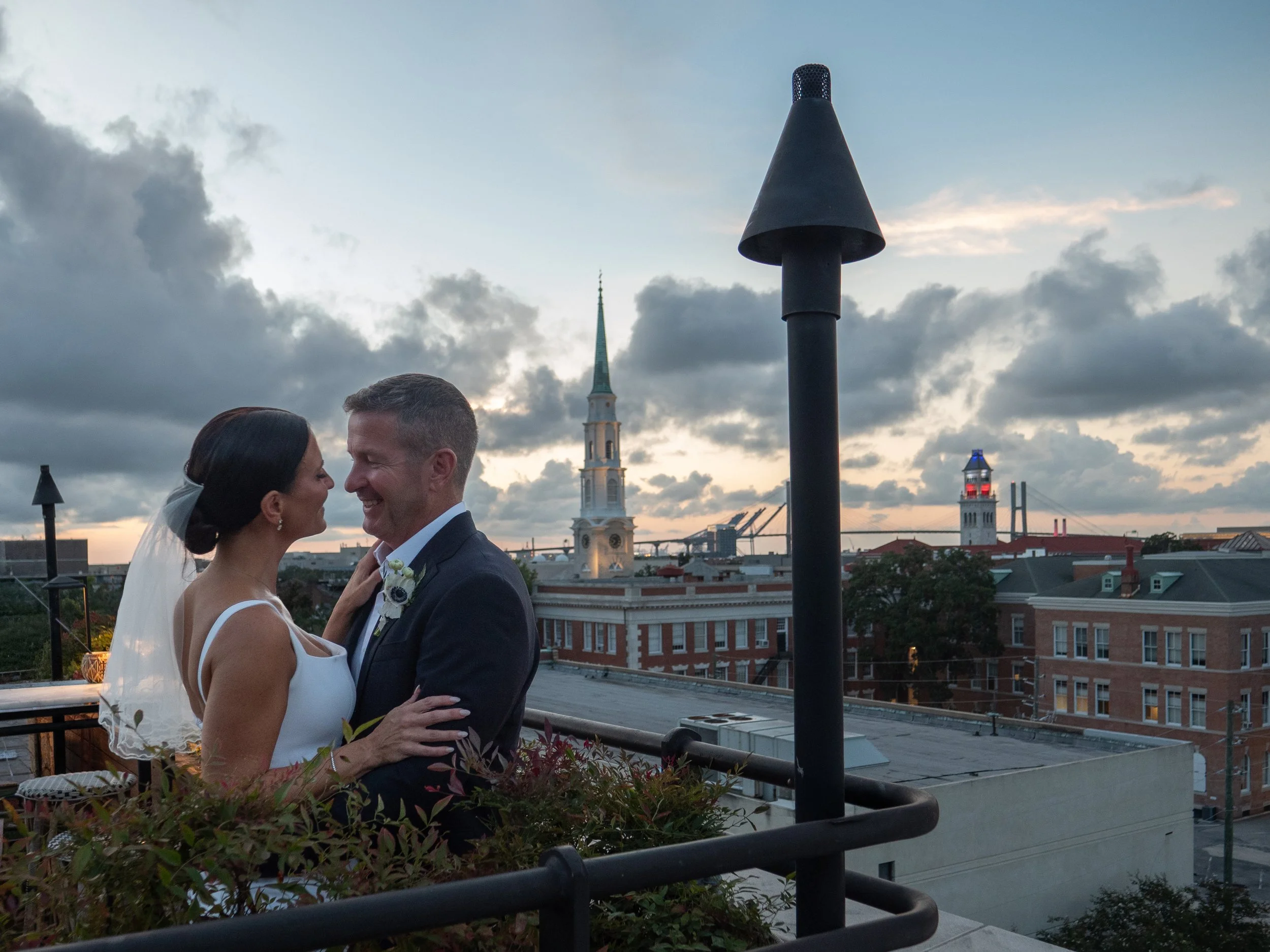
A wedding for two became a visual story moving through anticipation, architecture, ceremony, Savannah, and the last light of the day.
Photographing Kate and Ryan’s intimate Savannah wedding as a visual narrative
Editorial photography is often misunderstood.
People sometimes associate the word with fashion, dramatic poses, beautiful clothing, expensive locations, or photographs that appear in magazines. Those things can contribute to an editorial image, but they are not what makes the work editorial.
For me, editorial photography begins with an idea.
It asks what the photographs are trying to say, how one image will relate to the next, and what the viewer should feel as the story unfolds.
When Kate and Ryan came to Savannah for an intimate wedding shared by only the two of them, that distinction became especially important.
There would be no wedding party, no room filled with guests, and no traditional reception generating hours of spontaneous activity. Beyond the ceremony, there would be fewer naturally occurring moments for a photographer to observe.
Kate wanted photographs with an editorial feeling, but simply placing a couple in beautiful locations does not automatically create an editorial story.
First, there has to be something to experience.
Then there is something to photograph.
A Wedding for Two Still Needs a Beginning
Traditional weddings arrive with a structure already built into them.
People gather. Rooms become active. Anticipation builds. The ceremony changes the emotional temperature of the day. Cocktails, dinner, speeches, and dancing carry the story forward.
A wedding for two is quieter.
That quiet can be beautiful, but it changes the role of the photographer. I cannot depend upon a large cast of people or a crowded timeline to continuously generate the next photograph. I have to think more deliberately about sequence, environment, and transition.
Where does the story begin?
What creates anticipation?
When should the photography move closer?
When should it step back and allow the architecture or landscape to speak?
How does the day build toward a conclusion?
Savannah Proper worked with Kate to create an experience that began at Perry Lane Hotel, moved through a ceremony in Pulaski Square and portraits around Savannah, and concluded with champagne and cake above the city.
That plan gave the couple a meaningful day to live. It also gave me a narrative to photograph.
The Quiet Before Two People Meet
Kate prepared inside a suite at Perry Lane Hotel while Ryan waited elsewhere in the building.
The separation mattered.
It allowed each person to exist independently within the opening photographs. Kate’s dress, bouquet, shoes, and silhouette introduced her side of the story. Ryan’s presence inside the hotel created a parallel sense of waiting.
The rooms were quiet. Light moved softly through the windows. The pace was unhurried.
I have always believed that anticipation is visually powerful. A photograph does not need obvious action to suggest that something is about to happen.
Sometimes a still room, a figure near a window, or the way a hand rests beside a bouquet can carry more tension than a photograph filled with movement.
Those early images became the opening notes of the story.
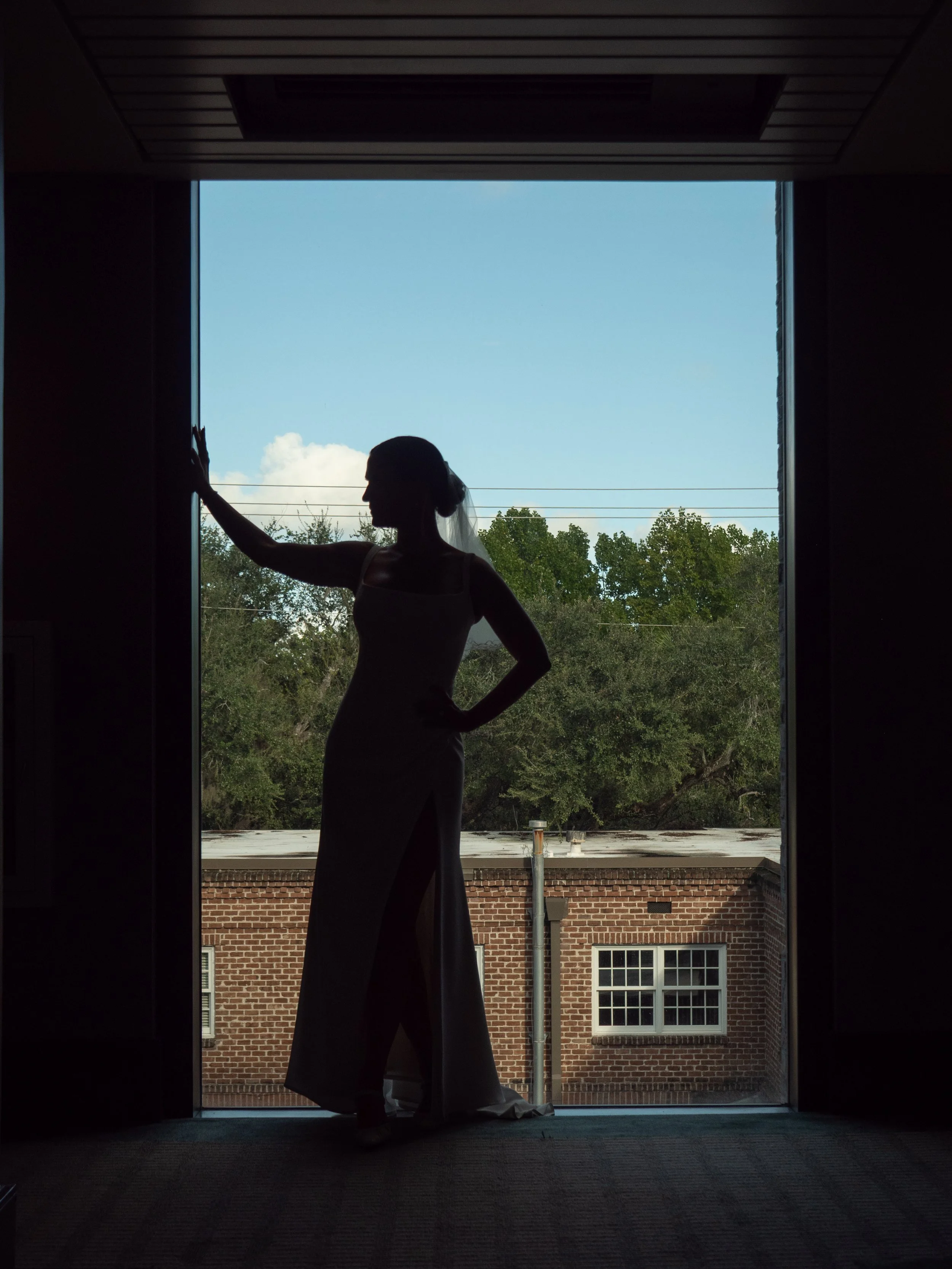
Stillness, negative space, and afternoon light created anticipation before Kate and Ryan saw one another.
Watching the First Look Unfold
Kate waited in the Perry Lane library while Ryan entered for their first look.
I photographed the moment from outside the immediate space, using the doorway and surrounding architecture to frame them.
I could have moved closer.
A close photograph would have shown their expressions more clearly, but it would have lost something else. By remaining farther away, the image retained the feeling of witnessing a private moment rather than entering it.
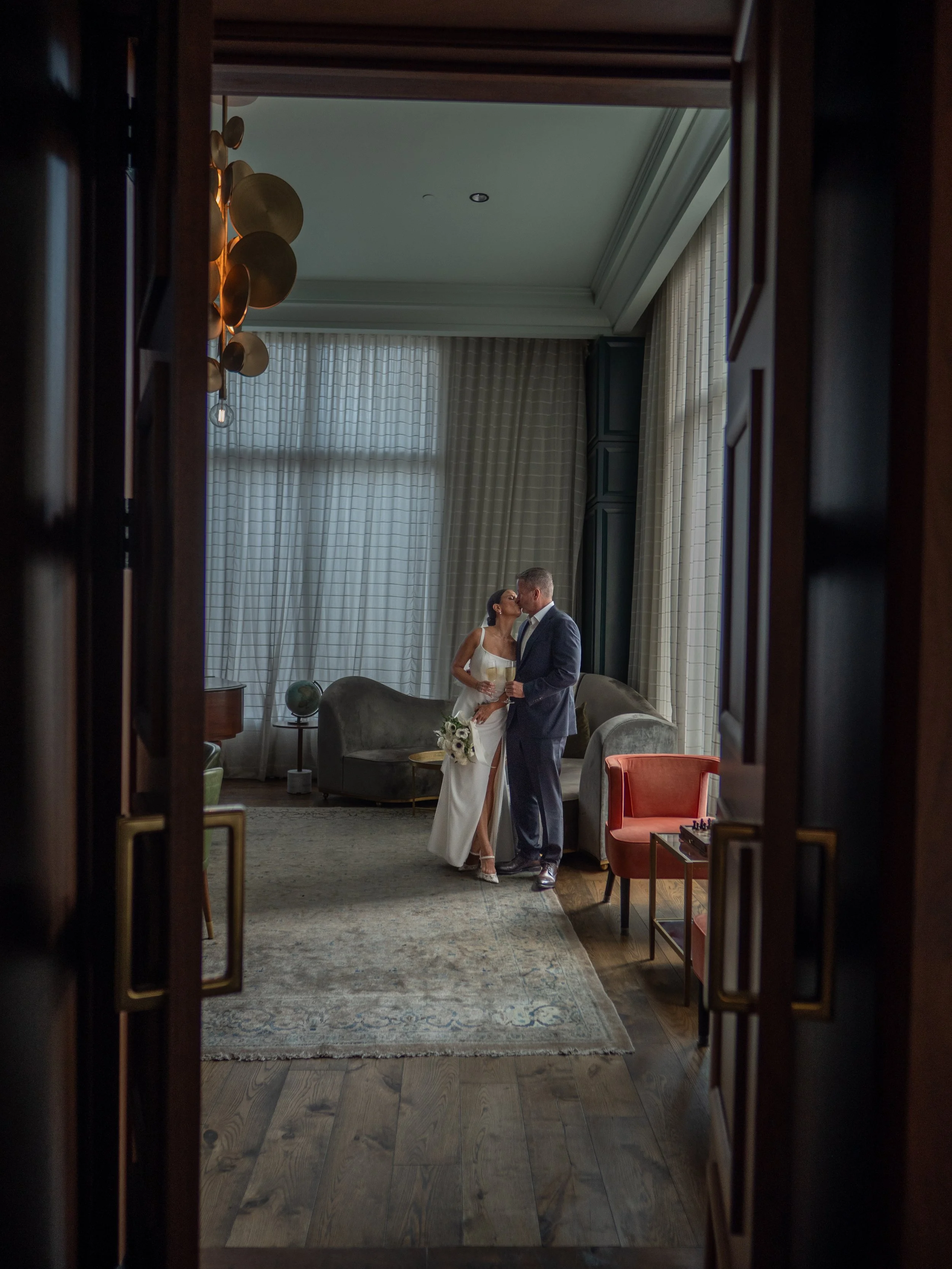
Distance and architecture allowed the first look to remain private while giving the photograph a sense of place.
That is a decision I make often.
Photography is not only about deciding what to include. It is also about deciding how close the viewer should be allowed to come.
Distance can create privacy. Negative space can create tension. Architecture can make two people appear small within a larger world while still allowing their connection to remain the emotional center of the photograph.
After the first look, I moved closer.
The progression mattered. The wider image established the room and the privacy of the moment. The closer photographs revealed the embrace, expressions, and quiet connection between them.
Composition Is More Than Arrangement
Perry Lane gave me a visual vocabulary to work with.
There were contemporary paintings, orchids, windows, furniture, mirrors, doorways, and pockets of light. Instead of treating those elements as decoration, I used them to create layers within the photographs.
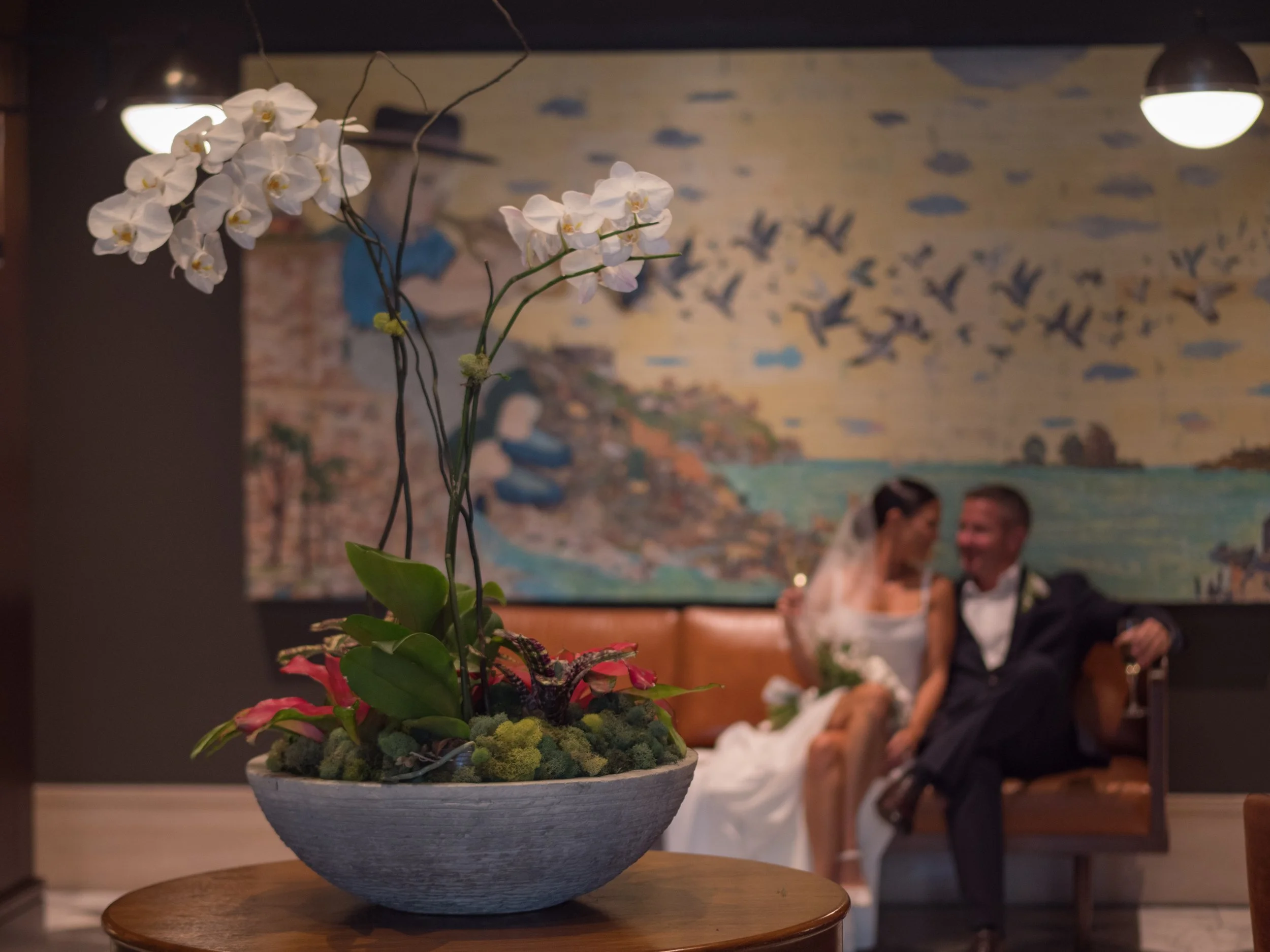
Orchids, artwork, furniture, and the couple became separate layers within one composed frame.
Flowers could partially conceal the couple. A doorway could become a frame. Artwork could introduce color or tension. Reflections could suggest another perspective.
This is where photography begins to feel very close to painting.
A painter builds the entire frame. A photographer discovers what already exists and decides how to organize it. Both rely on balance, shape, color, contrast, rhythm, and restraint.
The couple remains important, but they do not need to fill every inch of the image.
Sometimes the environment tells us something about them. Sometimes it establishes mood. Sometimes it gives the eye a path into the photograph.
Editorial portraiture is not simply about making people look stylish. It is about creating a composition in which every part of the frame contributes to the larger idea.
Direction Without Losing the Moment
I direct people when direction improves the photograph.
I may choose where a couple stands, how they enter a space, which direction they walk, or where the light will fall most beautifully. But I do not want people to feel as if they are performing for me continuously.
There has to be room for surprise.
At Perry Lane, some photographs were carefully composed. Others happened because Kate and Ryan were allowed to sit together, share a drink, laugh, and momentarily forget about the camera.
The shift between those approaches gave the photographs life.
A sequence made only of posed portraits can become visually polished but emotionally flat. A sequence made only of candid photographs can contain emotion but lack structure.
I am interested in the space between those extremes.
I want the composition to feel considered and the moment within it to remain alive.
The Ceremony Changes Everything
The ceremony took place beneath the trees in Pulaski Square.
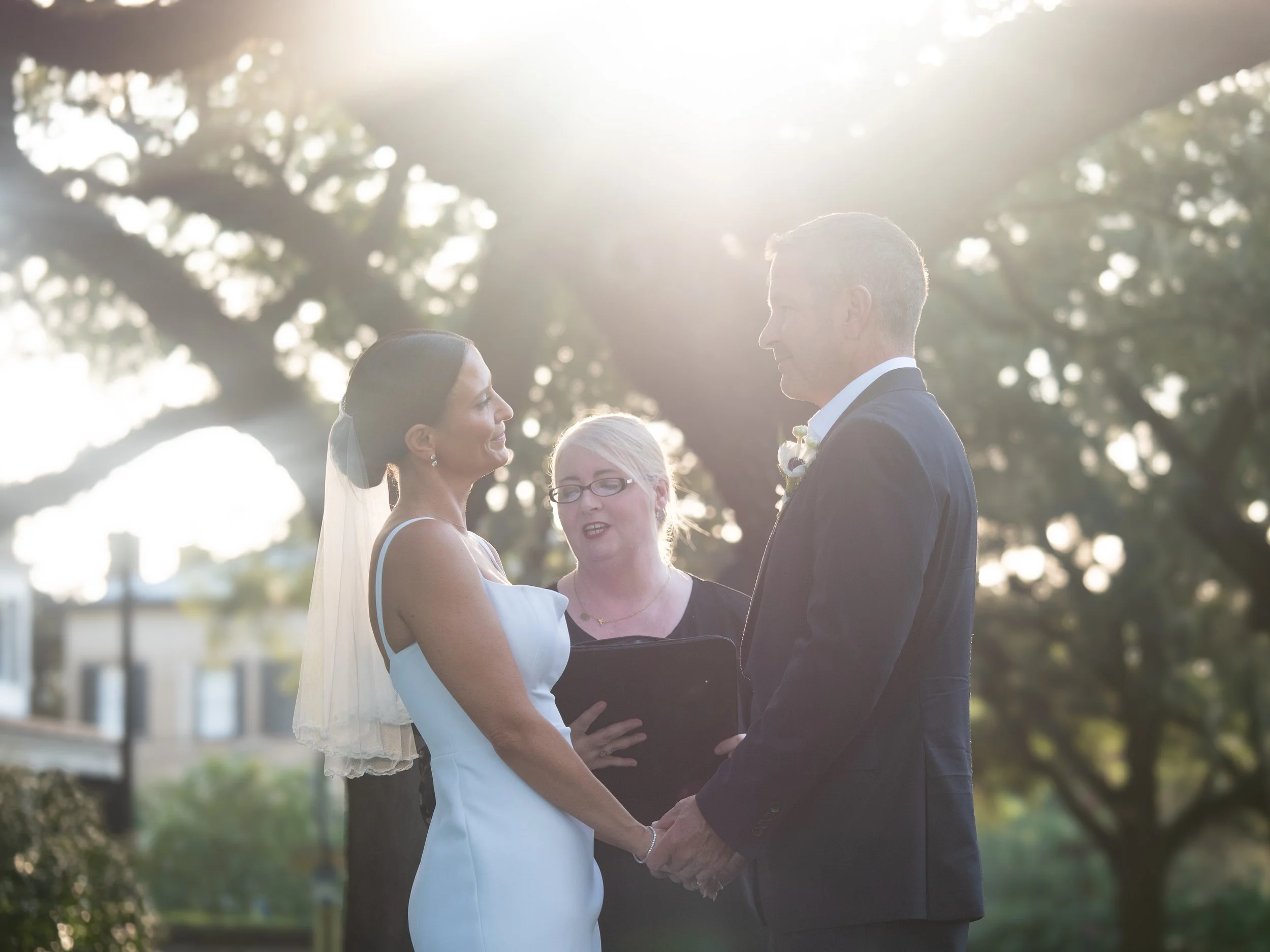
Afternoon light filtered through the trees as the visual story moved from anticipation into ceremony and emotion.
Afternoon light passed through the leaves, creating a warm glow around Kate and Ryan as they exchanged vows. Their officiant, Allie West, brought warmth, ease, and humor to the ceremony.
There was laughter.
That laughter changed the photographs.
Until that point, much of the story had been built around anticipation, style, environment, and movement toward the ceremony. Suddenly the emotional center of the day became visible.
I photographed wide views beneath the live oaks, closer expressions, gestures, shared laughter, and the kiss.
During an intimate ceremony, restraint becomes especially important. There is nowhere for a photographer to disappear into a crowd. Every movement can become noticeable.
I worked quietly and from a distance whenever possible, allowing the ceremony to remain theirs.
The photographs needed to preserve the emotion without interrupting the experience that created it.
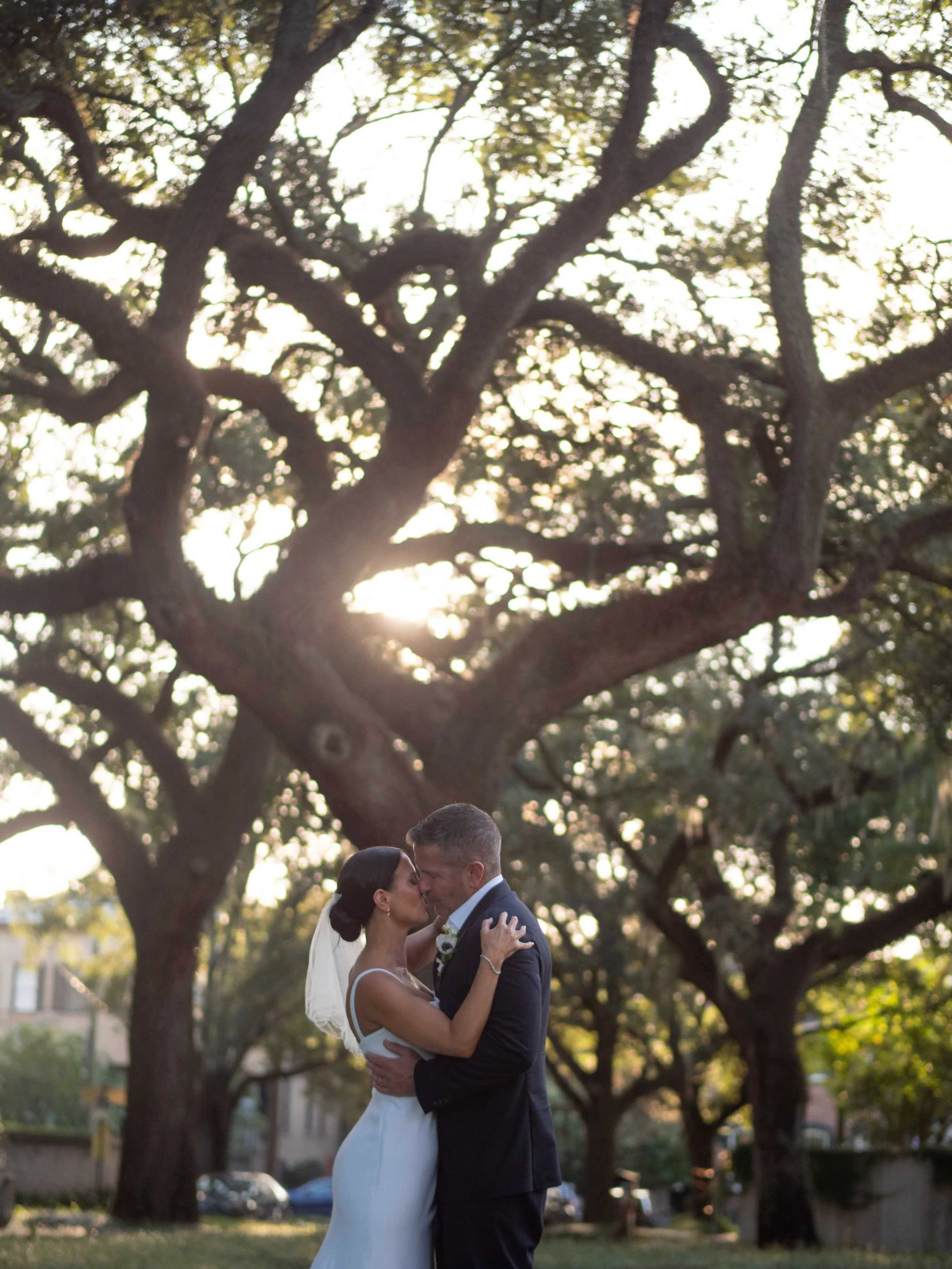
The kiss became the quiet conclusion to the ceremony beneath one of Savannah’s live oaks.
Savannah as More Than a Background
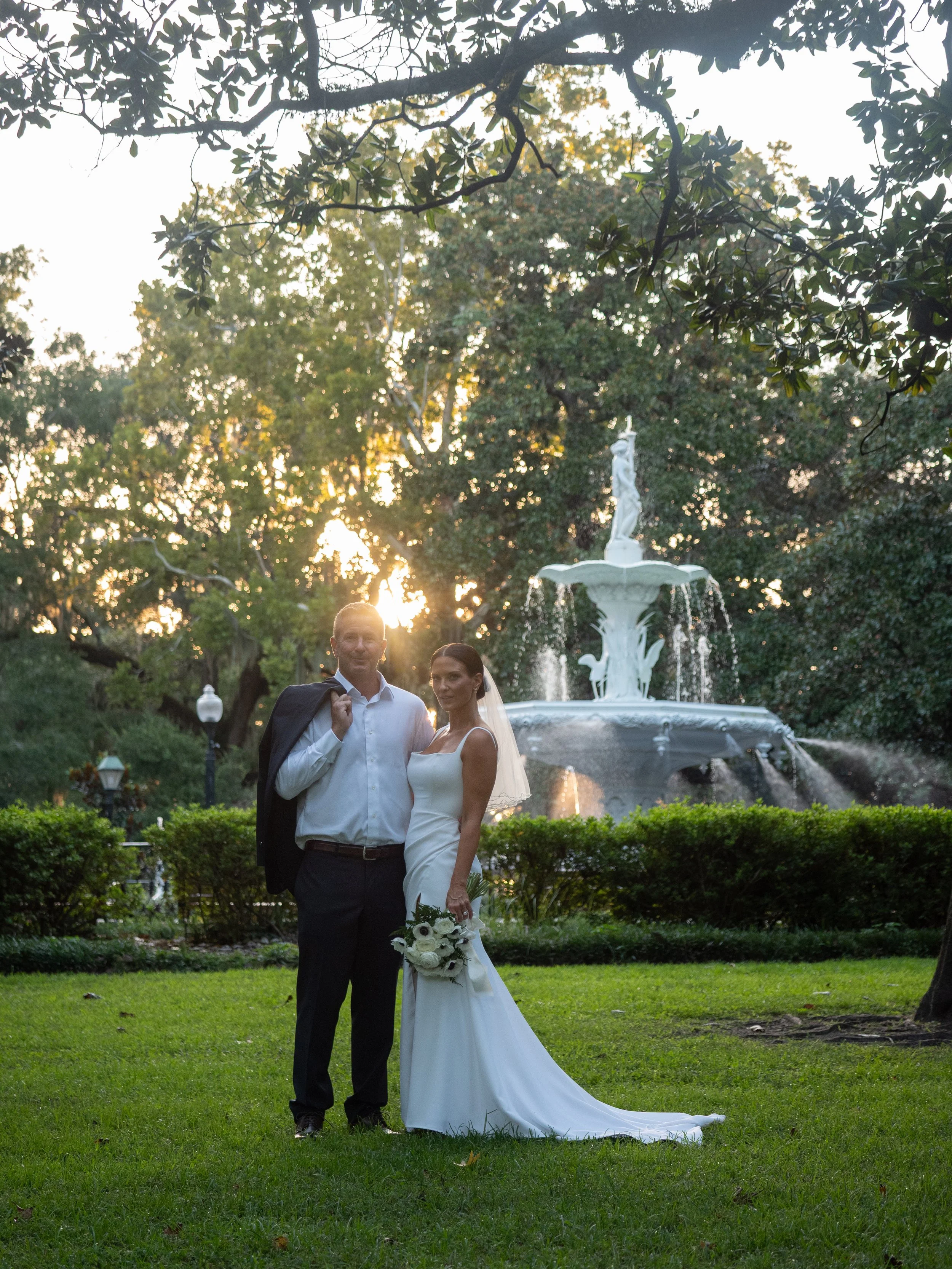
After the ceremony, Kate and Ryan moved through Pulaski Square, the Historic District, and Forsyth Park.
Savannah offers extraordinary visual material, but recognizable locations can easily become predictable photographs.
The challenge is not simply to place a couple in front of a mansion, beneath a live oak, or beside the Forsyth Fountain.
The challenge is to make the setting part of their particular story.
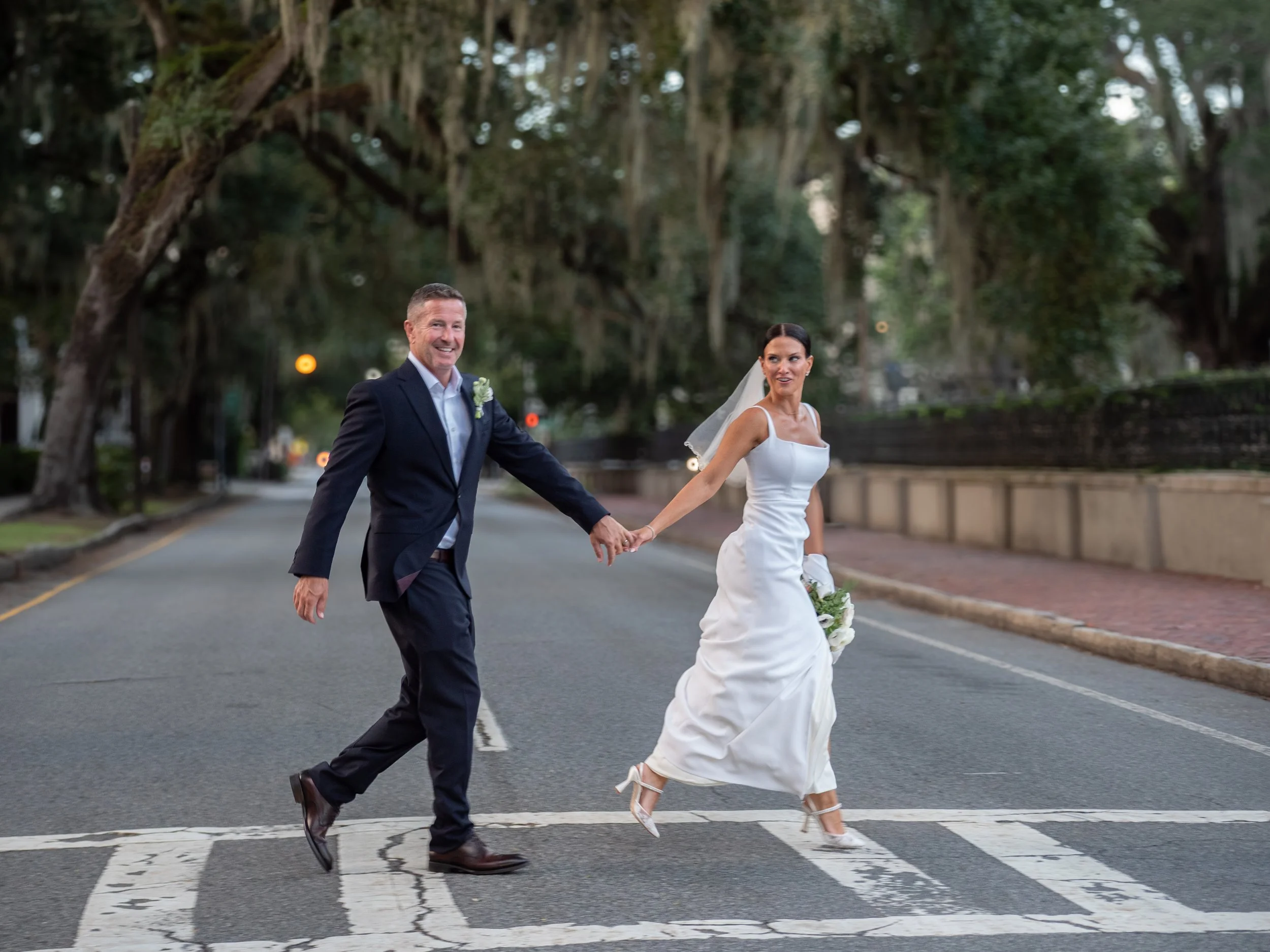
Movement allowed Savannah to become part of the experience rather than remain a static background.
We walked. We crossed streets. We used staircases, balconies, ironwork, colorful doors, open pathways, and changing light. Some photographs were quiet and architectural. Others relied on movement.
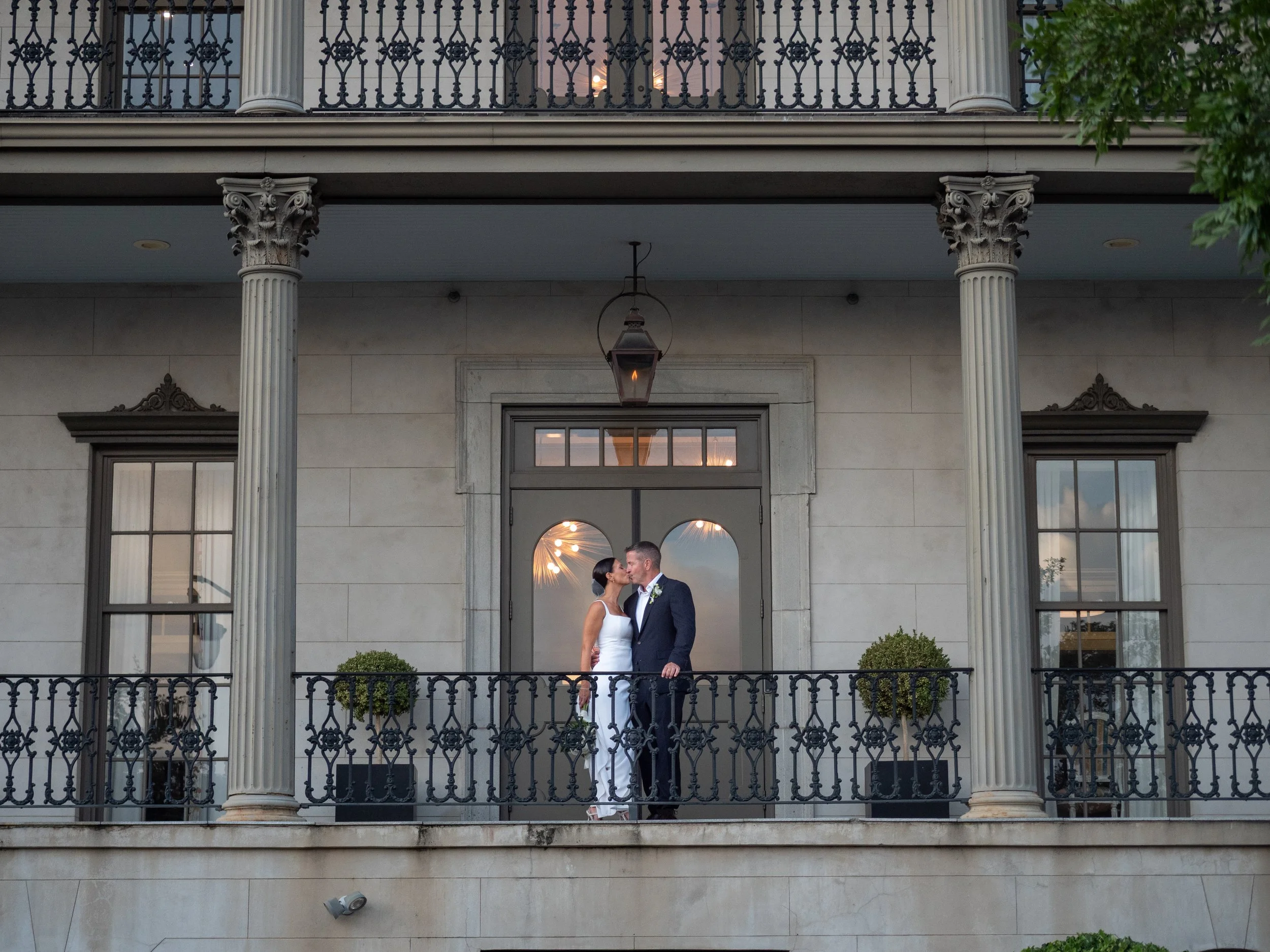
Architecture introduced symmetry, scale, and structure while the couple remained the emotional center of the frame.
I watched for the moments between the intended ones.
A turn of the head. A hand reaching back. A dress moving as Kate crossed the street. Ryan laughing as they walked. A composition briefly aligning before changing again.
Photography teaches you that almost everything is temporary.
The light moves. People move. Expressions pass. The visual balance exists for a fraction of a second and then disappears.
The work is learning to recognize it before it is gone.
A Photograph Has Rhythm
I think about photographic stories in much the same way I think about music.
Not every note can be loud. Not every image can be the climax.
A wide photograph creates space. A close photograph creates intimacy. A detail slows the tempo. Movement carries the viewer forward. A quiet portrait allows the story to breathe.
Repetition can create continuity, but too much repetition makes the sequence feel static. Contrast brings the viewer back to attention.
The strongest individual photograph is not always the photograph the story needs at that particular moment.
That is one of the differences between making a collection of beautiful pictures and building a narrative.
A story has rhythm.
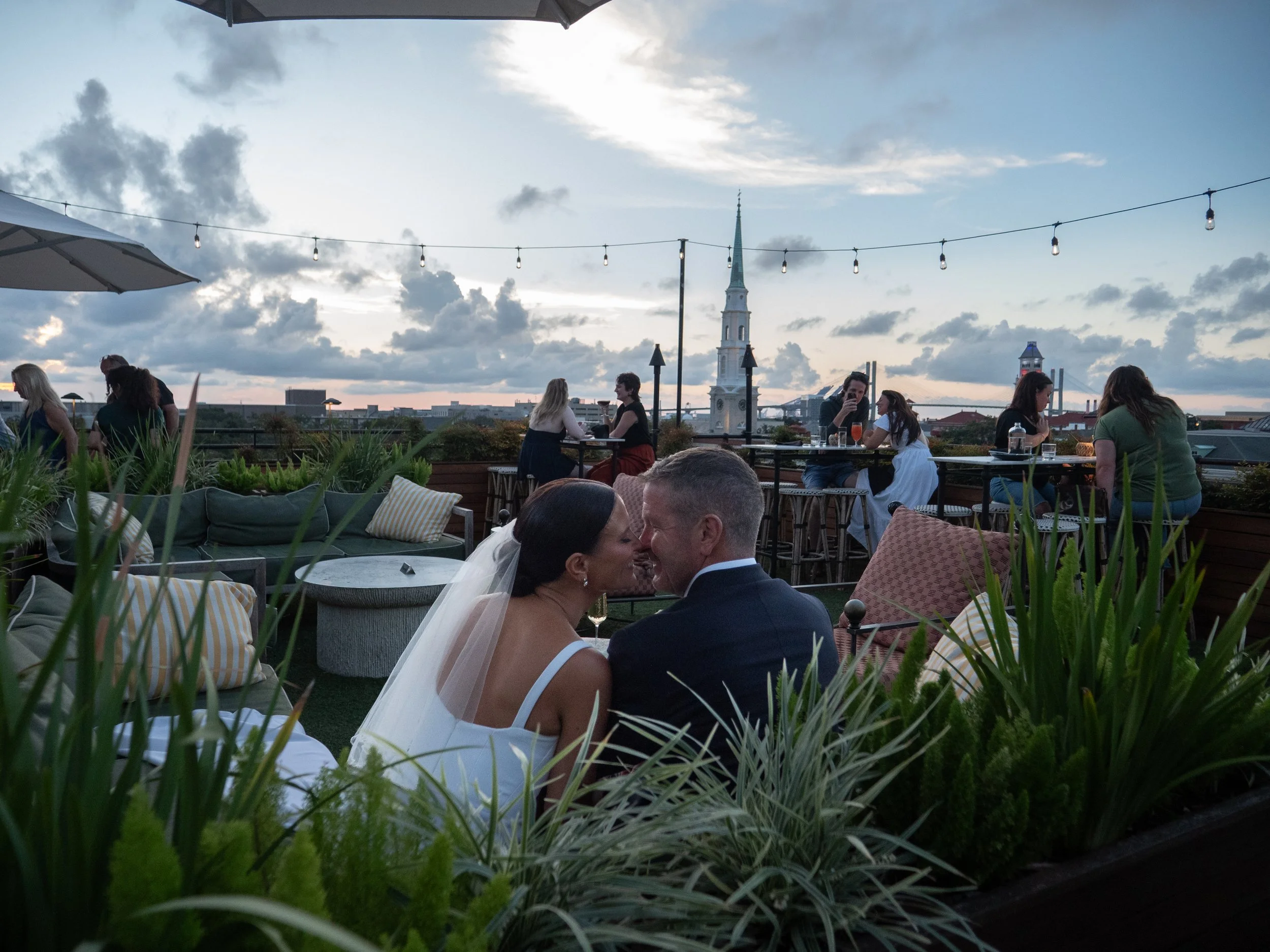
A quieter rooftop photograph created a pause before the final visual chapter of the day.
The Final Chapter Above Savannah
As the afternoon moved toward evening, Kate and Ryan returned to Perry Lane.
Savannah Proper’s events director had coordinated a rooftop table with champagne and a small wedding cake waiting for them.
The atmosphere changed again.
Pulaski Square had been quiet and intimate. The rooftop was active, colorful, and alive with people. The sky shifted toward evening. Clouds gathered. Church spires rose beyond the buildings. Lights began to appear across the city.
Kate and Ryan toasted, shared cake, sat together, and watched Savannah move from sunset into blue hour.
I photographed the skyline, the rooftop gardens, the changing light, and a colorful mural that allowed their figures to become silhouettes.
The final image was not simply another portrait in another location.
It was the conclusion of the visual sentence.
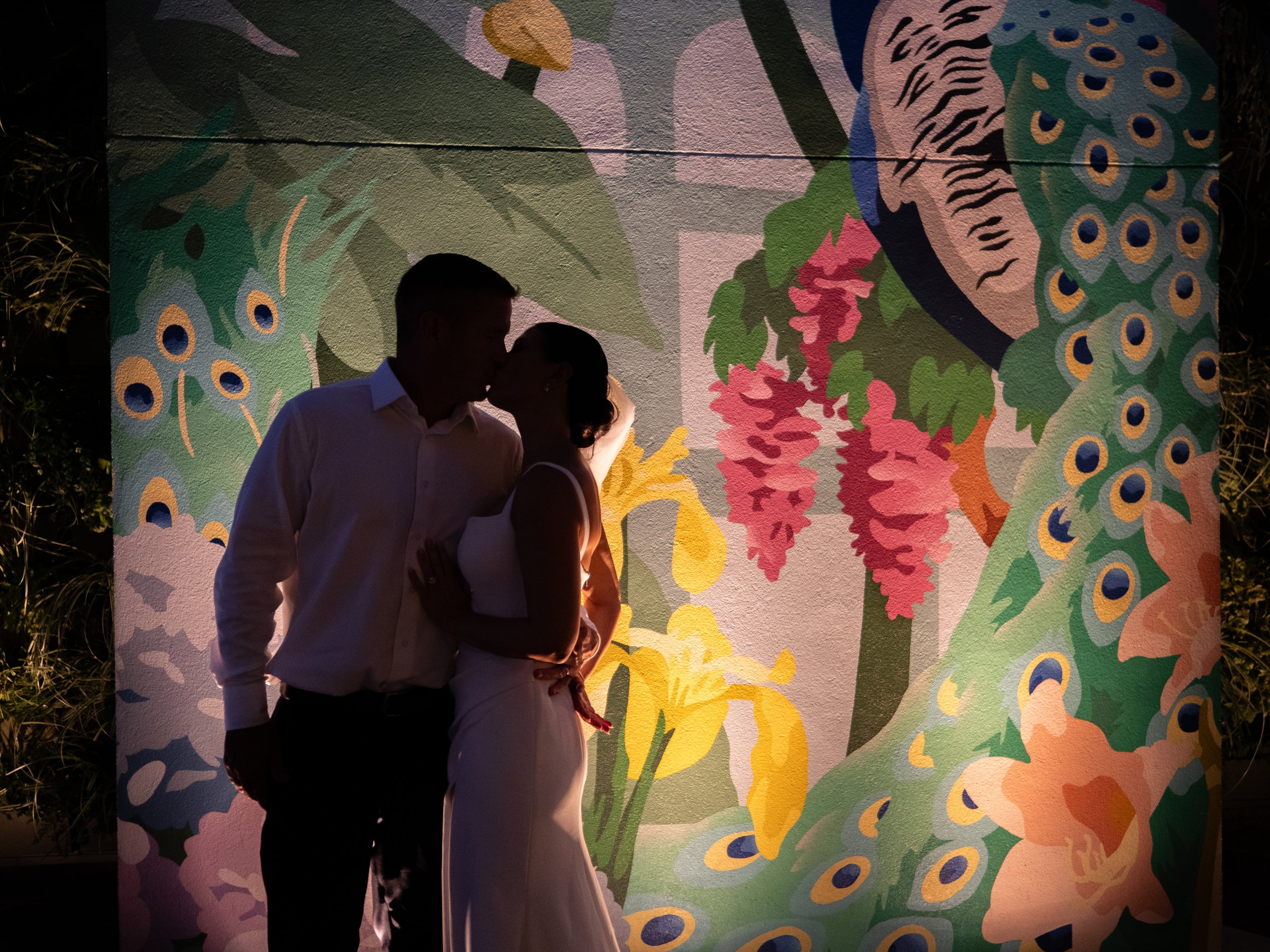
Color, silhouette, and evening light created the final visual sentence in Kate and Ryan’s Savannah story.
The story had begun in the quiet of a hotel suite. It moved through anticipation, first sight, laughter, vows, architecture, live oaks, streets, and sunlight. It ended above the city as the day disappeared.
Editorial Is Not Something Applied Later
Editing, color, and sequencing matter, but the editorial quality of these photographs was not added afterward.
It began with the experience itself.
It came from thinking about the day as a whole rather than treating the ceremony and portrait session as separate assignments. It came from allowing Savannah, Perry Lane, the light, the transportation, and the couple’s personalities to become part of one visual language.
The photographs feel connected because the experience was connected.
That is the lesson I continue to return to.
If I want to create photographs with meaning, I have to look beyond the photograph.
I have to understand what came before it, what might happen next, and why this moment belongs in the story at all.
The Experience Becomes the Photograph
Kate and Ryan’s wedding was intimate, but it did not feel incomplete.
It contained anticipation, humor, movement, fashion, architecture, emotion, celebration, and quiet.
The day did not need more people to become meaningful. It needed intention.
That intention gave the couple something real to experience. Their experience gave me something real to see. And what I saw became the photographs.
That is what editorial storytelling means to me.
Not making life appear more elaborate than it was.
Seeing the shape already forming within it.
Photography and perspective by Charles Maring.
Explore more of my work on the Charles Maring Photography page.
View the complete photographic story and learn about Savannah elopement photography through Maring Visuals.
Read how Savannah Proper planned and coordinated Kate and Ryan’s complete Savannah elopement experience.marin